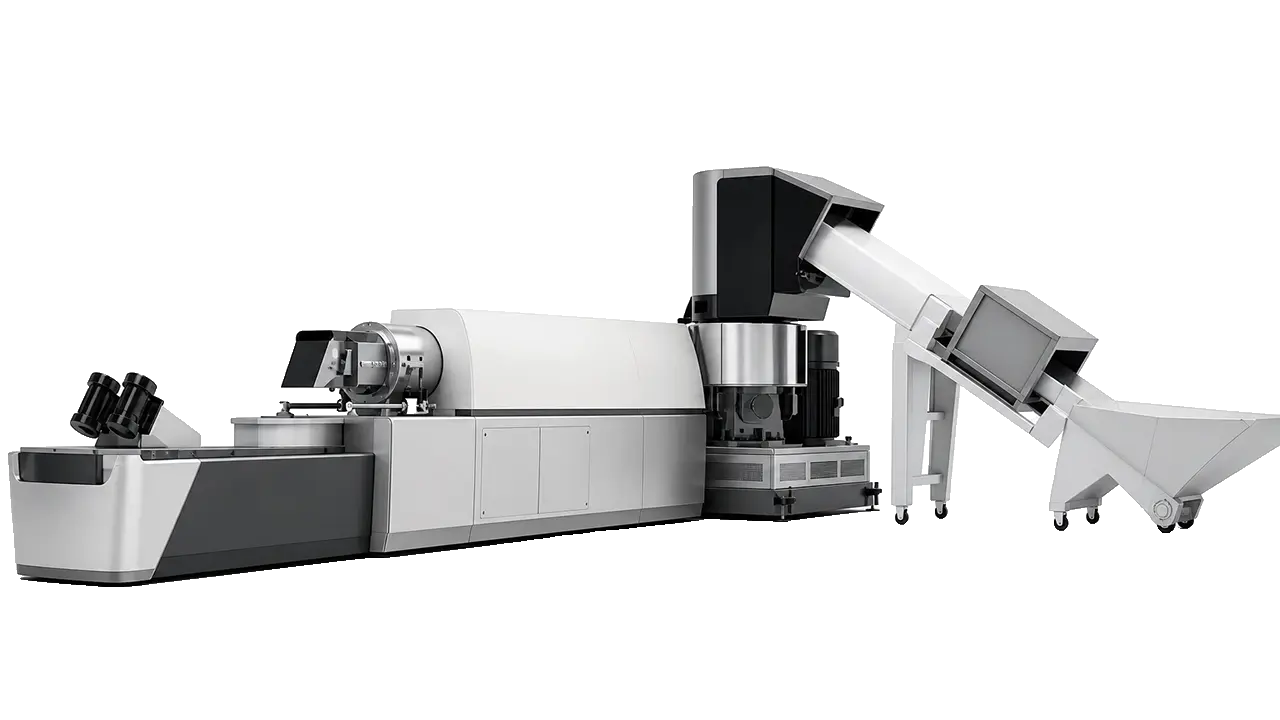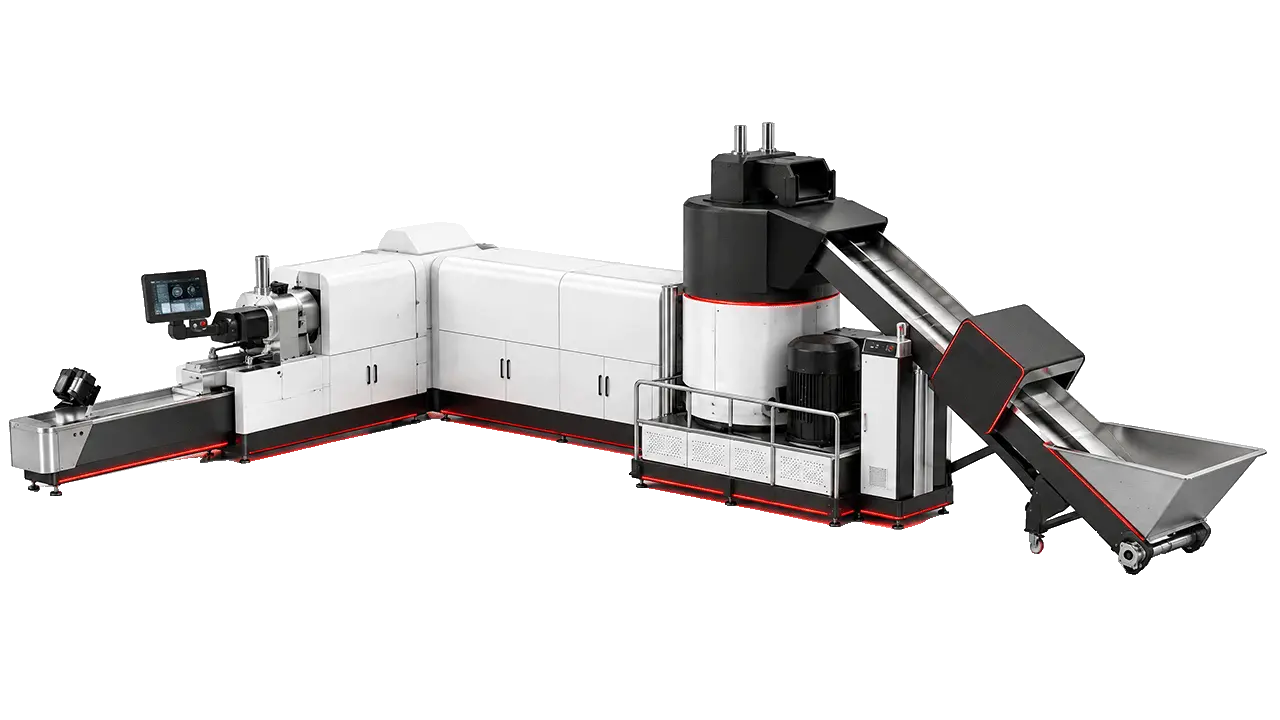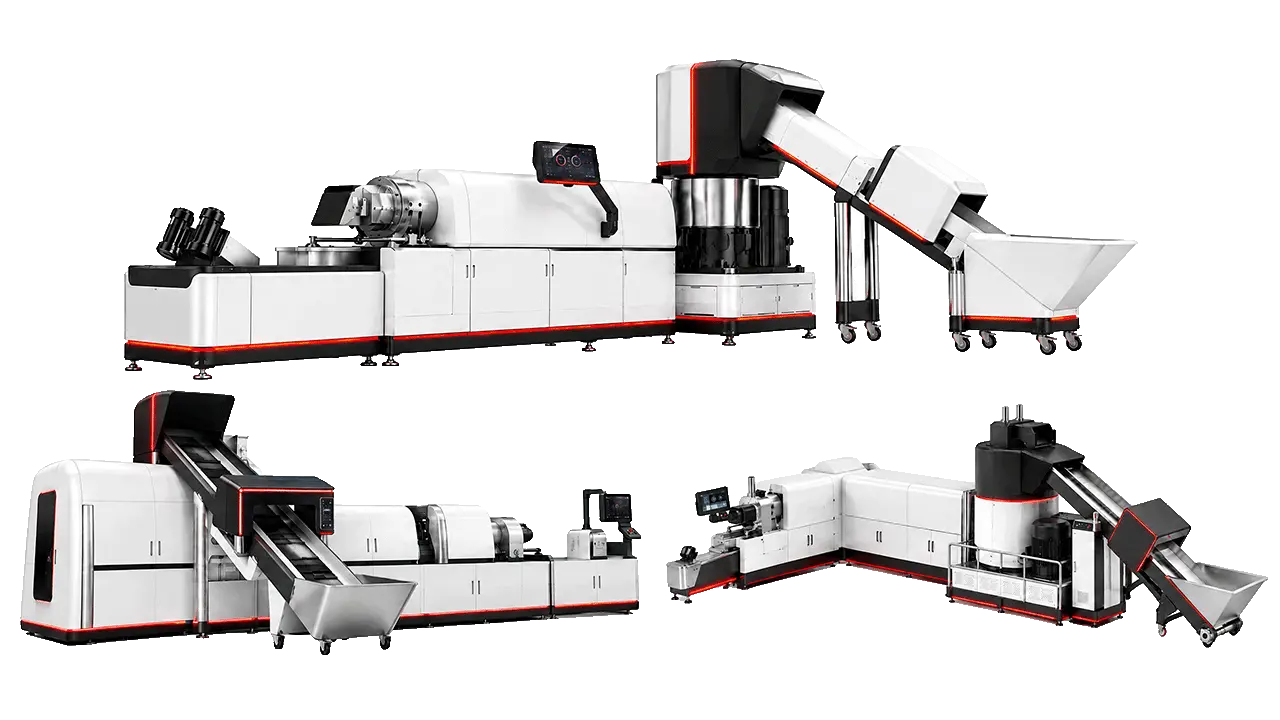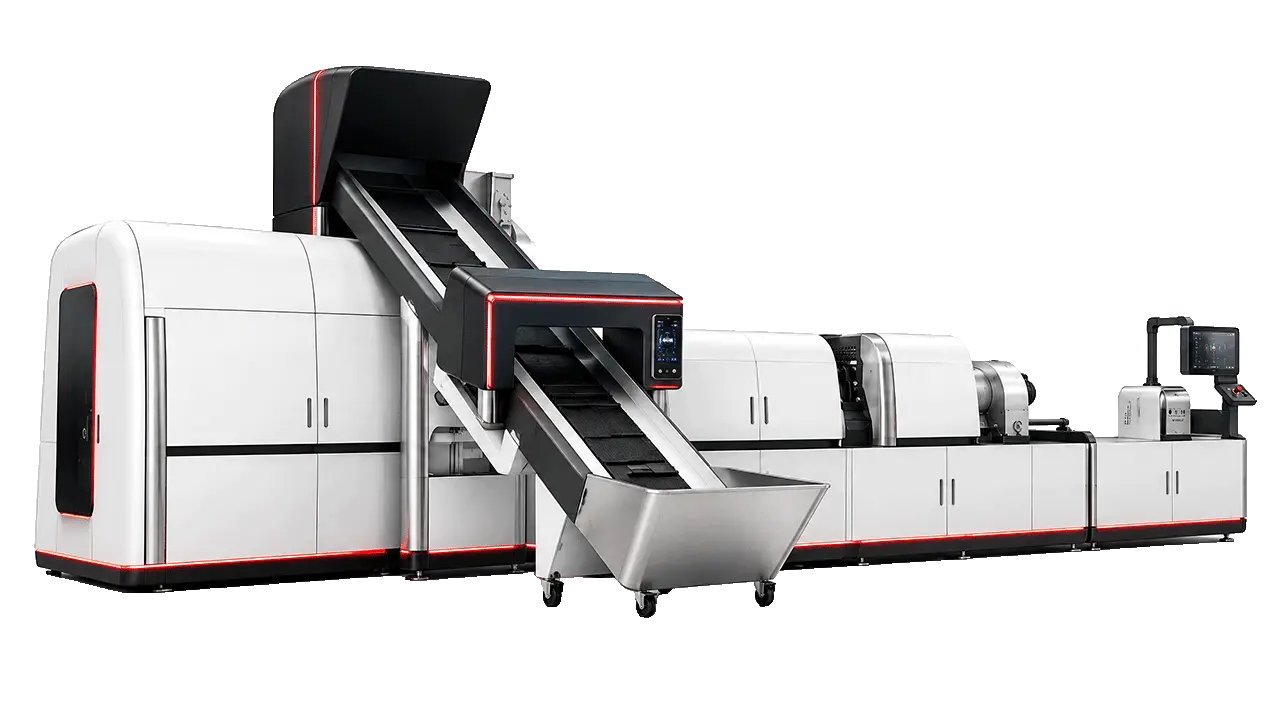
Single-shaft shredder through compactor, two-stage extrusion and water-ring pelletizing. Dry-process for in-plant woven scrap. Wet-process for post-consumer cement, fertilizer and rice bags. 100–500 kg/h depending on configuration.
PP woven bag recycling is not one system — it is two distinct process paths. Identify your waste source first. The wrong configuration costs you in screw wear, pellet quality and unplanned downtime.
Your waste is generated inside your own factory. It is clean, uncontaminated and consistent. You do not need a washing line.
Your waste comes from external sources — farms, construction sites, warehouses. It carries inorganic contamination that a dry-process line cannot handle without destroying the screw.
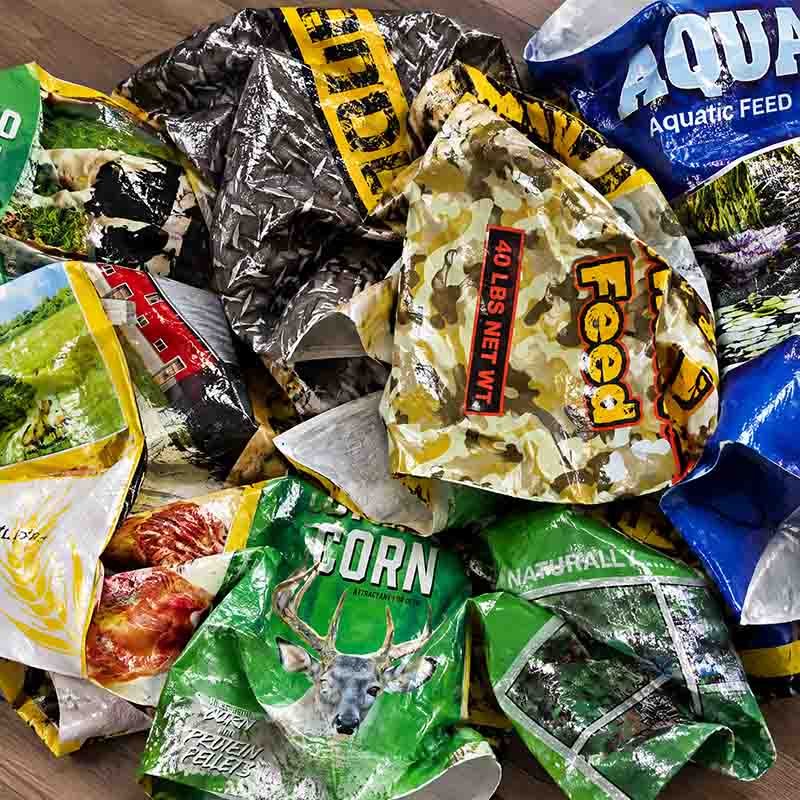
PP woven bag waste spans a wide range of contamination levels and material structures. Each type has a different process path. Matching the line to the waste stream is the first engineering decision.
Woven fabric edge trim, PP flat yarn waste, roll-change scrap and non-conforming bags from your own production line. Clean, consistent, no washing required.
Organic food residues on inner surfaces. Standard friction washing and float-sink separation is sufficient. No hot-wash stage required under normal contamination levels.
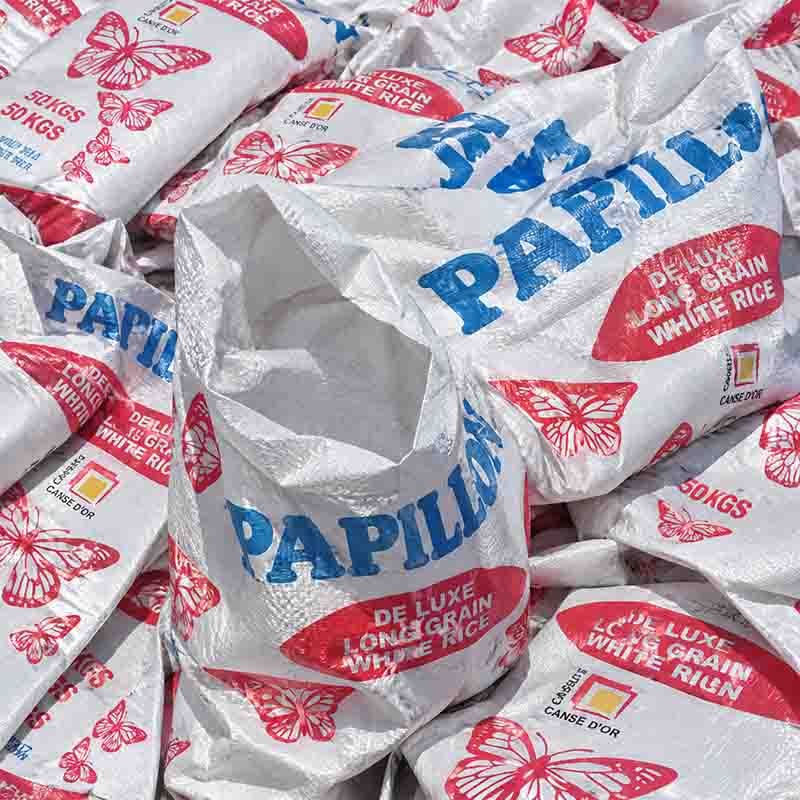
Chemical salt residues and hygroscopic contamination. Multi-stage washing with hot-wash unit recommended. Moisture content after drying must reach ≤3% before extrusion.
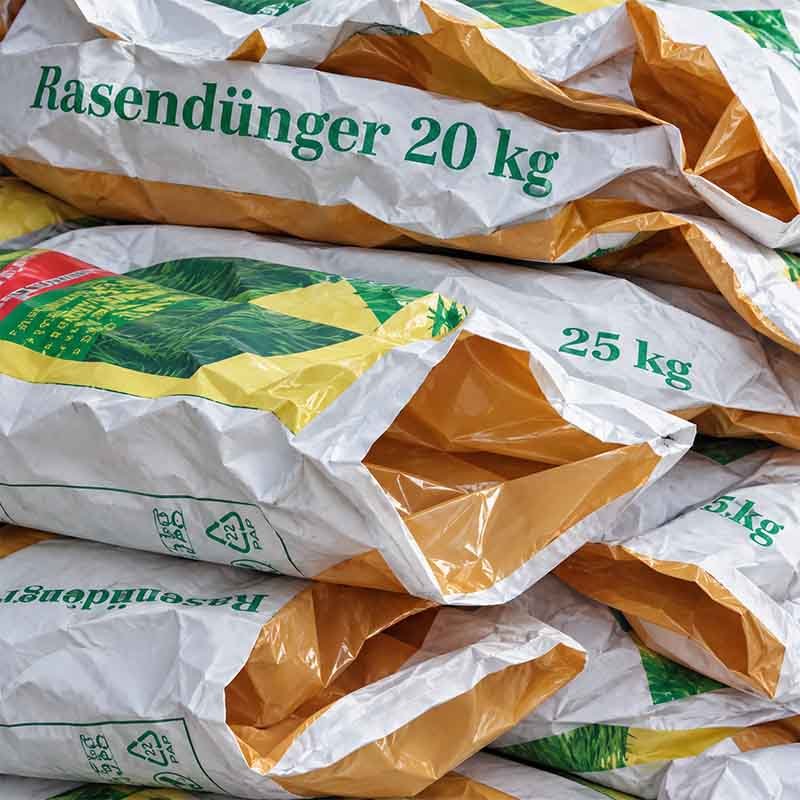
Inorganic cement dust penetrates the woven fabric structure. Hot washing is required — dry-process filtration alone cannot remove this contamination without destroying the screen changer within hours of operation.
BOPP coating introduces a PE/PP mixed-material structure. The lower melting point PE component must be managed through fine melt filtration. Two-stage extrusion with a precision screen changer is required for consistent pellet quality.
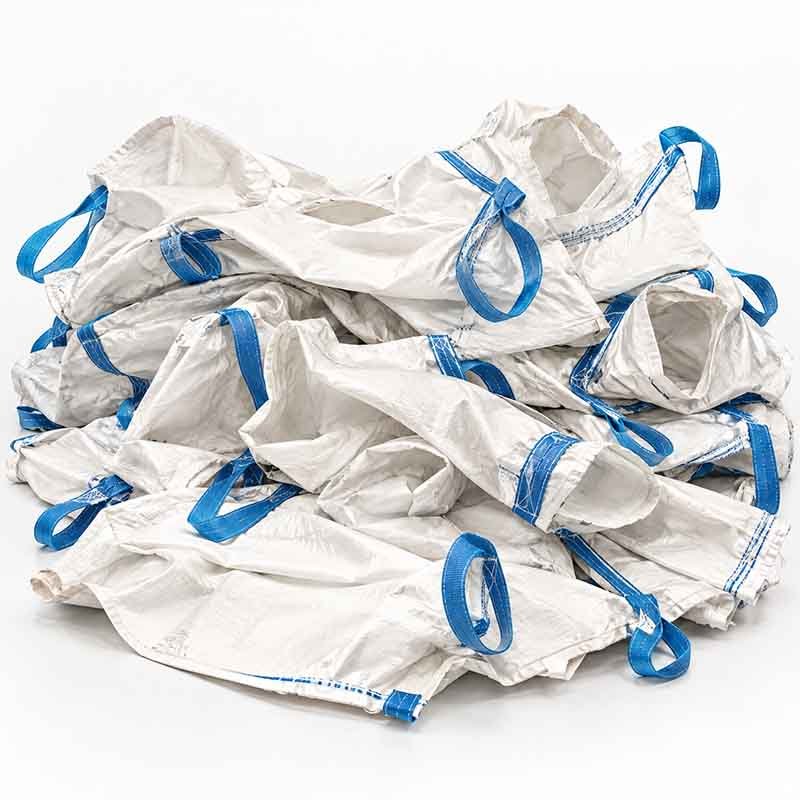
Single bags weigh 500 g–2 kg and often include PE inner liners, polyester sewing thread and BOPP labels. The shredder specification, liner separation and filtration requirements are different from standard woven bag lines. Contact us for a dedicated configuration assessment.
PP woven bag recycling presents a fundamentally different challenge from PE film recycling. The woven polypropylene fabric structure requires heavy-duty single-shaft shredding before any downstream processing is possible — standard granulators cannot handle the tensile strength of stretched PP flat yarn. Post-consumer bags, particularly cement sacks and fertilizer bags, carry inorganic contamination that degassing alone cannot remove. A wet washing stage is not optional for these waste streams; it is a prerequisite for protecting the extruder screw and maintaining pellet quality. LayerQuestar Machinery configures each line to the specific waste stream, not to a generic template.
Both paths share the same downstream extrusion and pelletizing equipment. The difference is upstream: whether your waste needs washing before it reaches the extruder.
Inline metal detection before the shredder. Wire, staples and metal clips embedded in woven bags will destroy shredder blades within minutes if not removed upstream.
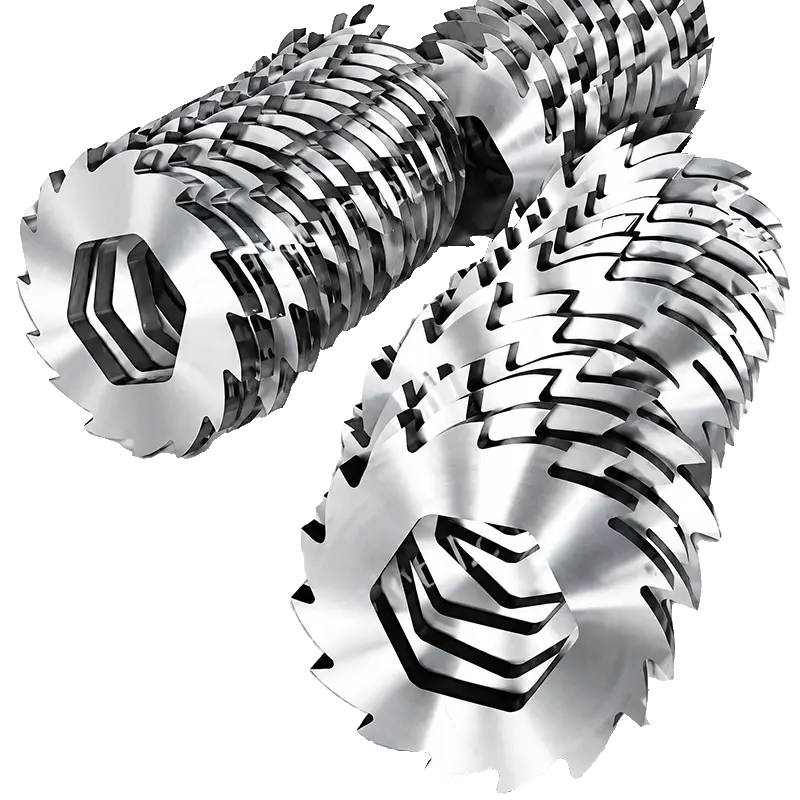
Low-speed, high-torque shredding reduces woven bags to 50–80 mm fragments. The tearing action is essential — the tensile strength of stretched PP flat yarn requires shear force, not the cutting action of a granulator.
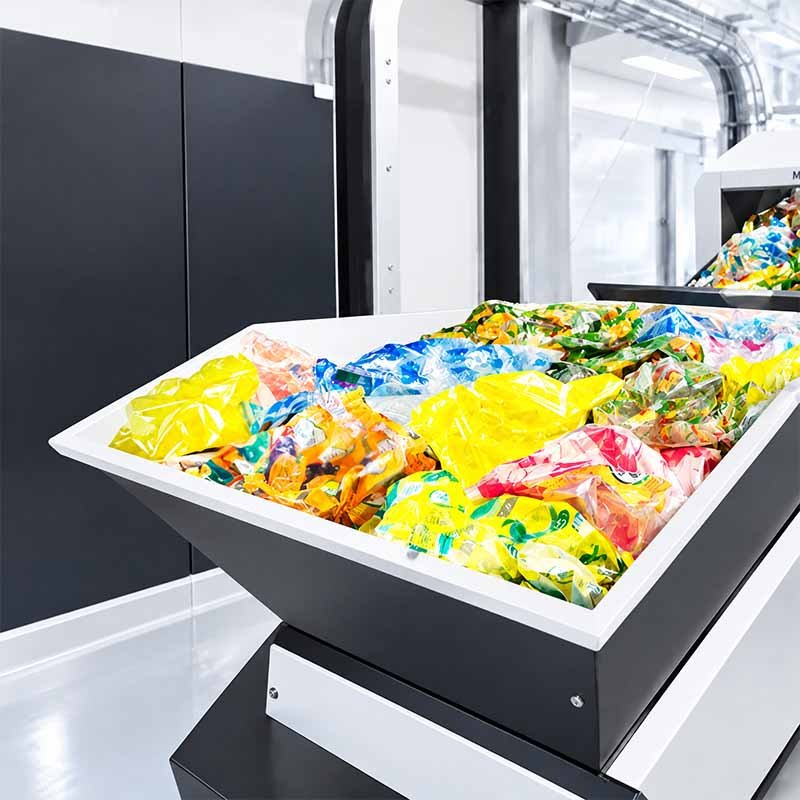
Output: 50–80 mm fragmentsShredded PP woven fragments are bulky and irregular. The compactor uses frictional heat to pre-plasticize and densify the material before it enters the extruder screw, ensuring stable, consistent feed rate and preventing bridging in the hopper.
Increases bulk density for stable screw feedingThe first extruder melts and plasticizes the PP material. A continuous (non-stop) screen changer filters the melt without halting production. For clean in-plant scrap, a single-stage system may be sufficient at this point.
Coarse filtration — melt plasticizationThe second extruder provides an additional vacuum degassing zone to remove ink volatiles and moisture, followed by precision melt filtration. This two-pass process is what separates production-grade recycled pellets from inconsistent single-pass output.
Fine filtration — volatiles removal — melt homogenizationThe melt is cut at the die face in a water ring, producing uniform cylindrical pellets. Pellets are dewatered, screened for size consistency and conveyed to storage silos. Suitable for MFI 1–20 PP melt.
Output: Uniform PP pellets, ready for reuseInline metal detection. Same requirement as dry process — metal contamination in post-consumer bags is typically higher.
Higher-capacity shredder specified for post-consumer bag volumes. Same tearing principle — 50–80 mm output fragments.
High-speed friction washing removes surface dust, sand and loose soil from shredded fragments. First contamination removal stage.
Removes: surface dust, sand, loose soilPP fragments float; heavy contaminants (stones, glass, dense plastics) sink. Gravity separation removes inorganic material that friction washing cannot dislodge.
Removes: stones, glass, heavy inorganic debrisHeated wash water with detergent removes oil, grease, chemical residues and organic contamination that cold washing cannot address. Required for cement and fertilizer bags to achieve acceptable pellet quality.
Removes: chemical residues, oil, organic contaminationTwo-stage drying: centrifugal dewatering removes bulk surface water, followed by hot-air pipe drying to reach ≤3% moisture content. Entering the extruder above this threshold causes bubble defects in the pellets.
Target: moisture content ≤3% before extrusionIdentical to dry-process Steps 3–5. The compactor densifies the dried fragments; two-stage extrusion with vacuum degassing removes residual volatiles and homogenizes the melt.
Same downstream pelletizing system as dry process. Uniform cylindrical PP pellets, dewatered, screened and conveyed to storage.
Output: Uniform PP pellets, ready for reuseReference specifications for standard configurations. All output figures vary depending on waste type, contamination level, material MFI and operating conditions. Contact LayerQuestar Machinery for a configuration matched to your specific waste stream.
| Parameter | Dry Process — In-Plant Scrap | Wet Process — Post-Consumer Bags |
|---|---|---|
| Applicable waste | In-plant edge trim, raffia, non-conforming bags, BOPP offcuts | Cement bags, fertilizer bags, rice/flour bags, mixed post-consumer PP woven |
| Output capacity | 100–300 kg/h Depending on configuration | 200–500 kg/h Depending on configuration |
| Shredder type | Single-shaft shredder | Heavy-duty single-shaft shredder (larger format) |
| Shredder output size | 50–80 mm fragments | 50–80 mm fragments |
| Washing system | Not required | Friction washer + float-sink tank + optional hot wash |
| Drying system | Not required | Centrifugal dewatering + hot-air pipe drying (≤3% moisture) |
| Feeding system | Belt conveyor + compactor | Belt conveyor + compactor |
| Extrusion stages | Single-stage (clean scrap) or two-stage (printed/mixed) | Two-stage (standard) |
| Degassing | Vacuum degassing — 1 or 2 zones | Vacuum degassing — 2 zones minimum |
| Filtration | Continuous screen changer | Continuous screen changer (Stage 1) + precision filter (Stage 2) |
| Pelletizing method | Vertical water-ring die-face cutting | Vertical water-ring die-face cutting |
| Applicable MFI range | 1–20 (PP) | 1–20 (PP) |
| Main motor brand | ABB preferred; Innomotics available | ABB preferred; Innomotics available |
| Temperature control | OMRON PID, ±1°C under stable conditions | OMRON PID, ±1°C under stable conditions |
| Control cabinet | Fully English-labeled, 2–3 independent cooling fans | Fully English-labeled, 2–3 independent cooling fans |
| Pre-shipment test | 72-hour continuous factory acceptance test | 72-hour continuous factory acceptance test |
All specifications are reference values under standard operating conditions. Actual output varies by waste type, contamination level, material MFI and ambient conditions. Screw diameter, installed power and footprint dimensions are confirmed at quotation stage based on your specific waste stream data. [NEEDS CLIENT DATA — screw diameter range and installed power to be confirmed by LayerQuestar engineering team before publication.]
When evaluating PP woven bag recycling lines, the relevant comparison is not between Chinese and European brands — it is between suppliers with documented build standards and those without.
Austrian engineering. Food-contact compliance. Premium positioning.
Documented build standard. Verified component specification. 72-hour FAT.
Lowest entry price. Component specification typically undisclosed.
For buyers evaluating PP woven bag recycling lines outside the food-contact compliance market, the relevant comparison is not between Chinese and European brands — it is between Chinese suppliers with documented build standards and those without. LayerQuestar Machinery publishes its component specifications: ABB or Innomotics main motors, WC bi-metallic screws with HRC 59–65 surface hardness, OMRON PID temperature control with ±1°C deviation under stable conditions, and a mandatory 72-hour continuous factory acceptance test before every shipment. These are verifiable specifications, not marketing claims.
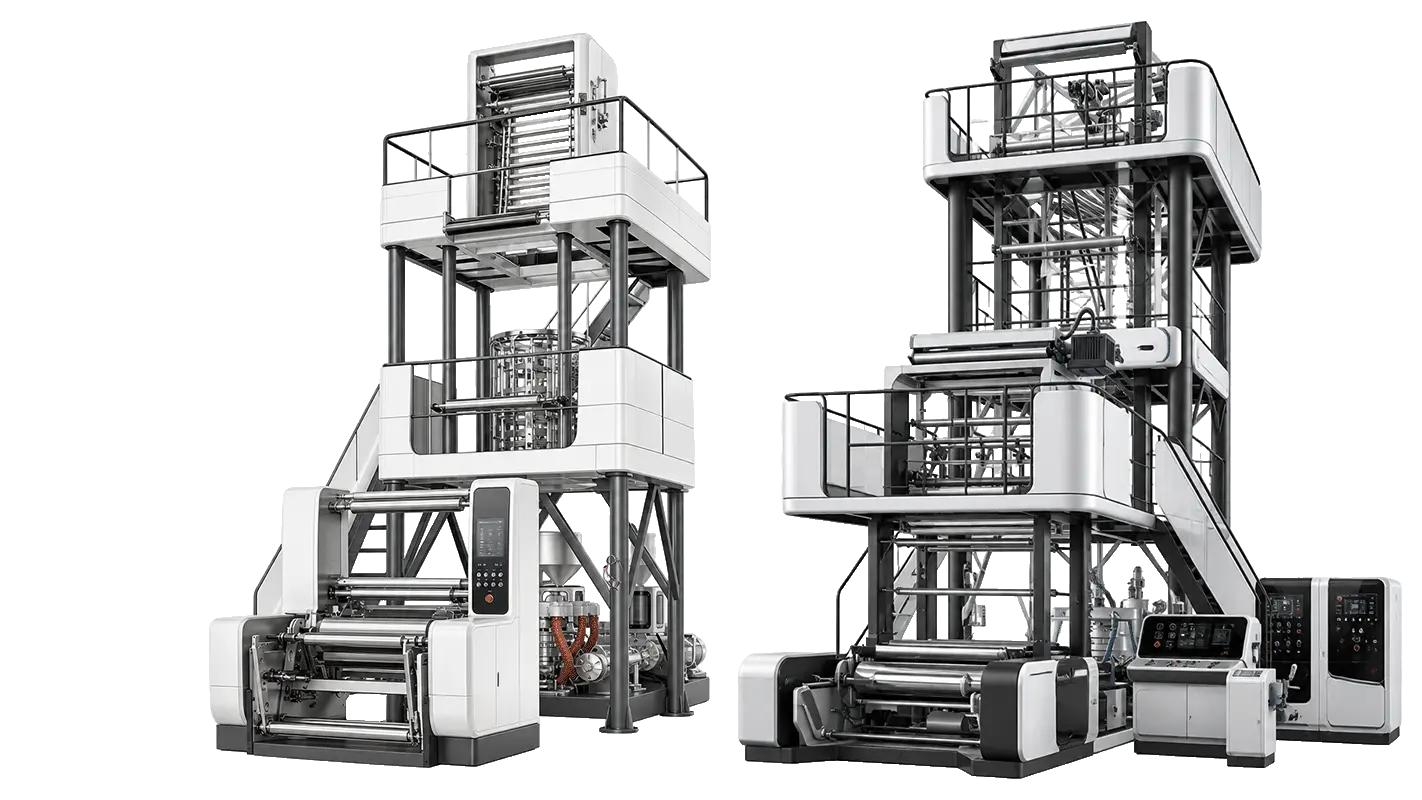
The same component specification that applies to our blown film machines applies to every recycling line. No downgrade for recycling applications.
Every PP woven bag recycling line runs for a minimum of 72 continuous hours at LayerQuestar Machinery's Zhejiang facility before shipment. The test uses representative waste material — not virgin resin. Output pellets are inspected for bubble defects, black specks, dimensional consistency and MFI stability. The line does not ship until it passes. You receive the test report with your documentation package.
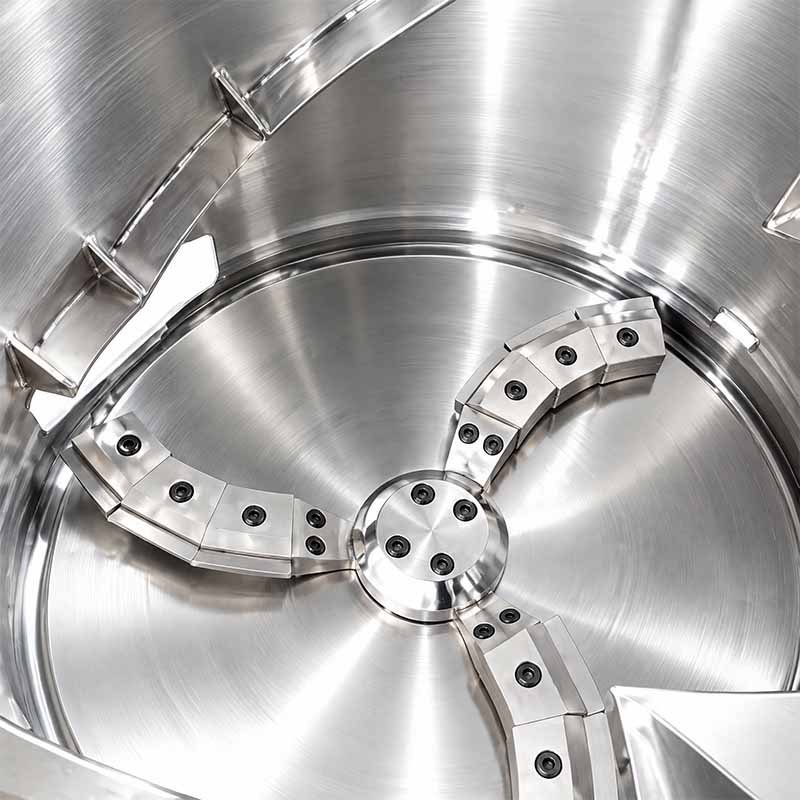
Alloy tool steel, designed for the tensile strength of stretched PP flat yarn. Replaceable individually — no full rotor replacement required on wear.
Frictional pre-plasticization densifies shredded PP fragments before the extruder screw. Prevents bridging and ensures consistent feed rate at full throughput.
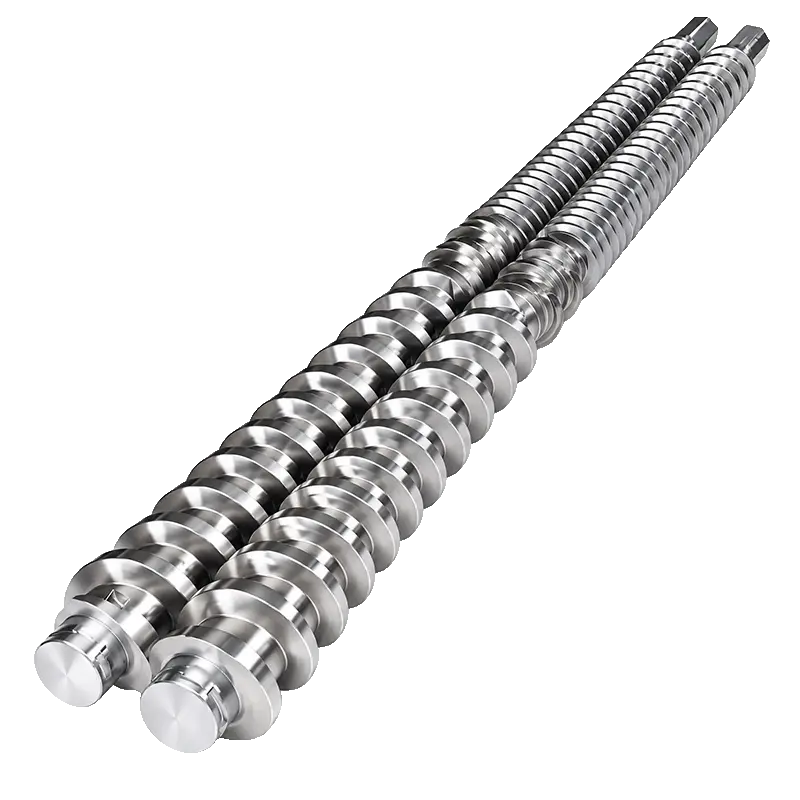
Base 38CrMoAlA nitrided steel with 1.5–3 mm WC alloy overlay. HRC 59–65 surface hardness. Designed to withstand the abrasive contamination inherent in post-consumer PP woven bag waste.
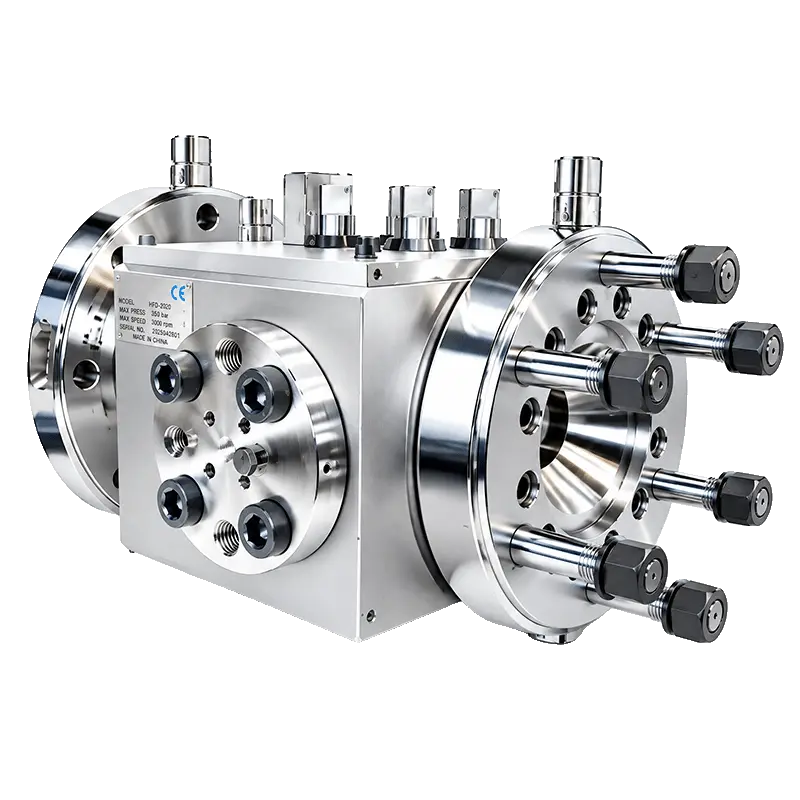
Non-stop screen replacement without production interruption or pressure surge. Essential for post-consumer PP waste with high contamination loads that require frequent screen changes during operation.
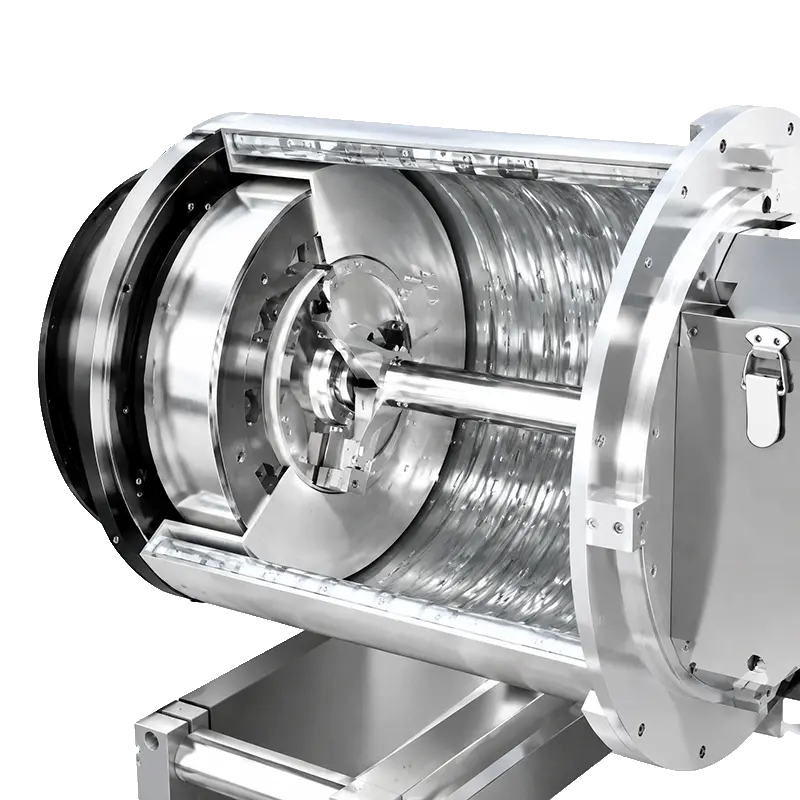
Die-face cutting in a vertical water ring. Suitable for PP melt at MFI 1–20. Produces uniform cylindrical pellets with low moisture content and consistent dimensional stability.
The questions factory owners, procurement managers and recycling operators ask most often before specifying a PP woven bag recycling and pelletizing line.
The fundamental difference is material structure and contamination type. PE blown film is a thin, continuous sheet with low bulk density — the primary feeding challenge is compacting loose film into a consistent feed stream. PP woven bags are a fabric structure made from stretched polypropylene flat yarn — the primary challenge is breaking down that woven structure before any downstream processing is possible. A standard granulator cannot handle the tensile strength of PP flat yarn; a heavy-duty single-shaft shredder is required. Post-consumer PP woven bags also carry inorganic contamination — cement dust, fertilizer residues, sand — that PE film waste typically does not. This contamination cannot be removed by degassing alone and requires a dedicated wet washing stage before extrusion.
The answer depends entirely on the source of your waste. If your waste is generated inside your own factory — edge trim, raffia tape, roll-change scrap, non-conforming bags that have never been filled — a dry-process system is sufficient. The material is clean and consistent, and a shredder-compactor-extruder configuration will produce acceptable pellets without washing. If your waste comes from external sources — cement bags, fertilizer bags, rice bags, or any bag that has been filled and used — a washing line is not optional. Inorganic contamination from cement dust and fertilizer residues will destroy the extruder screen changer within hours of operation if fed into a dry-process line without prior washing. The cost of a washing line is significantly lower than the cost of repeated screen changer replacements and screw wear.
A cutter compactor is designed for thin PE film — it uses frictional heat to compact loose, lightweight film into a dense mass that can feed into an extruder screw. PP woven bags are a fundamentally different material. The woven polypropylene fabric structure, made from stretched flat yarn, has high tensile strength that a cutter compactor cannot overcome. Attempting to process whole or folded woven bags through a cutter compactor results in wrapping around the rotor, jams and inconsistent output. A heavy-duty single-shaft shredder applies shear force to tear the woven structure into manageable fragments before the compactor stage. The compactor then performs its intended function — densifying the shredded fragments for stable extruder feeding.
After shredding, PP woven bag fragments are still bulky and irregular. Their bulk density is too low for consistent extruder screw feeding — the screw would feed air rather than material, causing surging and inconsistent output. The compactor uses a rotating drum to apply frictional heat to the shredded fragments, pre-plasticizing and densifying them into a compact mass before they enter the extruder. This ensures a stable, continuous feed rate at the target throughput. The compactor is positioned between the shredder output and the extruder inlet, and is a standard component in both dry-process and wet-process PP woven bag recycling configurations.
Two-stage extrusion passes the melt through two separate extruders in sequence. The first stage melts and plasticizes the PP material and performs coarse filtration. The second stage provides an additional vacuum degassing zone and precision filtration pass. For PP woven bag waste — which typically contains ink volatiles, residual moisture and fine contamination even after washing — a single extrusion pass often cannot achieve the degassing and filtration depth required for consistent pellet quality. The second stage homogenizes the melt and removes residual volatiles that the first stage did not capture. For clean in-plant scrap with minimal contamination, a single-stage system may be acceptable. For post-consumer bags and any waste with print coverage or chemical residues, two-stage extrusion is the correct specification.
Yes, with the correct filtration configuration. BOPP-laminated bags introduce a mixed PP/PE material structure — the BOPP coating has a lower melting point than the PP woven base fabric. During extrusion, both components melt and blend into the melt stream. The resulting recycled pellets will have a slightly modified MFI compared to pure PP, which affects their suitability for downstream applications. For injection-molded products, plastic pallets and non-woven applications, this blend is typically acceptable. For re-extrusion into new woven bags, the mixed material may affect tape-drawing performance. Two-stage extrusion with precision melt filtration is required to manage the mixed-material stream and maintain consistent pellet quality. Share your BOPP lamination percentage with LayerQuestar Machinery when requesting a configuration.
FIBC jumbo bags require a separate configuration assessment and cannot be processed on a standard PP woven bag recycling line without modification. The reasons are: FIBC bags are significantly larger and heavier than standard woven bags, requiring a larger-format shredder with higher torque; most FIBCs include PE inner liners, polyester sewing thread and BOPP labels that introduce multiple material streams; and the contamination profile of used FIBCs — particularly those used for chemical, mineral or construction materials — varies widely. A line configured for standard woven bags may be undersized for FIBC volume and incorrectly specified for FIBC contamination. Contact LayerQuestar Machinery with your FIBC waste volume, source industry and estimated contamination level for a dedicated configuration assessment.
Vertical water-ring pelletizing cuts the melt at the die face while a ring of water simultaneously cools and transports the pellets. The vertical orientation is preferred for PP because PP melt has a relatively low viscosity at processing temperature and can drip or deform under gravity in a horizontal die-face setup. The vertical configuration keeps the melt stream stable and produces consistent cylindrical pellets. It is suitable for PP melt in the MFI 1–20 range, which covers the majority of recycled PP woven bag material. Strand pelletizing is an alternative but is more sensitive to melt viscosity variation — a significant disadvantage when processing recycled material with inherent batch-to-batch variation.
For in-plant scrap: calculate your total woven bag production output and multiply by your scrap rate. A woven bag factory producing 50,000 bags per day at an average weight of 80 g per bag generates 4,000 kg of finished product. At a 4% scrap rate, that is 160 kg of recyclable waste per day. If your recycling line runs 8 hours per day, you need a minimum of 20 kg/h output capacity — a small single-stage system. For post-consumer waste recycling: base your calculation on your planned daily waste intake volume, not your production output. Factor in a 15–20% efficiency allowance for washing water, screen changes and startup losses. Share your daily waste volume, operating hours per day and waste type with LayerQuestar Machinery for a specific capacity recommendation.
European brands such as Starlinger and Erema are the appropriate choice for food-contact compliance applications, EU-regulated markets and projects where European certification is a contractual requirement. For industrial non-food-contact PP woven bag recycling, the relevant comparison is between suppliers with documented build standards and those without — not between Chinese and European brands as a category. LayerQuestar Machinery specifies ABB or Innomotics main motors, WC bi-metallic screws with HRC 59–65 surface hardness, OMRON PID temperature control with ±1°C deviation under stable conditions, and conducts a 72-hour continuous factory acceptance test on every line before shipment. These specifications are published and verifiable. The price difference versus European equivalents for non-food-contact industrial applications is substantial — typically a fraction of the European price for the same functional output specification.
Four things: waste type (in-plant trim / cement bags / fertilizer bags / mixed post-consumer), estimated daily volume in kg, contamination level, and whether a washing system is already available on-site. LayerQuestar Machinery will come back with a specific system recommendation — dry or wet process, single or two-stage, and reference capacity range.