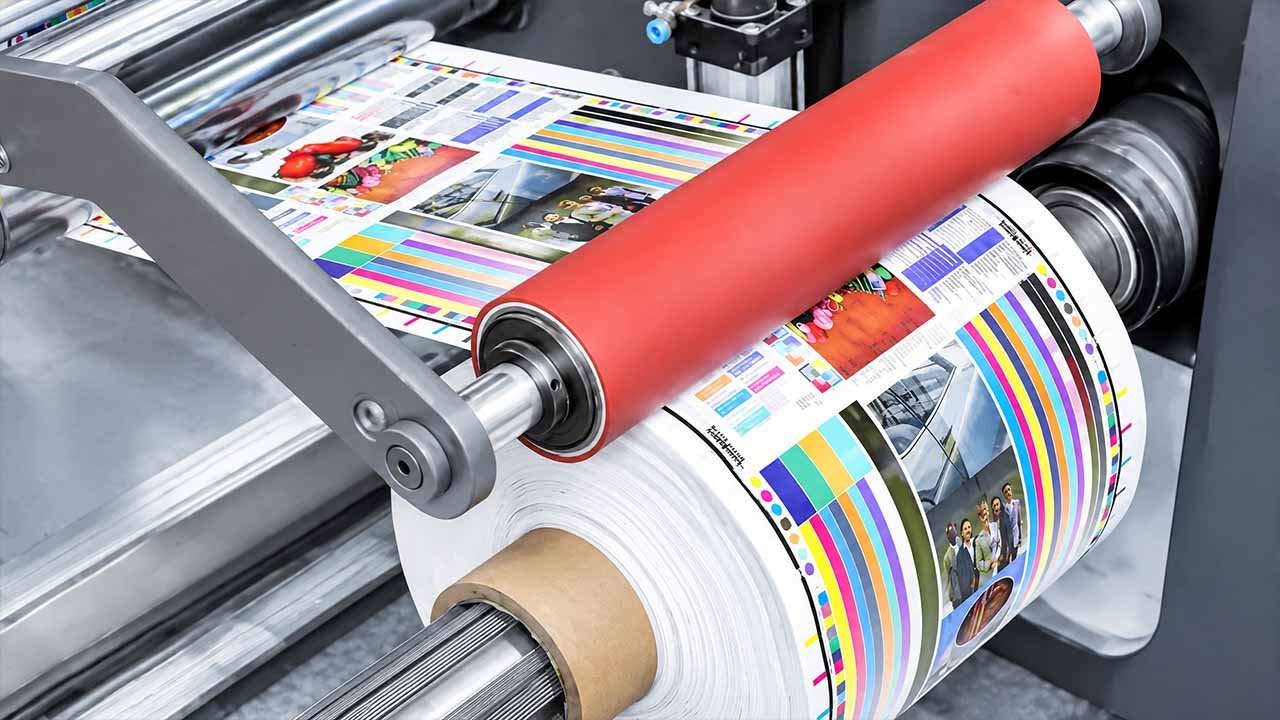
Four-color flexo printing is where functional packaging becomes
branded packaging. Supermarket carriers, food bags, courier mailers,
garment bags — if your customers are retail brands, 4-color is the
minimum print standard they expect.
This page helps you confirm whether 4-color is right for your
operation, and which series fits your production scale.
Three questions worth answering before comparing machine models:
Is 4-color the right step up from 2-color?
Should you buy a flexo printer or outsource to digital printing?
And when does 6-color become relevant?
01
2-Color vs. 4-Color — What Changes Visually
2-Color Printing
Brand name + single-color graphic
Brand name and text
Simple geometric patterns
Single-color logo
Barcode and product information
Multi-color brand logos
Gradient and tonal printing
Photo-quality imagery
Retail brand packaging standards
Best for: industrial packaging, logistics bags, internal-use bags
Upgrade
4-Color Printing
Near-CMYK full-color output
Everything 2-color can do
Multi-color brand logos
Gradient and tonal printing
Photo-quality imagery
Retail brand packaging standards
Supermarket carrier bags
Chain restaurant delivery bags
Garment and gift bags
Best for: retail brands, food service, garment, gift packaging
Already confirmed you need 4-color?
Skip to the machine comparison →
Compare LQ-4C vs LQ-4CH
02
Flexo Printing vs. Digital Printing — Which Makes More Sense?
Before buying a 4-color flexo printer, many converters ask the same
question: should I invest in a machine, or outsource short runs to a
digital print service? The answer depends almost entirely on your
monthly production volume.
Flexo Printing (In-House)
High Volume
Very low cost per unit at scale
Full production control and lead time
Consistent color across large runs
Compatible with PE, PP film substrates
Plate cost per job (amortised over volume)
Setup time per job change
Right when: You run the same design at high volume.
Plate cost is spread across thousands of bags — unit economics improve
significantly above approximately 50,000 bags per design per month.
VS
Digital Printing (Outsourced)
Low Volume
No plate cost — design changes are free
Short runs economical (100–5,000 bags)
Variable data printing possible
High cost per unit at volume
Dependent on third-party lead times
Limited compatibility with PE/PP film
Right when: You handle many different designs
in small quantities, or you are testing a new market before
committing to in-house printing capacity.
The general rule: Once your monthly print volume
for a single design exceeds approximately 30,000–50,000 bags,
the per-unit cost of flexo printing (including plate amortisation)
typically becomes lower than outsourced digital printing.
Below that threshold, digital outsourcing is often more economical.
Reference estimate based on typical flexo plate costs in Southeast Asia and China markets. Actual break-even volume varies by plate supplier, ink cost, and local digital print service pricing — confirm with LayerQuestar sales team for your specific market.
03
4-Color vs. 6-Color — When Does 6-Color Become Relevant?
The short answer: 4-color covers the vast majority of bag printing
requirements. 6-color is a specialist tool for a specific need.
4-Color Is Sufficient When:
Your customers accept near-CMYK color reproduction
Premium luxury packaging with tight color tolerances
High-end cosmetics, fashion brand carrier bags
Customers supply a Pantone color reference and require matching
Extended color gamut printing is contractually required
If none of these apply to your current customer base,
4-color is the right starting point.
You can always add a 6-color line later as your market moves upmarket.
Series Overview
Same 4 Colors. Different Production Scale.
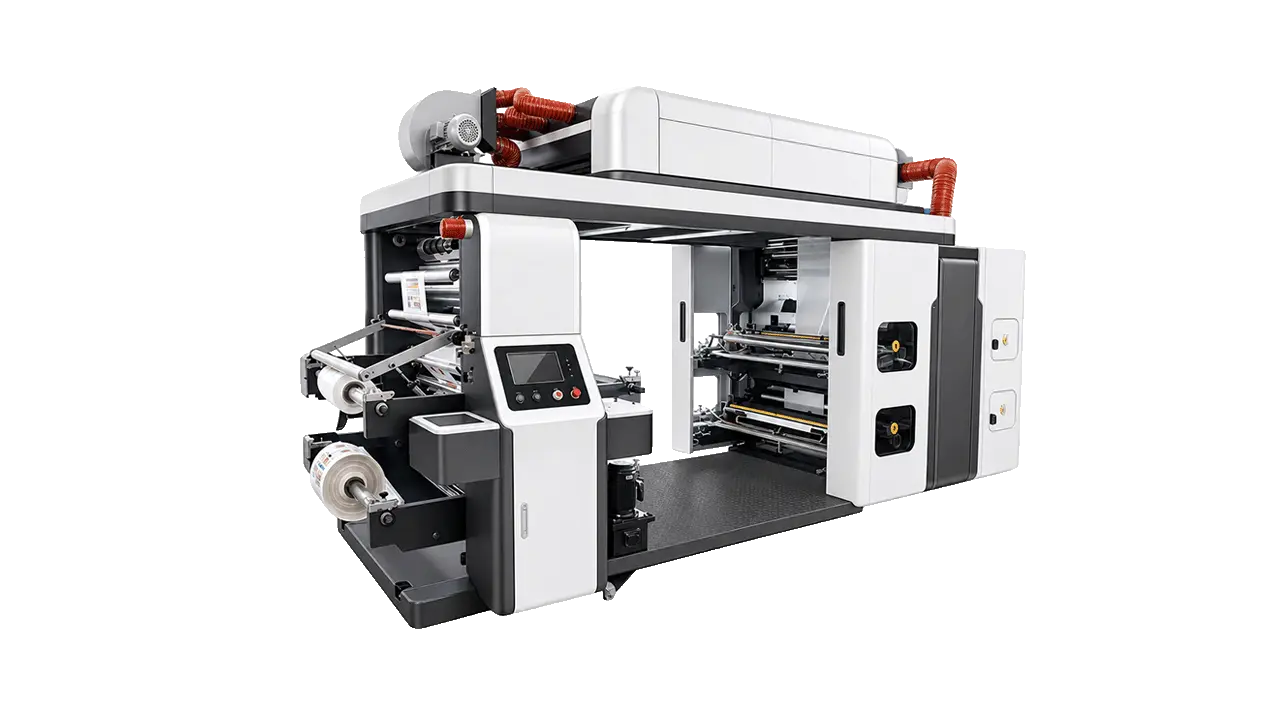
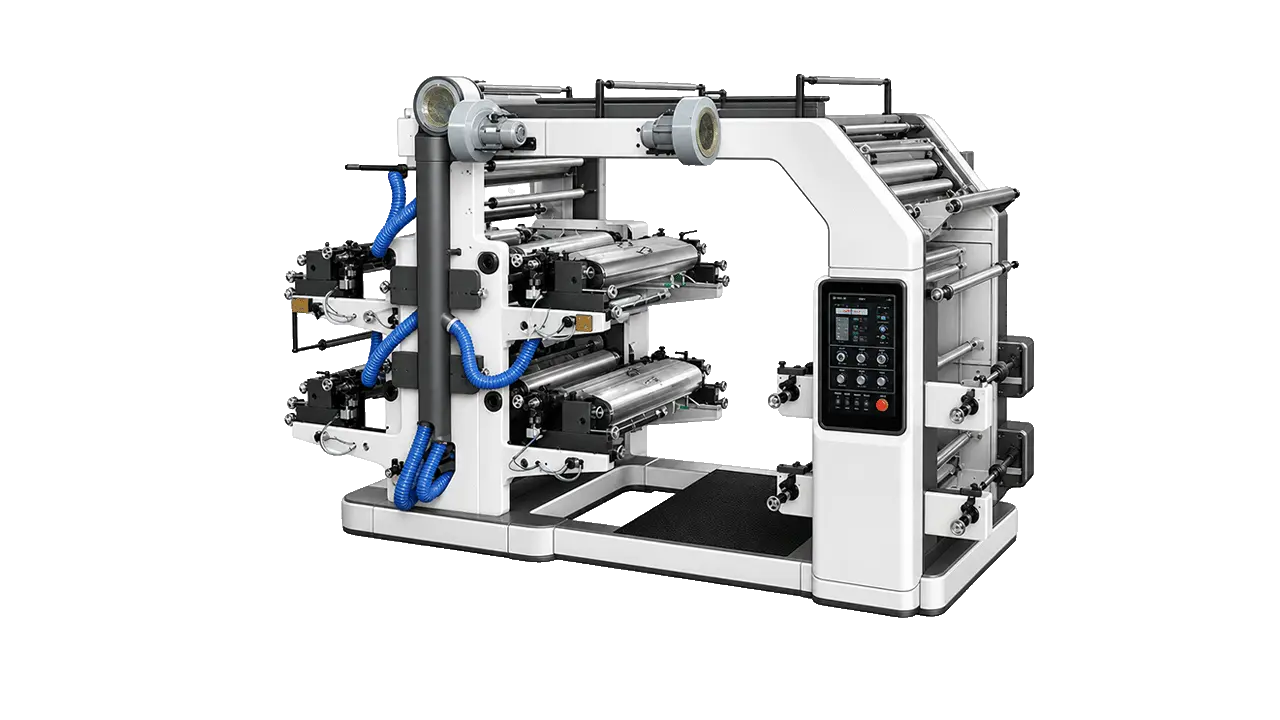
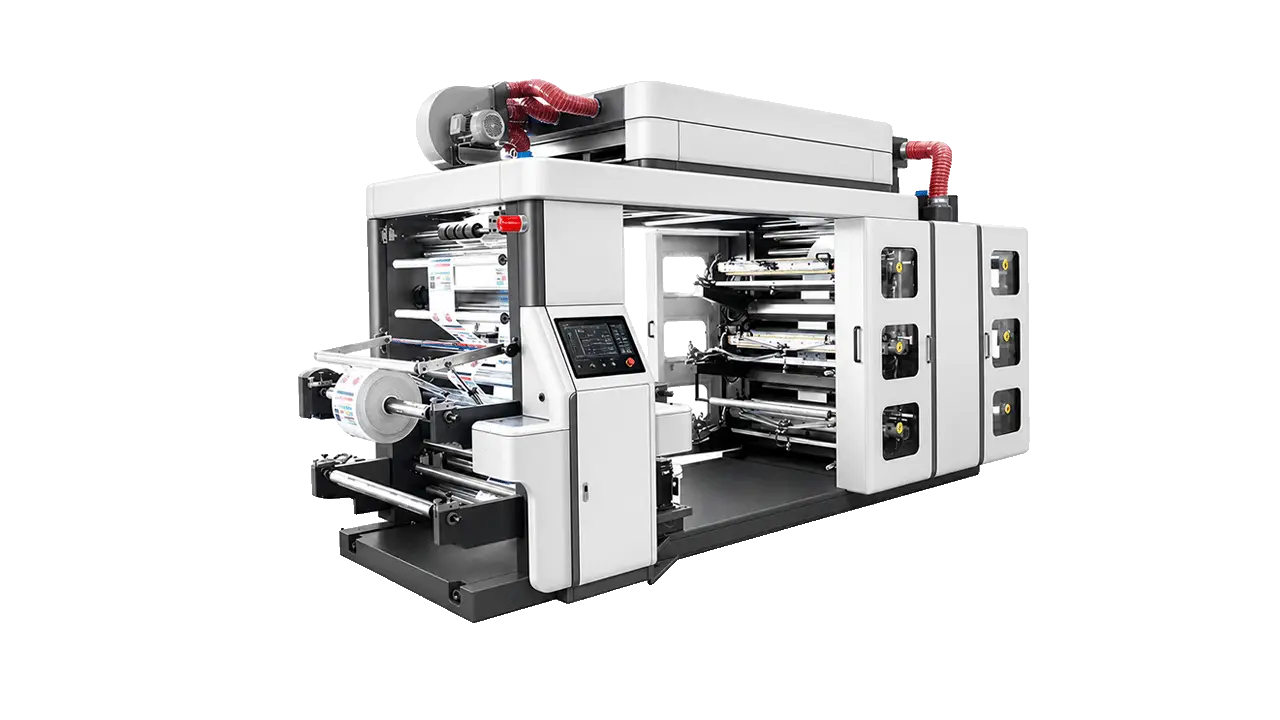
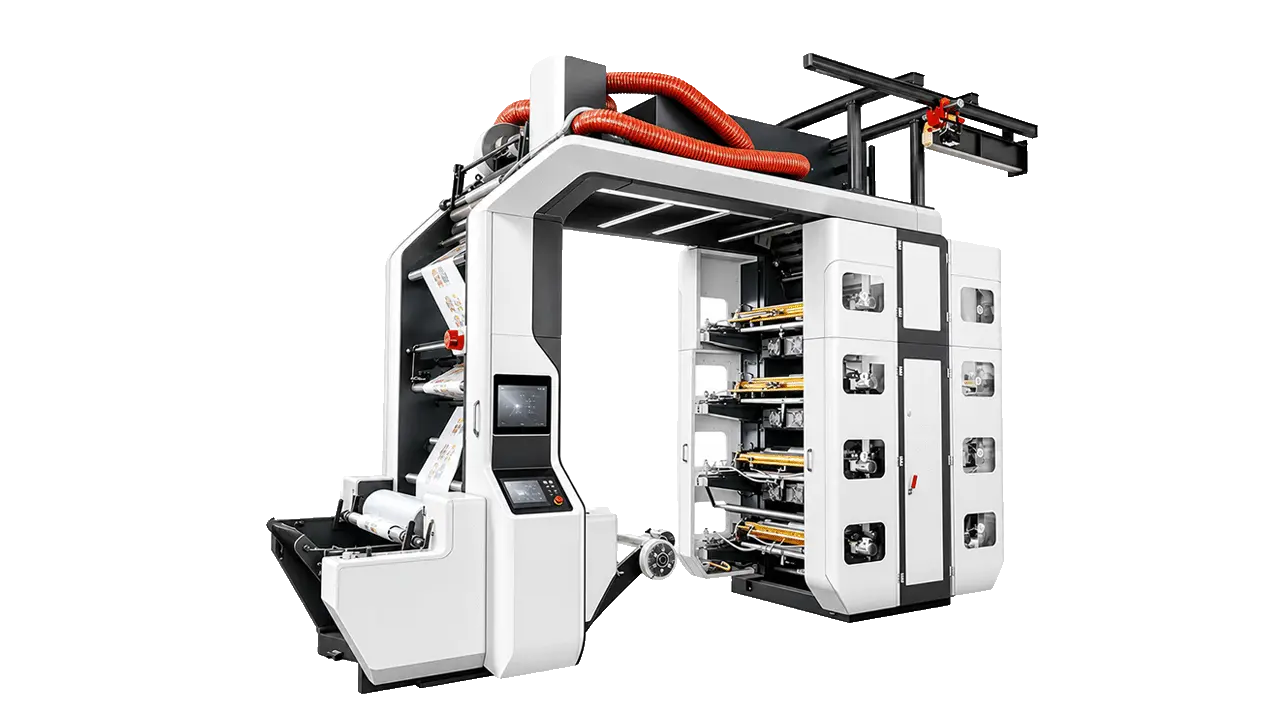
The LQ-4C and LQ-4CH produce identical 4-color output.
The choice between them is a production volume decision —
and a factory floor space decision.
4-color registration is more demanding than 2-color.
Every dimension in this table has a direct consequence
for print quality, throughput, and operating cost.
Dimension
Standard
LQ-4C
High-Speed
LQ-4CH
Why It Matters for 4-Color
Drive System
Variable frequency motor
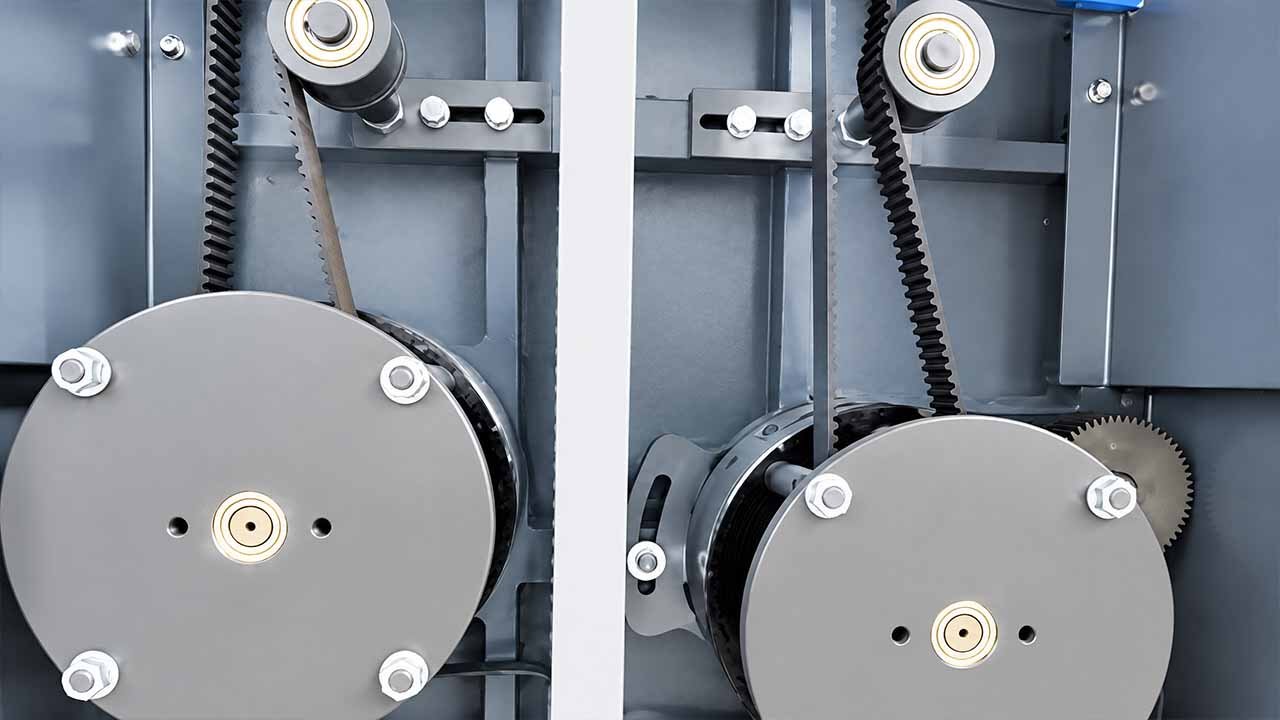
Synchronous belt transmission
4-color registration requires all four print stations to maintain identical surface speed simultaneously. Synchronous belt transmission eliminates speed variation between stations during acceleration and deceleration — the window where registration errors compound across 4 colors. At 50 m/min, VFD drive is sufficient. Above 80 m/min, synchronous belt becomes necessary.
At 80–100 m/min vs. 40–50 m/min average, the LQ-4CH produces approximately 2× the output per shift. For large continuous orders of branded bags, this directly affects your cost per unit. Note: 8 m/min is the slow-speed calibration range used during job setup and color registration checks — not a production speed.
EPC Edge Position Control
Not included
Hydraulic EPC
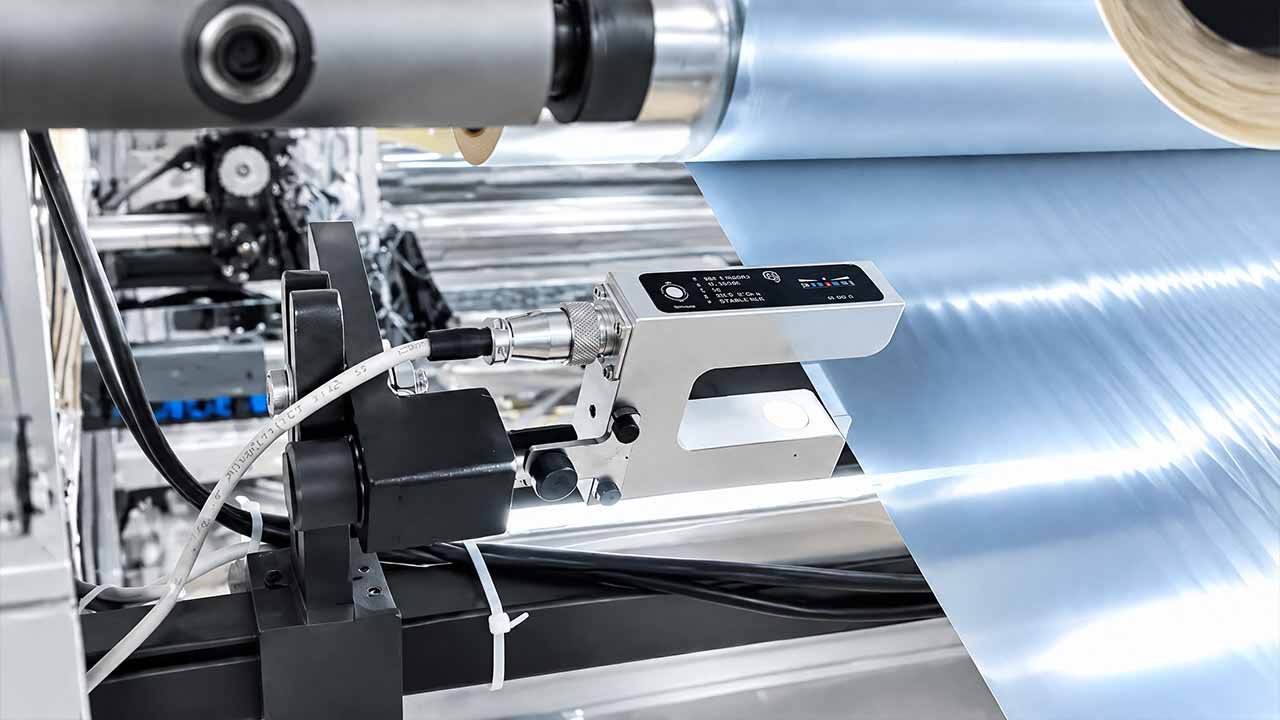
In 4-color printing, lateral substrate drift causes all four colors to shift simultaneously — the misregistration is visible as color fringing on every printed element. Hydraulic EPC corrects drift in real time. At 100 m/min, manual correction is not practical. The LQ-4C manages without EPC at 50 m/min, but requires attentive operators on extensible PE film.
Registration Precision
Standard — adequate at 50 m/min
Higher — synchronous belt + EPC combined
4-color printing has zero tolerance for registration error — a 0.3mm shift on one color station produces visible color fringing that makes the print look blurred. The LQ-4CH's combination of synchronous belt drive and hydraulic EPC provides a tighter registration envelope than the LQ-4C, particularly important for fine-detail brand logos and small text.
Plate Thickness Accepted
2.38mm (fixed) incl. double-sided tape
1.14–3.94mm full range
The LQ-4CH accepts all standard flexo plate thicknesses including thin digital photopolymer plates (1.14mm / 1.70mm). The LQ-4C is fixed at 2.38mm — confirm your plate supplier's standard before ordering. For 4-color work, plate quality and consistency are more critical than for 2-color, so plate supplier compatibility is a real procurement consideration.
Machine Length
4,200mm 4 stations + drying
6,800mm 4 stations + extended oven
Both 4-color machines are significantly longer than their 2-color equivalents (LQ-2C: 1,900mm / LQ-2CH: 6,800mm). If you are upgrading from a 2-color line, the LQ-4C at 4,200mm requires a minimum floor length of approximately 6–7m. The LQ-4CH at 6,800mm requires 9m+. Verify your floor plan before ordering either machine.
Machine Weight
4,000–5,000 kg
600mm: 4,000 kg / 800mm: 4,500 kg / 1000mm: 5,000 kg
5,000–6,000 kg depending on width model
Both series require a reinforced industrial floor. The LQ-4C ranges from 4,000 kg (600mm model) to 5,000 kg (1000mm model). The LQ-4CH ranges from 5,000 kg to 6,000 kg. Confirm your floor's load-bearing capacity before installation — standard residential-grade concrete floors are typically not sufficient for either series.
Drying System
Standard drying per station
Extended high-capacity oven
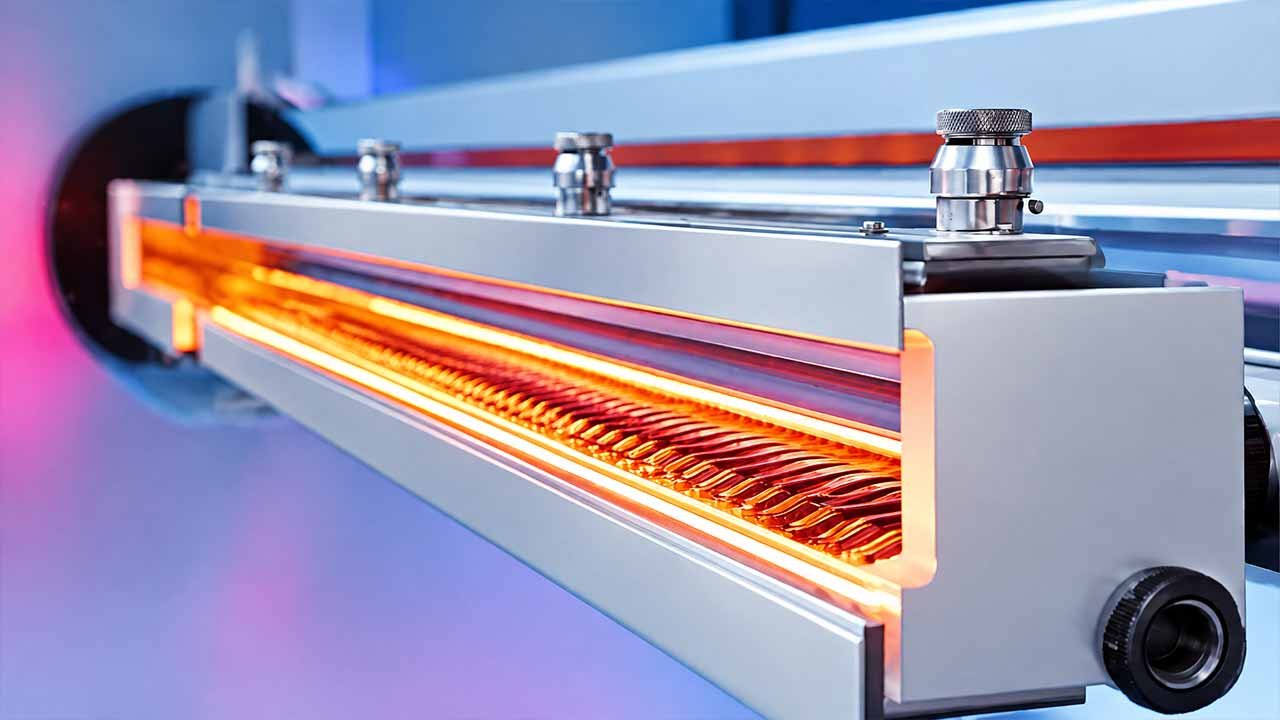
4-color printing requires complete ink cure between each station — if ink from station 1 is not fully dry before station 2 prints over it, the two inks mix and produce muddy, inaccurate colors. The LQ-4CH's extended oven provides greater dwell time at high speed. The LQ-4C's standard drying is sufficient at 50 m/min.
Operator Skill Level
Moderate — 4-color setup requires care
Experienced operators required
4-color printing is more complex to set up than 2-color regardless of machine. Color sequence, ink viscosity, anilox roller selection and drying temperature must all be calibrated for each job. The LQ-4C's lower speed gives operators more time to make adjustments. The LQ-4CH adds EPC and high-speed parameters that require a more experienced team.
Entry Investment
Lower
Higher
Contact LayerQuestar for current pricing. The LQ-4CH's higher cost is justified when your production volume is large enough that the throughput difference generates measurable cost-per-unit savings. For operations running below full capacity, the LQ-4C delivers better return on investment.
Both series are available in three substrate widths.
Select the series, then identify the width model
that matches your largest substrate requirement.
Parameter
LQ-4C-600
LQ-4C-800
LQ-4C-1000
Max Substrate Width
600mm (23.6")
800mm (31.5")
1000mm (39.4")
Max Printing Width
560mm (22.0")
760mm (29.9")
960mm (37.8")
Print Length Range
200–1100mm
Max Roll Diameter
⌀450mm
Printing Speed
5–50 m/min
Plate Thickness
2.38mm (incl. double-sided tape)
Number of Print Stations
4
Machine Size (L×W×H)
4200×1600×2400mm
4200×1800×2400mm
4200×2000×2400mm
Machine Weight
4,000 kg
4,500 kg
5,000 kg
Compatible Substrates
PE, PP, glass paper, roll paper, non-woven fabric
Which width model do you need?
600mm
Small-format branded bags: food pouches, small retail bags, T-shirt bags up to ~550mm wide. Smallest footprint — machine width 1,600mm, suitable for space-constrained facilities entering 4-color production.
Most Common800mm
Standard supermarket shopping bags, food service bags, garment bags, courier mailers. The most common LQ-4C configuration for converters entering the retail brand packaging market. Machine width 1,800mm.
1000mm
Wide-format branded bags, large supermarket carriers, industrial packaging with brand printing. Also enables multi-lane layouts — printing two narrow branded bags side by side on a single wide roll. Machine width 2,000mm.
PE film, PP film, paper, woven bag, non-woven fabric
Floor space note: The LQ-4CH requires a minimum floor
length of approximately 9–10m (machine 6,800mm + operator clearance at
both ends). Ceiling height minimum 3.2m recommended. Floor load capacity
must support 5,000–6,000 kg depending on width model.
If you are upgrading from a 2-color line, note that the LQ-4CH is
4,900mm longer than the LQ-2CH — a significant floor plan change.
Confirm all facility dimensions with LayerQuestar before ordering.
Which width model do you need?
600mm
High-speed narrow-format branded bag production. Small retail bags, food pouches, T-shirt bags at continuous high volume. Machine width 1,800mm.
Most Common800mm
The most common LQ-4CH configuration for high-volume converters supplying supermarket chains, food service brands and garment retailers. Machine width 2,000mm — same as the 1000mm model, making the 1000mm a straightforward capacity upgrade.
1000mm
Maximum throughput configuration for wide-format or multi-lane high-speed branded bag printing. Same machine width as the 800mm model — no additional floor space required in the width dimension.
The LQ-4C and LQ-4CH share LayerQuestar's core build standard.
Hardware differences between the two series are noted on each card.
Drive System
LQ-4C: VFD MotorLQ-4CH: Sync Belt
The LQ-4C uses variable frequency motor drive — reliable and
straightforward to maintain at 50 m/min. The LQ-4CH uses
low-noise synchronous belt transmission across all four print
stations simultaneously. In 4-color printing, all stations must
maintain identical surface speed — any variation between stations
causes color-to-color misregistration. Synchronous belt eliminates
this variation during acceleration and deceleration, where
registration errors are most likely to occur.
Anilox Roller Ink Transfer
Both Series
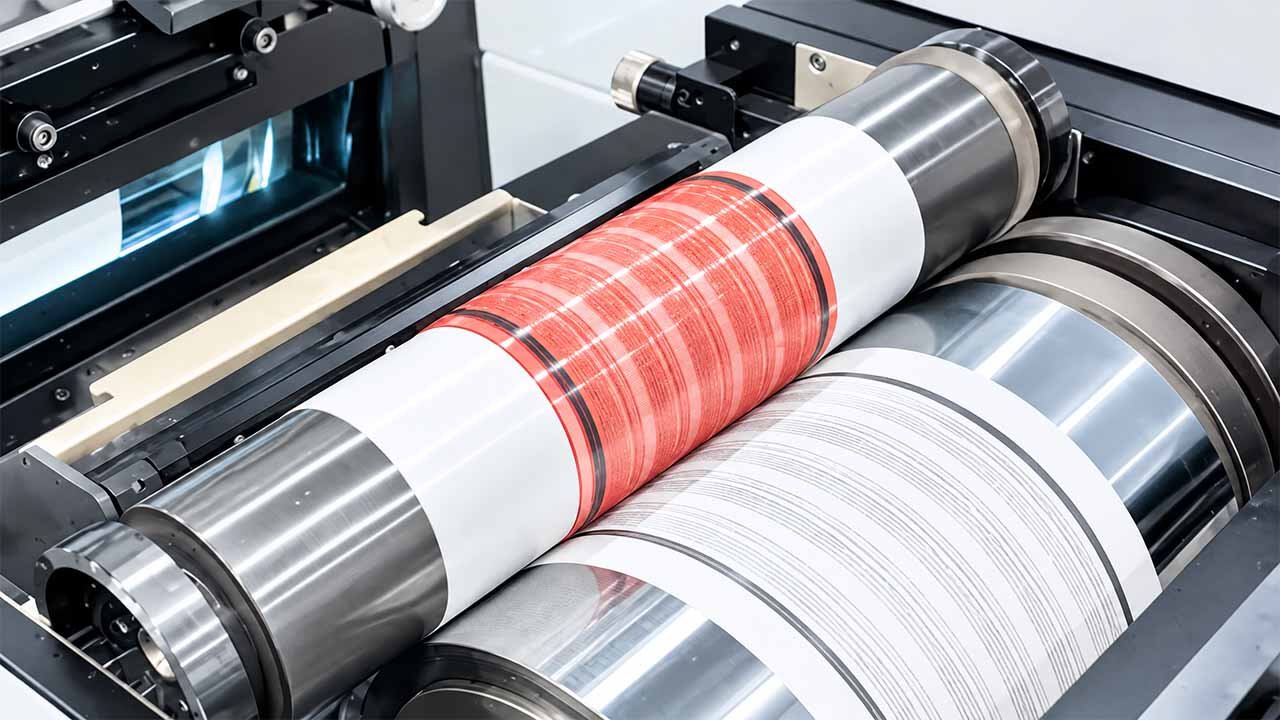
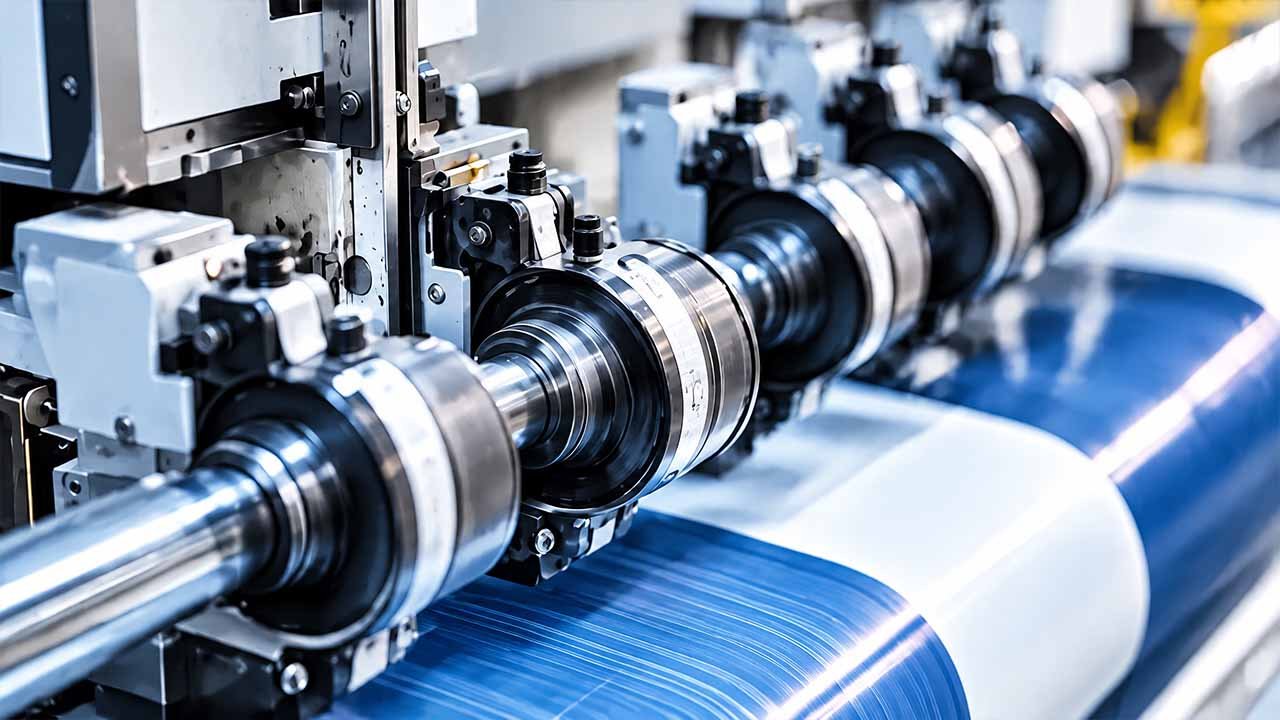
Each of the four print stations uses a precision-engraved anilox
roller to meter ink transfer to the printing plate. The anilox
roller's cell structure controls the exact volume of ink delivered
per station — ensuring consistent color density across the full
substrate width and throughout the production run. In 4-color
printing, ink volume consistency per station is the foundation of
accurate color reproduction. Anilox rollers are a wear component:
cell walls erode over time, reducing ink transfer volume and
causing color drift. LayerQuestar supplies replacement anilox
rollers as standard spare parts — confirm specification and
lead time with the after-sales team when ordering your machine.
Inter-Station Drying System
LQ-4C: Standard per-stationLQ-4CH: Extended high-capacity oven
4-color printing requires complete ink cure between each station.
If ink from station 1 is not fully dry before station 2 prints
over it, the two inks mix — producing muddy, inaccurate colors
that cannot be corrected without stopping the run. Both series
use a central constant-temperature heating system with
auto-shutdown when the machine stops, preventing ink from
baking onto the substrate during downtime. The LQ-4CH's
extended high-capacity oven provides greater dwell time at
speeds up to 100 m/min, ensuring complete cure even at
maximum production speed.
EPC Edge Position Control
LQ-4CH Only
Hydraulic edge position control automatically corrects lateral
substrate drift in real time — no manual material re-alignment
required during production runs. In 4-color printing, lateral
drift causes all four colors to shift simultaneously, producing
visible color fringing on every printed element across the full
width of the substrate. At 100 m/min, a 0.5mm drift that goes
uncorrected for 10 seconds results in 16 meters of defective
print. The LQ-4C does not include EPC — operators manage
alignment manually, which is practical at 50 m/min with
attentive operation.
Tension Control System
LQ-4C: PneumaticLQ-4CH: Hydraulic + Pneumatic
Both series use pneumatic unwinding tension control with
friction-type winding, producing compact, even roll diameter
throughout the production run. The LQ-4CH adds a hydraulic
layer for greater tension stability at high speed. In 4-color
printing, tension variation causes print repeat length to
fluctuate between stations — even a 0.1mm repeat variation
accumulates into visible misregistration over a long run.
Consistent substrate tension is therefore more critical in
4-color than in 2-color printing.
Factory Acceptance Test
72-Hour Continuous Run — Both Series
Every LayerQuestar 4-color flexo printer undergoes a 72-hour
continuous factory run test before shipment. For 4-color machines,
the test protocol includes: color-to-color registration accuracy
across the full speed range, ink transfer consistency per station
across the full substrate width, inter-station drying performance
at maximum speed, tension stability during acceleration and
deceleration, and EPC correction response time (LQ-4CH).
Test results are documented and provided with the machine.
National High-Tech EnterpriseProvincial Innovative SME123+ Patents Granted
FAQ
Questions Buyers Ask Before Choosing
The most common questions when deciding on a 4-color flexo printer —
from "do I need 4 colors" to "how much floor space does it require."
What is the real visual difference between 2-color and 4-color printing?
2-color printing produces a brand name, text and simple graphics in two distinct colors — typically a background color and a foreground color. There are no gradients, no tonal transitions, and no multi-color logos. 4-color printing uses a near-CMYK process (cyan, magenta, yellow, black) that can reproduce gradients, tonal photography, multi-color brand logos, and complex graphic designs. The practical difference for a bag converter is this: if your customers are retail brands, food service chains, or garment retailers, they almost always require 4-color printing as a minimum standard. If your customers are industrial buyers, logistics companies, or internal-use packaging buyers, 2-color is typically sufficient.
How does 4-color registration work, and why is it harder than 2-color?
Registration is the alignment of each color station's print to the same position on the substrate. In 2-color printing, a misregistration of 0.5mm between two colors produces a visible but often acceptable color shift. In 4-color printing, the same 0.5mm error affects all four colors simultaneously — the result is color fringing on every edge of every printed element, making the entire design look blurred or out of focus. 4-color registration is harder because there are four stations to align instead of two, and because the error compounds: if station 1 is 0.2mm off and station 3 is 0.2mm off in the opposite direction, the effective misregistration between those two colors is 0.4mm. This is why drive system quality (synchronous belt vs. VFD) and substrate tension consistency matter more in 4-color printing than in 2-color.
The LQ-4CH speed starts at 8 m/min. Does that mean it sometimes runs that slowly?
8 m/min is the slow-speed calibration range used during job setup — not a production speed. When operators start a new job on the LQ-4CH, they run the machine slowly to check color registration, verify ink viscosity and density, confirm drying temperature, and make fine adjustments before ramping up to production speed. This calibration phase typically takes 10–20 minutes per job change. Once the machine is dialed in, production speed runs at 80–100 m/min. The 8 m/min figure is published because it defines the machine's full operating range — but for production planning purposes, use 80–100 m/min as your throughput basis.
How much floor space does each machine require?
The LQ-4C (800mm model) has a machine footprint of 4,200 × 1,800 × 2,400mm. Allow at least 1m operator clearance on all sides plus feed and exit space for material rolls — a practical floor allocation of approximately 7m × 4m. The LQ-4CH is significantly larger at 6,800 × 2,000 × 2,900mm. Allow a minimum floor length of 9–10m. If you are currently running a 2-color line and considering an upgrade: the LQ-4C is 2,300mm longer than the LQ-2C (4,200mm vs. 1,900mm), and the LQ-4CH is the same length as the LQ-2CH (both 6,800mm) but taller (2,900mm vs. 2,300mm). Ceiling height and floor load capacity (5,000–6,000 kg for LQ-4CH) must both be confirmed before ordering.
What are anilox rollers and how often do they need to be replaced?
Anilox rollers are precision-engraved cylinders that meter the exact volume of ink transferred from the ink tray to the printing plate at each station. The surface is covered with microscopic cells — the cell volume and line count (measured in lines per centimetre, LPC) determine how much ink is delivered. Over time, these cells wear and become partially blocked with dried ink, reducing transfer volume and causing color density to drift. Replacement frequency depends on production volume, ink type, and cleaning practices — in a high-volume operation running water-based inks with proper cleaning, anilox rollers typically last 2–5 years before measurable cell wear affects print quality. LayerQuestar supplies replacement anilox rollers as standard spare parts. Confirm the specification (cell volume and LPC) for your specific substrate and ink system with the LayerQuestar after-sales team when ordering your machine.
My operators have experience with 2-color printing but not 4-color. Which machine is more suitable?
The LQ-4C is the more appropriate starting point for operators transitioning from 2-color to 4-color printing. Its lower operating speed (50 m/min maximum) gives operators more time to observe and adjust color registration, ink viscosity, and drying temperature during a run. The slower speed also means that when a registration error occurs — and it will, during the learning phase — less substrate is wasted before the operator identifies and corrects it. The LQ-4CH's higher speed and additional systems (EPC, extended oven, dual tension control) require operators who already understand 4-color registration fundamentals. LayerQuestar provides on-site commissioning support and operator training for both series — confirm the training scope and duration with the sales team when ordering.
How long does a job changeover take on a 4-color machine?
A full job changeover on a 4-color machine — replacing all four plates, cleaning all four ink trays and anilox rollers, loading new ink, and re-calibrating registration — typically takes 45–90 minutes depending on operator experience and the complexity of the new design. This is significantly longer than a 2-color changeover (20–40 minutes). The practical implication: if you run many different designs in small quantities, the changeover time per job becomes a significant portion of your total machine time. In this scenario, the LQ-4C's lower speed is less of a disadvantage, because the machine is frequently stopped for changeovers anyway. The LQ-4CH's throughput advantage is most pronounced on long continuous runs of the same design.
When should I consider 6-color instead of 4-color?
4-color printing covers approximately 90–95% of plastic bag printing requirements. The specific scenarios where 6-color becomes relevant are: (1) your customer's brand guidelines specify exact Pantone spot colors that cannot be reproduced accurately through CMYK process mixing — common in premium cosmetics, luxury fashion, and international retail chains with strict brand color standards; (2) you are printing on substrates where CMYK gamut is limited and extended color gamut printing is contractually required; (3) you are targeting the high-end gift bag or premium carrier bag market where color accuracy is a competitive differentiator. If none of these apply to your current customer base, 4-color is the right starting point. You can always add a 6-color line later as your market moves upmarket — it is a separate machine investment, not an upgrade to the 4-color line.
Next Steps
Complete Your Production Line
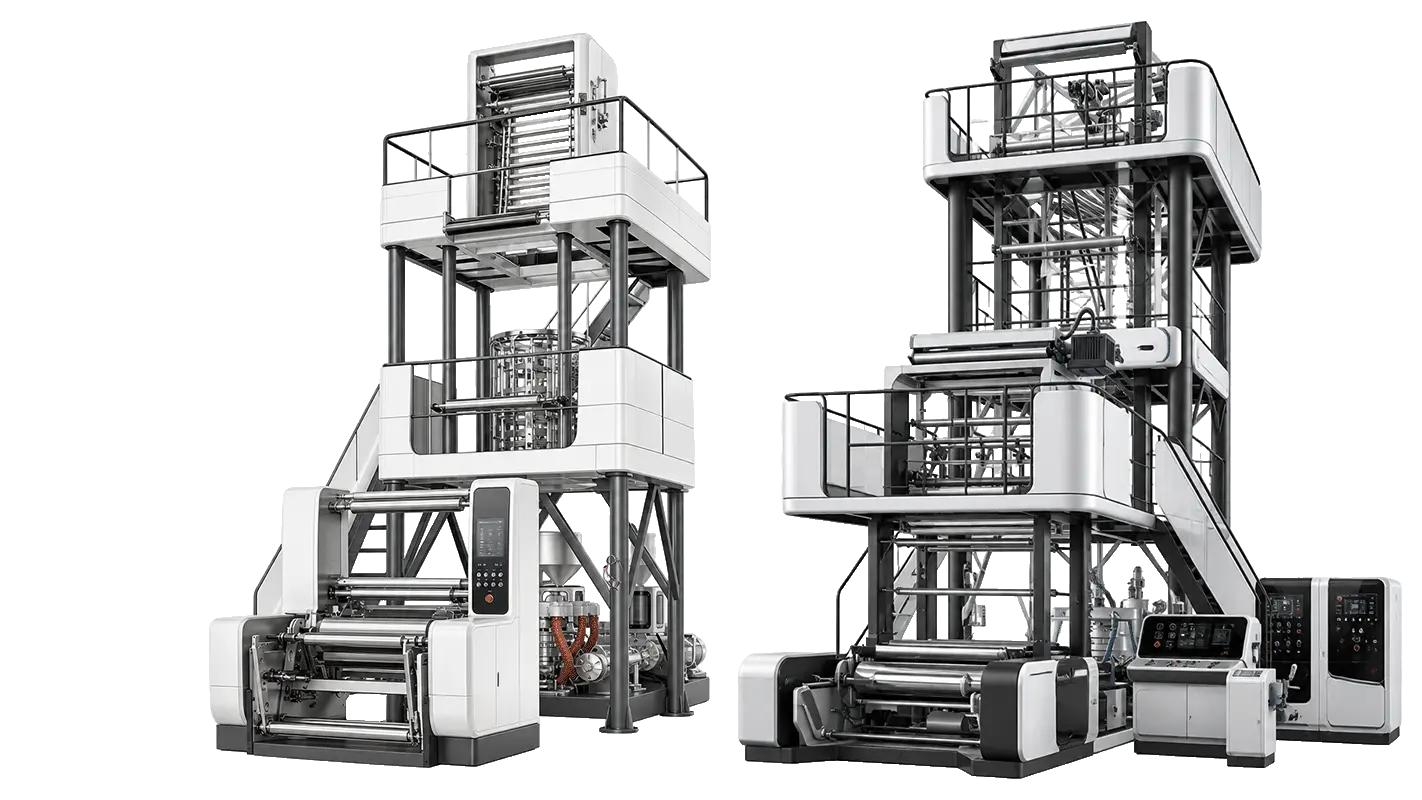
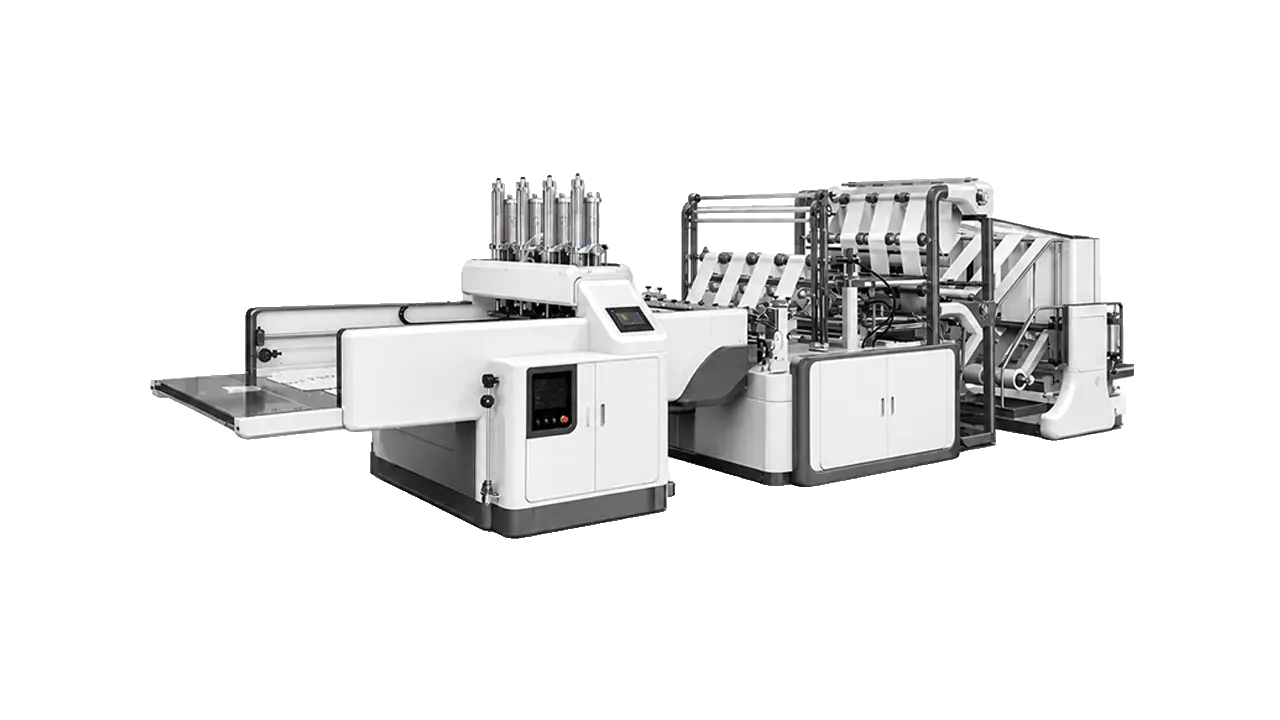
A 4-color flexo printer sits in the middle of your production chain.
LayerQuestar supplies every machine upstream and downstream.
Tell us your substrate, your monthly print volume, your target bag
format, and whether your customers require specific color standards.
LayerQuestar's team will confirm whether the LQ-4C or LQ-4CH is the
right fit — and which width model matches your production requirements.