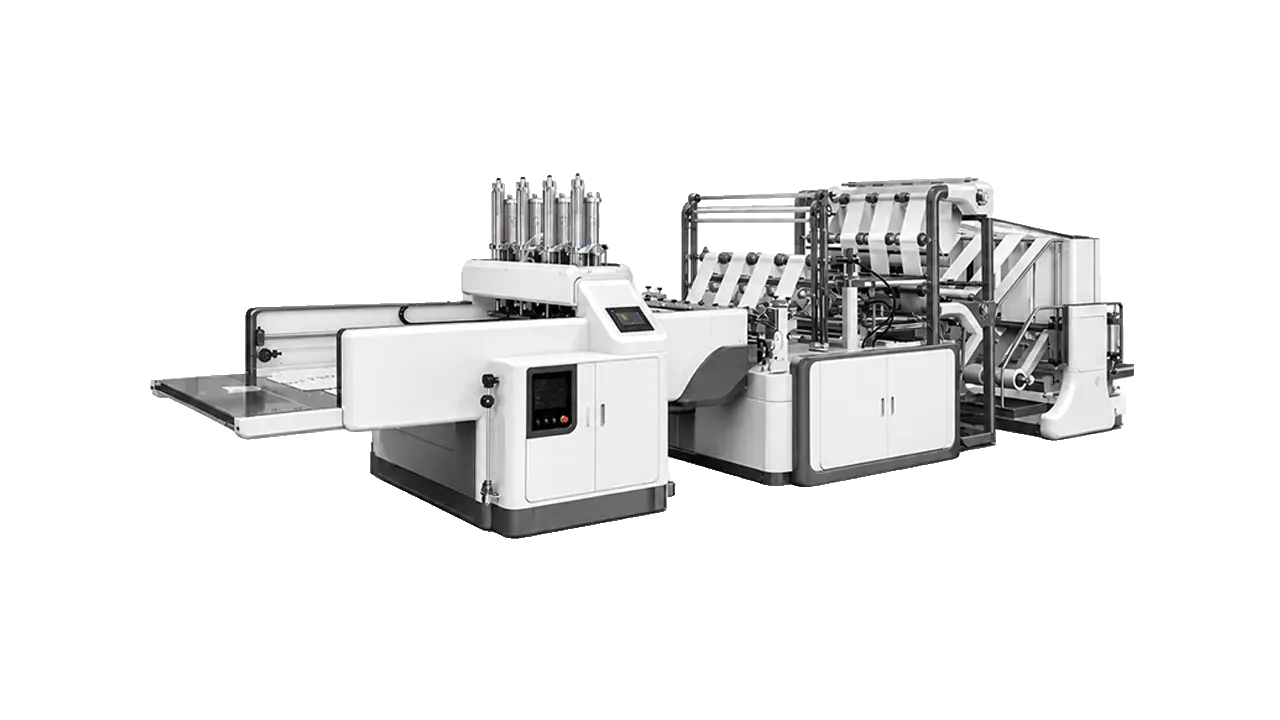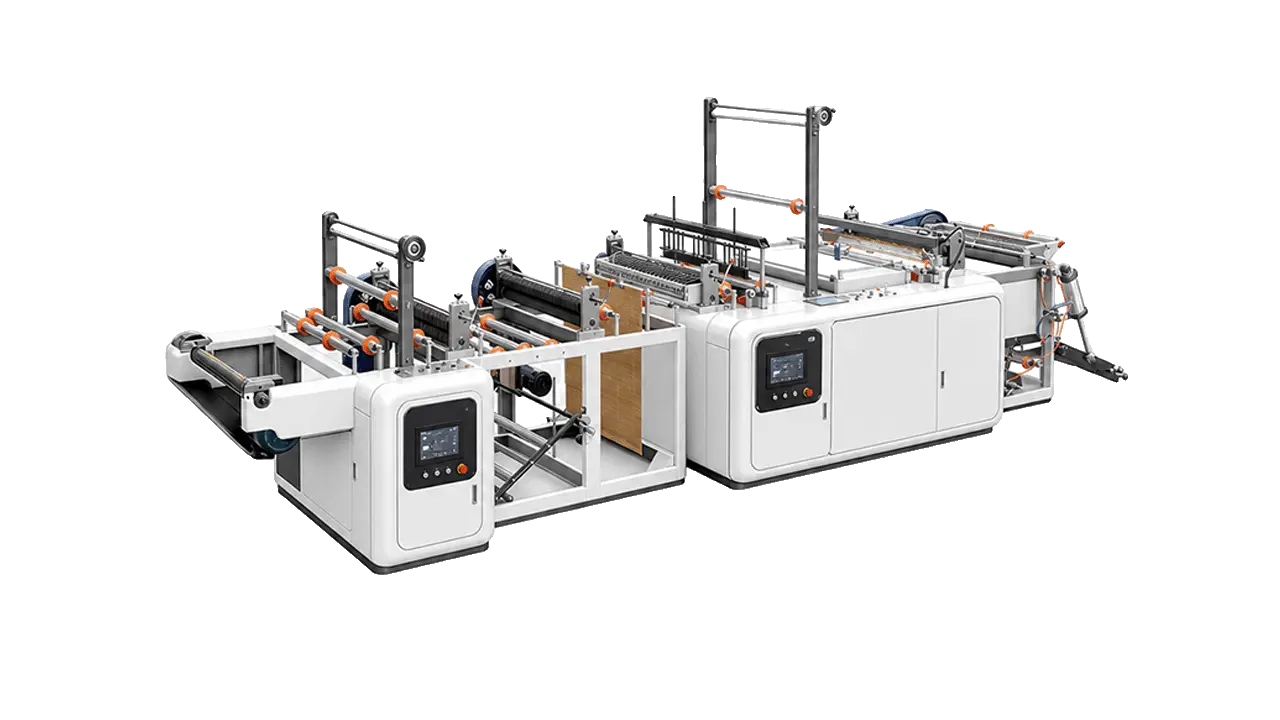
Produces retail-ready bags on a roll — perforated for easy tear-off, wound to your specified count. Garbage bags, supermarket roll bags, product packaging sleeves and sanitary bags. Four models from 480 mm to 780 mm bag width.
Unlike standard bag making machines that output individual stacked bags, the LQ-CRB series outputs finished bags wound onto a roll — perforated between each bag for clean hand tear-off. The result is a retail-ready or production-line-ready product that requires no secondary packaging step.
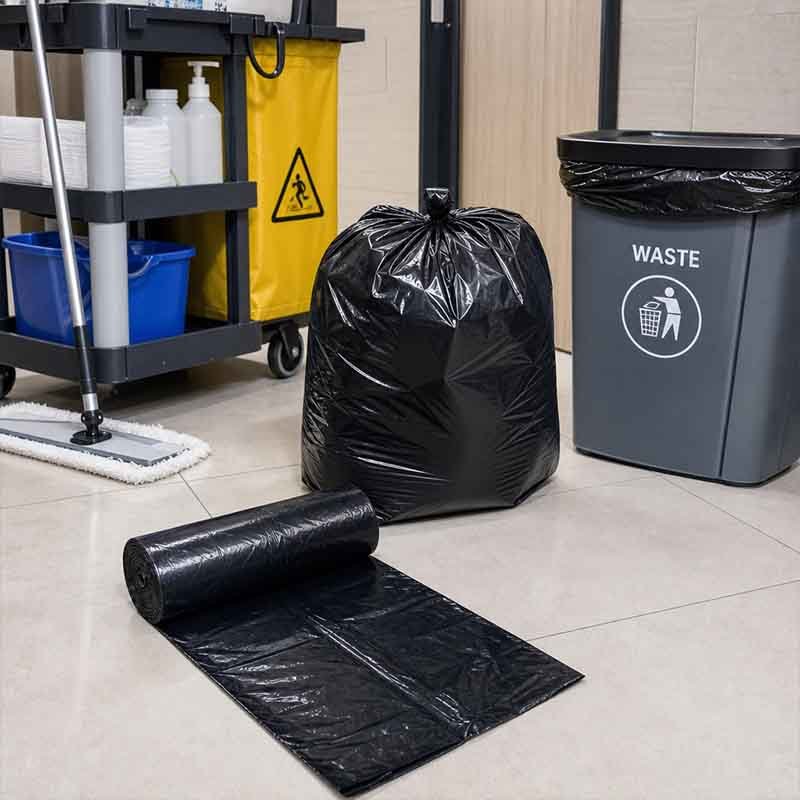
Household and commercial waste bags wound onto a coreless or cored roll. Each bag is separated by a perforation line — consumers tear off one bag at a time. Typical count: 10–50 bags per roll depending on bag size and thickness.
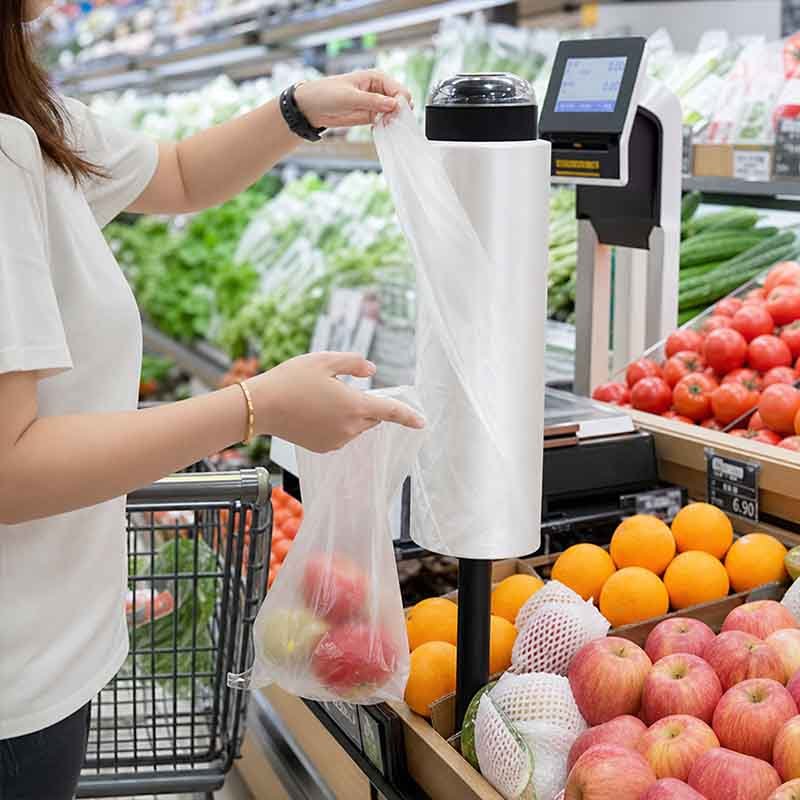
Produce bags and checkout bags dispensed from a roll holder in supermarkets and retail stores. Customers tear off individual bags at the point of use. High-volume output with consistent perforation spacing is critical for this application.
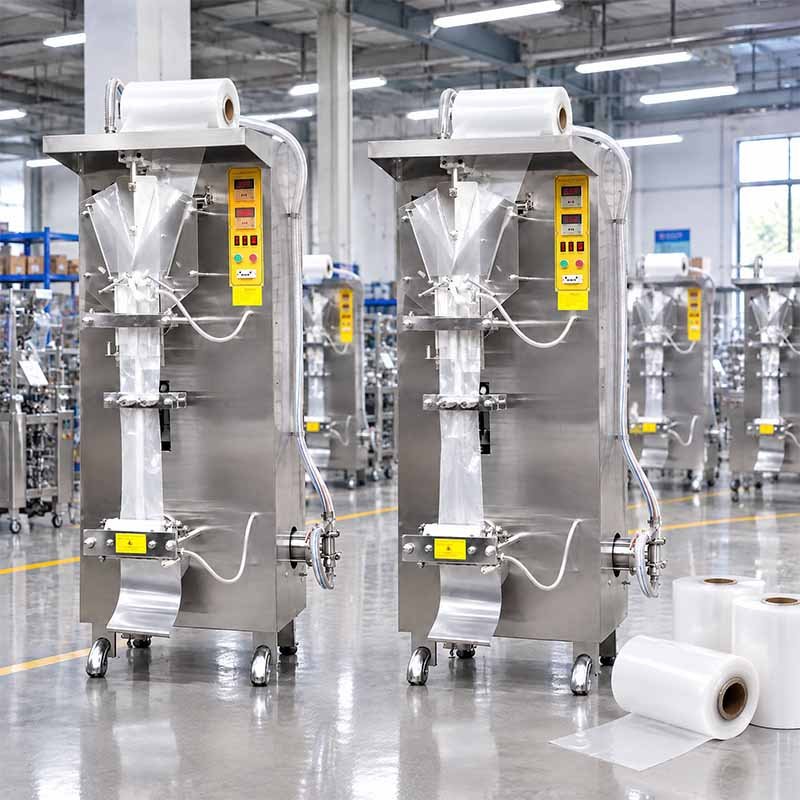
Bags used as product packaging sleeves on a factory production line. The roll feeds directly into an automated filling or sleeving station — operators or machines tear off one bag per product cycle. Common in food processing, bakery, and light industrial packaging.
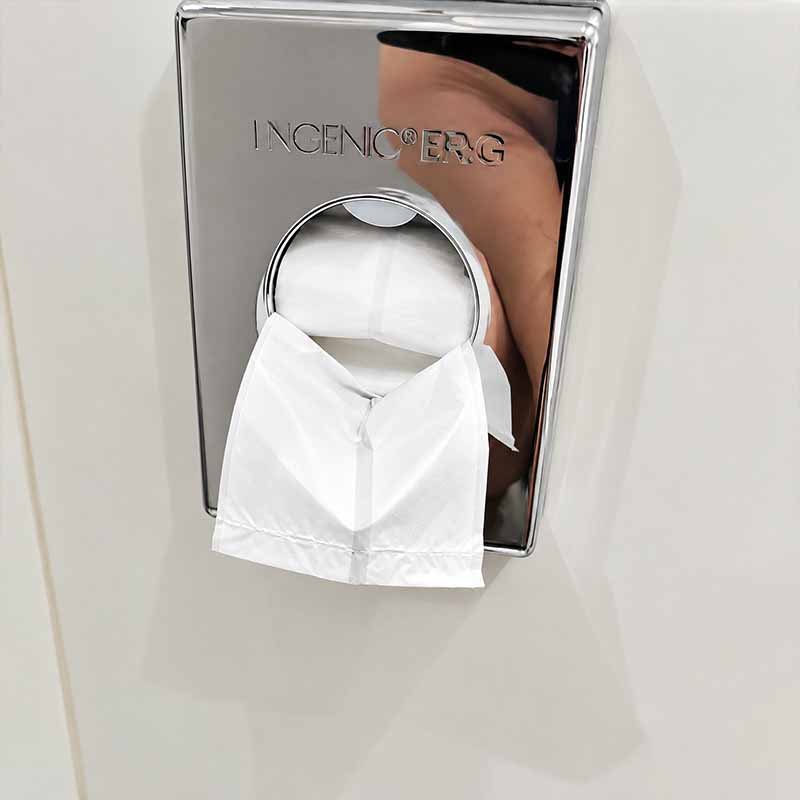
Individually dispensed sanitary bags for hotel bathrooms, medical facilities, and public washrooms. Compact roll format fits standard wall-mounted dispensers. Thin HDPE film provides the right balance of opacity and tear strength for this application.
LayerQuestar's LQ-CRB series continuous roll bag making machine is the only machine in the LayerQuestar range that outputs bags in roll format. All other LayerQuestar bag making machines output individual stacked bags. If your product requires bags dispensed from a roll — whether for retail shelf display, supermarket dispensers, hotel amenity kits, or factory production lines — the LQ-CRB series is the correct machine family. For individual stacked flat bags, see the Flat Bag Making Machine .
The LQ-CRB series uses a four-stage process to convert a flat film roll into finished bags wound onto an output roll. Understanding each stage helps you specify the correct model and configure the right output format for your product.
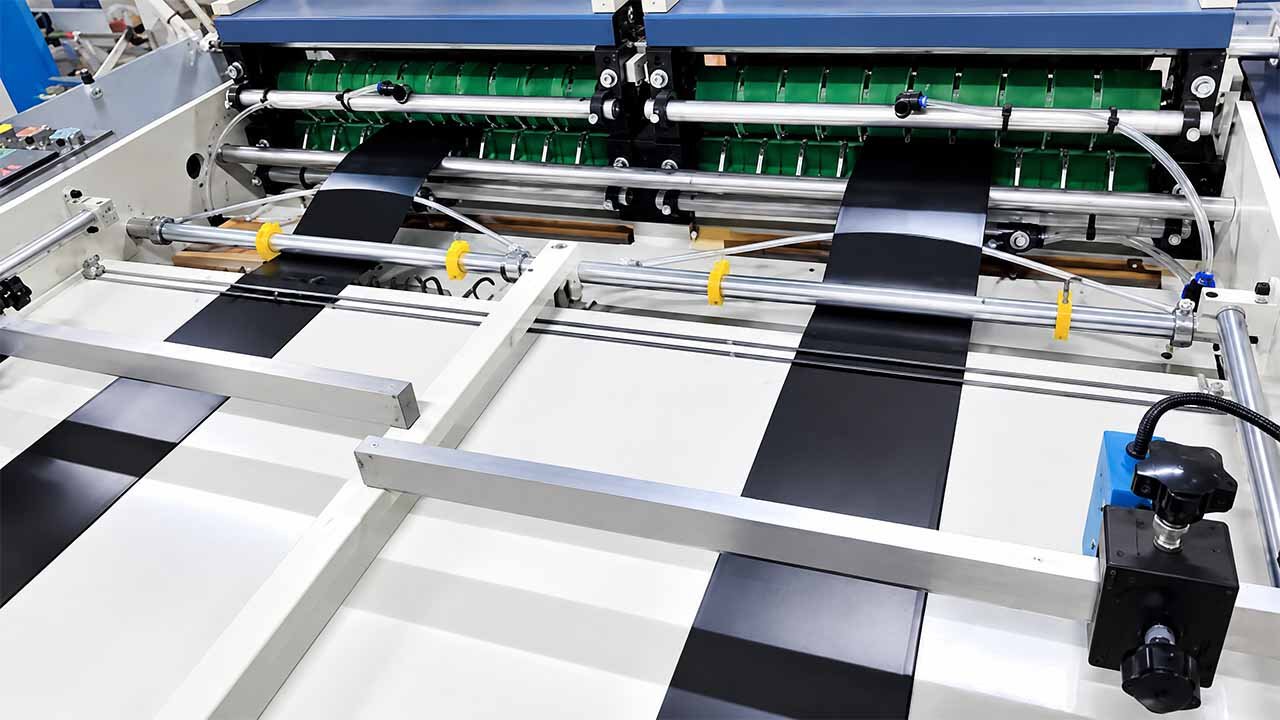
A pre-wound flat film roll (tubular or centre-folded) is loaded onto the unwind station. The microcomputer-controlled stepping motor — or optional servo motor — pulls the film forward in precise, programmable increments. The photoelectric eye reads printed registration marks on the film surface and adjusts feed length in real time to keep every seal and perforation aligned with the printed bag pattern.
The sealing bar descends and applies heat across the full bag width, creating a flat bottom seal. The LQ-CRB series uses flat-seal technology — the seal runs straight across the bag width in a single line. Seal temperature and dwell time are set via the digital control panel and maintained consistently across the full production run.
This is the critical difference between the LQ-CRB series and all other LayerQuestar bag making machines. Instead of a cutting blade that severs the film completely, the perforation unit creates a line of micro-holes across the film between each bag. The film remains physically continuous — bags stay connected on the roll. The perforation spacing and the number of bags per roll are both operator-programmable via the microcomputer control panel.
The finished perforated bag chain feeds into the integrated winding station — standard on all LQ-CRB models. The winding unit collects the continuous bag chain onto an output roll at controlled tension. When the preset bag count is reached, the machine signals the operator to change the output roll. The finished roll is retail-ready or production-line-ready with no secondary packaging required.
Every other LayerQuestar bag making machine severs the film completely to produce individual bags. The LQ-CRB series perforates — creating the tear-off line between bags while keeping the roll intact. This single design decision is what makes the LQ-CRB the correct machine for any product that must be dispensed from a roll.
All four LQ-CRB models share the same speed range, maximum bag length, film thickness range, and machine length. The only differentiator is maximum bag width. Select the model that matches your widest required bag format — you can always run narrower bags on a wider model.
Verified factory data. Output figures are theoretical maximums under standard operating conditions; actual production output varies by bag size, film material and perforation setting.
| Parameter | LQ-CRB-500 | LQ-CRB-600 | LQ-CRB-700 | LQ-CRB-800 |
|---|---|---|---|---|
| Max. Bag Width | 480 mm | 580 mm | 680 mm | 780 mm |
| Max. Bag Length (Cutting Length) | 999 mm | |||
| Film Thickness Range | 0.008–0.025 mm (8–25 μm) | |||
| Production Speed | 30–120 pcs/min | |||
| Total Power | 3.2 kW | 3.4 kW | 3.6 kW | 4.2 kW |
| Machine Size (L×W×H) | 3350×900×1500 mm | 3350×1000×1500 mm | 3350×1100×1500 mm | 3350×1250×1500 mm |
| Machine Weight | 650 kg | 750 kg | 800 kg | 900 kg |
| Compatible Materials | HDPE · LDPE · PP | |||
| Seal Type | Flat seal (straight bottom seal) | |||
| Output Format | Continuous roll with perforation (bags not cut through) | |||
| Bags per Roll | Operator-programmable via microcomputer control panel | |||
| Perforation Spacing | Adjustable — set to match bag length | |||
| Drive System | Stepping motor (standard) · Servo motor (optional upgrade) | |||
| Control System | Microcomputer + photoelectric eye registration | |||
| Roll Winding | Integrated winding station — standard on all models | |||
Minimum clear floor area: 5 m × 3 m per machine. Allow 1.5 m at rear for film roll loading and 2 m at front for output roll collection and changeover.
380V / 3-phase / 50Hz standard. Voltage fluctuation should not exceed ±10% for stable stepping motor and sealing temperature performance.
1–2 operators per machine per shift. One operator manages machine settings, perforation count programming and film feeding. One assistant handles output roll changes and finished roll collection.
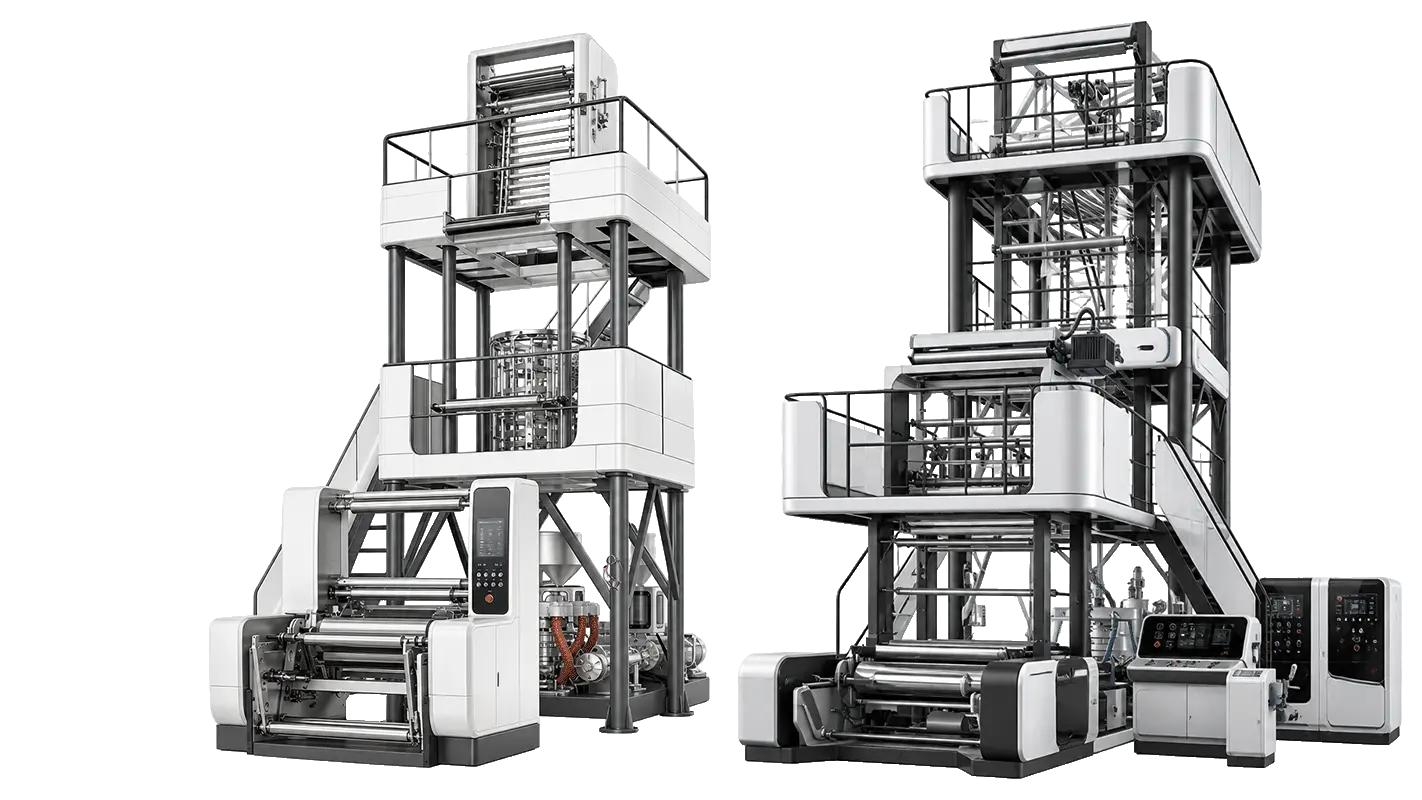
Machine accepts pre-wound flat film rolls. For in-house film production, a LayerQuestar blown film machine is recommended upstream. View Blown Film Machines →
The LQ-CRB series gives you full control over three output parameters: bags per roll, perforation strength, and roll diameter. These are set on the microcomputer control panel before each production run and can be changed between runs without tooling changes.
Set the exact number of bags per finished roll on the microcomputer control panel. The machine counts automatically and signals the operator when the preset count is reached. Typical configurations:
Exact count range depends on bag size, film thickness and output roll diameter. Confirm your target count with LayerQuestar at order stage.
Perforation spacing is set to match your bag length. The perforation unit creates the tear-off line at the exact interval required. Key considerations for perforation configuration:
The drive system choice affects perforation accuracy and long-term consistency — especially important for printed bags where the perforation must align with the printed design on every bag in the roll.
The LQ-CRB series serves one specific output requirement: bags on a roll. Use the profiles and decision table below to confirm fit.
| My Requirement | Recommended Direction |
|---|---|
| Bags dispensed from a roll (retail / dispenser / production line) | → Continuous Roll Bag Machine — LQ-CRB Series |
| Individual stacked bags, no roll format needed | → Flat Bag Making Machine |
| Bags with handle punch for hand-carrying | → T-shirt Bag Making Machine |
| Need specific bag count per roll (e.g. 20 per roll) | → LQ-CRB Series — count is operator-programmable |
| Printed roll bags requiring precise registration | → LQ-CRB Series with servo motor upgrade |
| Bag width > 780 mm on a roll | → Contact LayerQuestar — custom configuration required |
| Not sure which format fits my product | → Contact LayerQuestar Technical Team |
Five hardware standards applied to every LQ-CRB machine before shipment, verified by a 72-hour continuous factory acceptance test.
Uniform temperature across the full sealing width. Consistent seal quality is critical for roll bags — a weak seal on any bag in the roll compromises the entire roll's usability.
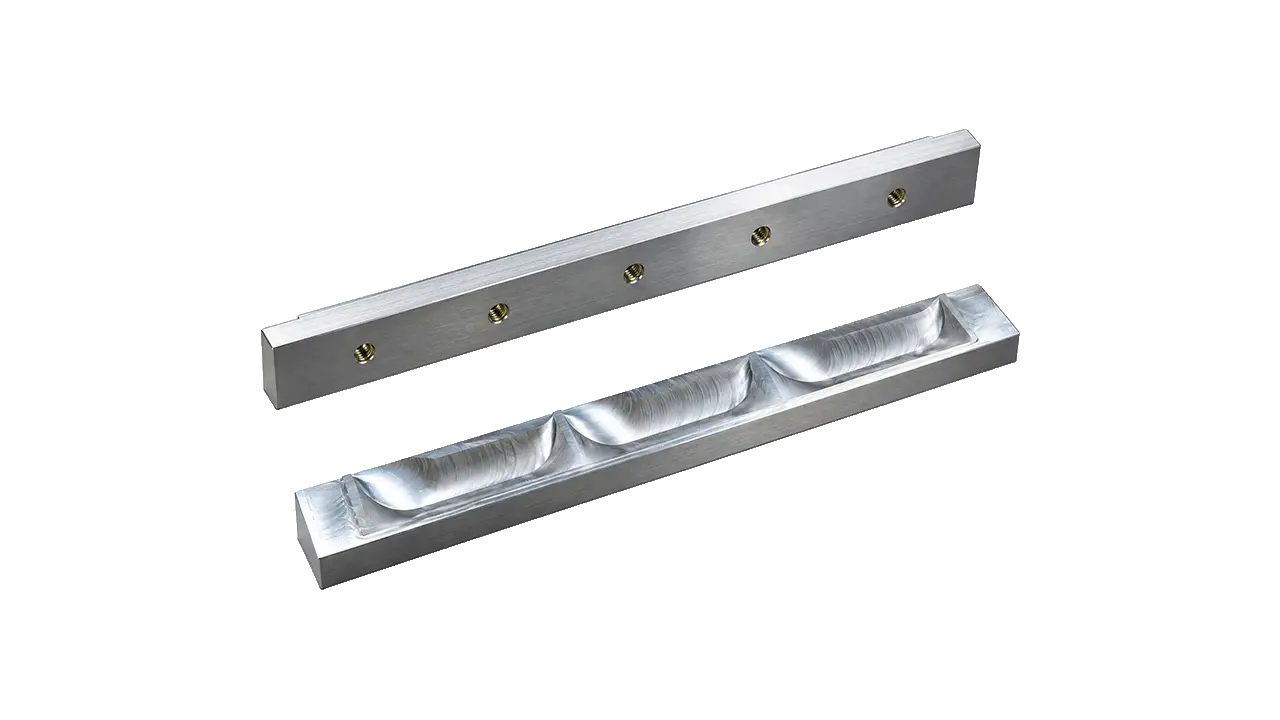
Precision perforation needle bar creates consistent tear-off lines between bags. Perforation spacing is adjustable to match any bag length within the machine's range without tooling changes.
Standard on all LQ-CRB models. Controlled-tension winding produces neat, uniform output rolls. Bag count is tracked automatically — the machine signals when the preset count is reached.
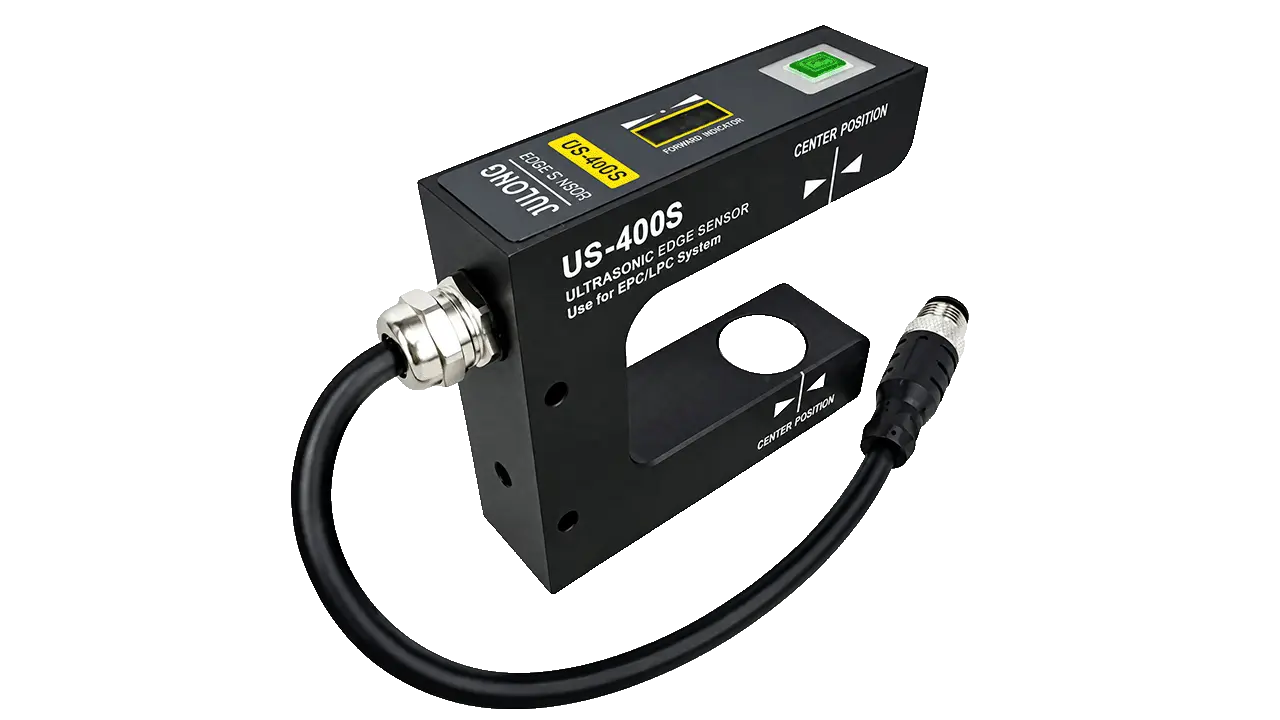
Detects printed registration marks on pre-printed film and adjusts feed length automatically. Ensures seal and perforation positions stay aligned with the printed design across every bag in the roll.
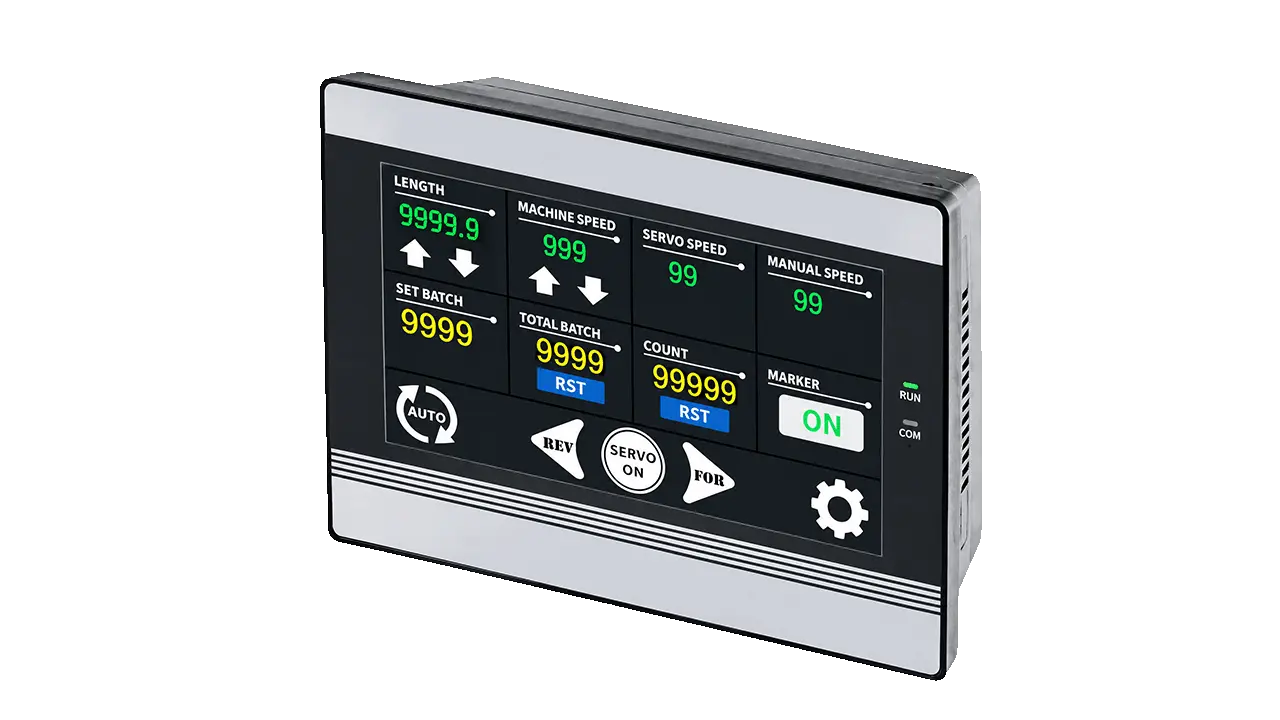
Digital control of bag length, perforation spacing, bags-per-roll count and production speed. All parameters are set and saved on the panel — switching between product formats requires no mechanical adjustment, only a parameter change.
Every LQ-CRB machine completes a 72-hour continuous production test at the LayerQuestar factory in Zhejiang before it is packed for shipment. Seal integrity, perforation consistency, roll winding tension, bag count accuracy and all electrical systems are verified under full production load.
You or your representative are welcome to witness the FAT in person before final payment and dispatch. Remote video witness is also available.
Answers to the questions buyers ask most often before specifying a continuous roll bag making machine from LayerQuestar.
A standard bag making machine severs the film completely between each bag, producing individual bags that are stacked and counted for output. A continuous roll bag machine — like the LayerQuestar LQ-CRB series — perforates the film between bags instead of cutting through it. The bags remain physically connected on a roll, with a tear-off perforation line between each one.
The practical result is a roll of bags that can be placed on a retail shelf dispenser, loaded into a supermarket bag holder, used in a hotel amenity kit, or fed into a factory production line — all without any secondary packaging step. If your product needs to be dispensed from a roll, the LQ-CRB series is the correct machine. If you need individual stacked bags, see the Flat Bag Making Machine.
Yes. The bags-per-roll count is operator-programmable via the microcomputer control panel. You enter your target count before the production run begins. The machine tracks the count automatically and signals the operator when the preset number is reached so the output roll can be changed.
This makes it straightforward to produce rolls of different counts for different products or customers — for example, 20-bag rolls for household garbage bags and 100-bag rolls for supermarket produce bags — simply by changing the count setting on the panel between runs.
The LQ-CRB series uses flat-seal technology and produces bottom-sealed open-top bags in continuous roll format. Typical products include: household and commercial garbage bags on a roll, supermarket produce bags on a roll, product packaging sleeves on a roll for factory production lines, and sanitary bags for hotel or medical use.
The machine does not produce bags with handle punches, zipper closures, or star-seal (drawstring-style) bottoms. For those bag types, LayerQuestar offers separate machine models.
The integrated winding station is standard on all four LQ-CRB models — it is not an optional extra. Every machine ships with the winding unit installed and configured. This is what distinguishes the LQ-CRB series from other LayerQuestar bag making machines, which output individual stacked bags and do not include a winding station.
The stepping motor is the standard drive system and is suitable for most plain (unprinted) film applications — garbage bags, produce bags, plain packaging sleeves. It provides reliable fixed-length feed control at a lower cost.
The servo motor is an optional upgrade that provides higher positioning accuracy, better performance with pre-printed film registration, and reduced film waste during startup and speed changes. It is recommended for branded printed roll bags where the seal and perforation must align precisely with the printed design on every bag in the roll. Specify the servo motor option at order stage — it cannot be retrofitted easily after delivery.
Yes. All LQ-CRB models include a photoelectric eye registration system that detects printed registration marks on the film and automatically adjusts the feed length to keep the seal and perforation positions aligned with the printed design. This is essential for branded roll bags where logo and text positioning must be consistent across every bag on the roll.
For the most demanding printed film applications — particularly high-speed runs with tight registration tolerances — the servo motor upgrade is recommended over the standard stepping motor for improved accuracy and reduced startup waste.
All four LQ-CRB models are identical in speed, bag length capacity, film thickness range and machine length. The only difference is maximum bag width: 480 mm (CRB-500), 580 mm (CRB-600), 680 mm (CRB-700) and 780 mm (CRB-800).
Select the model whose maximum bag width matches or exceeds your widest required bag format. You can always run narrower bags on a wider model — there is no performance penalty for running a narrower bag on a larger machine. If you produce multiple bag widths, specify the model that accommodates your widest format.
The LQ-CRB series accepts pre-wound flat film rolls as its input — tubular or centre-folded film in the correct width for your bag specification. These rolls can be purchased from a film supplier or produced in-house.
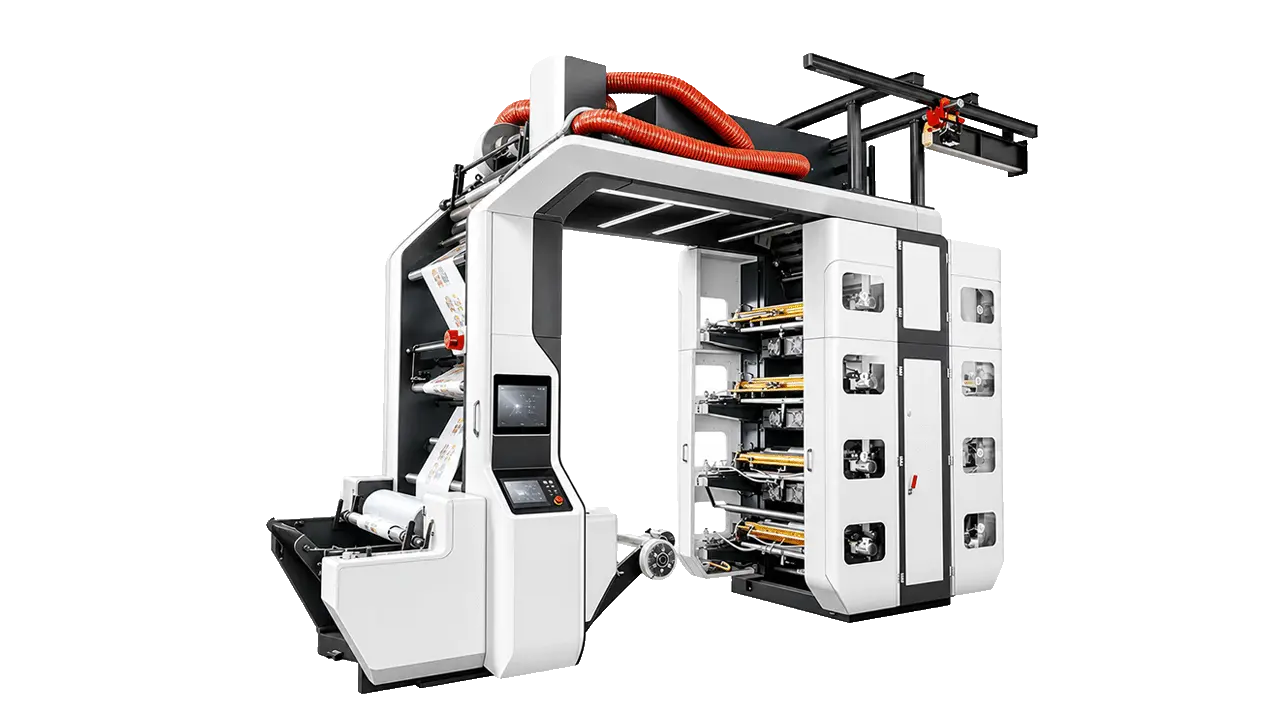
For in-house film production, the recommended upstream sequence is: (1) Blown film machine to extrude and wind HDPE, LDPE or PP film rolls; (2) Optional flexographic printer to add branding before bag making; (3) LQ-CRB machine to convert film into finished bags on a roll. LayerQuestar supplies all three machine types and can configure the complete line as a turnkey solution.
Send LayerQuestar your bag width, bag length, target bags per roll, film material and daily output requirement. The technical team will recommend the correct LQ-CRB model, confirm whether the servo motor upgrade applies to your application, and prepare a detailed quotation — typically within one business day.