Blown Film Machines —
From Single Layer to 9-Layer Co-Extrusion
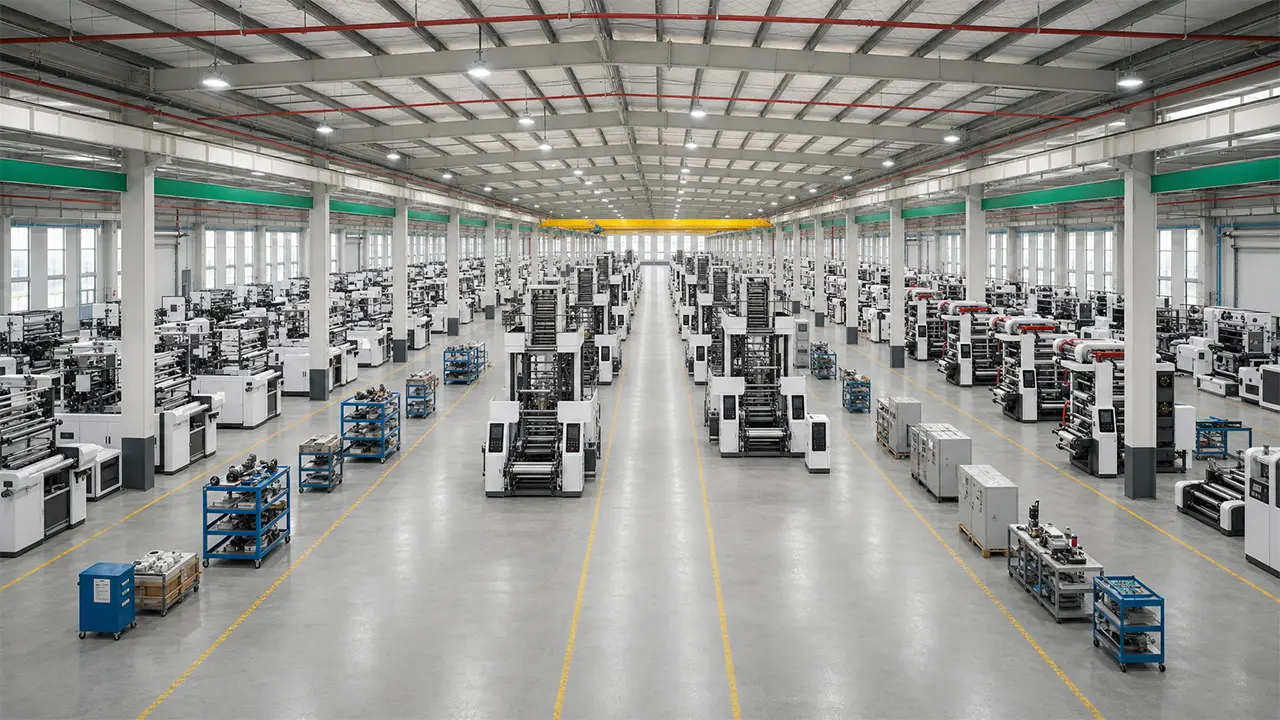
LayerQuestar blown film lines convert plastic resin into continuous tubular film — from mono-layer commodity bags to 9-layer EVOH barrier structures. Screw diameters from Φ45mm to Φ120mm, output from 15 kg/h to over 800 kg/h.
How Does a Blown Film Machine Work?
Five steps — from raw resin pellets to a finished film roll ready for printing or bag making.
Resin Feed
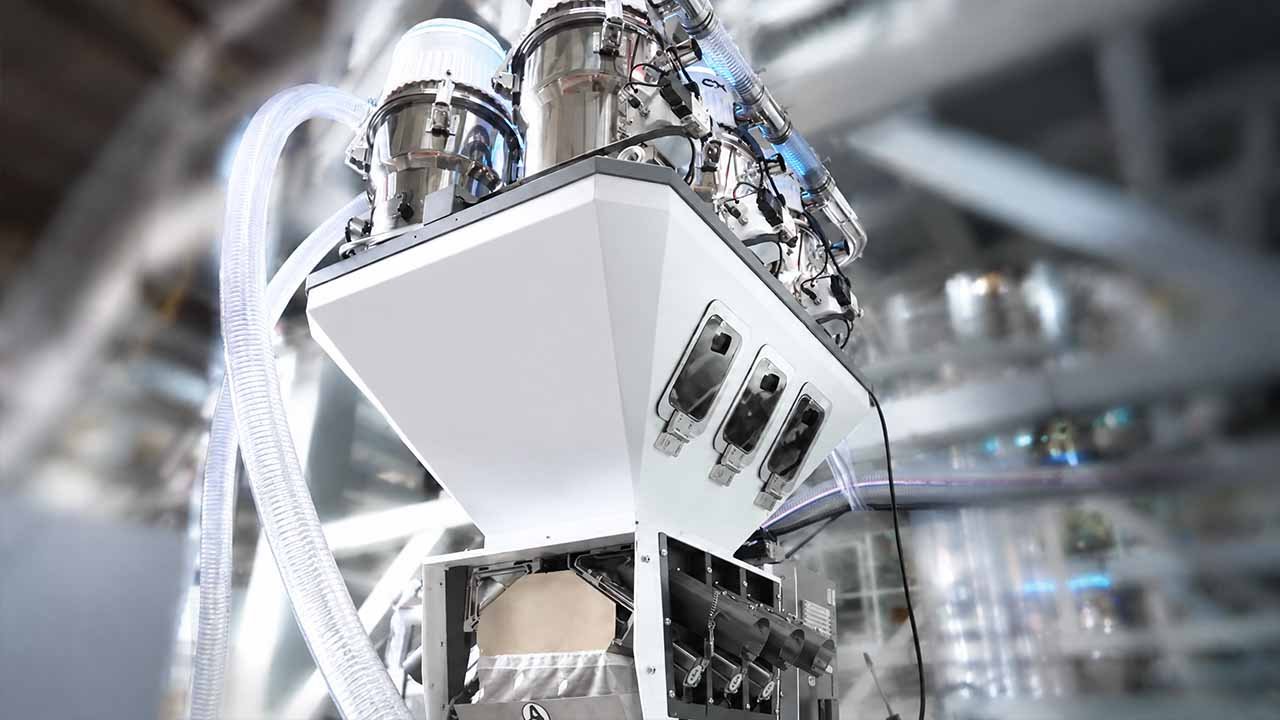
Plastic pellets — LDPE, HDPE, LLDPE, PP or specialty compounds — are loaded into the hopper. A metering system controls the feed rate into the extruder barrel.
Melt Extrusion
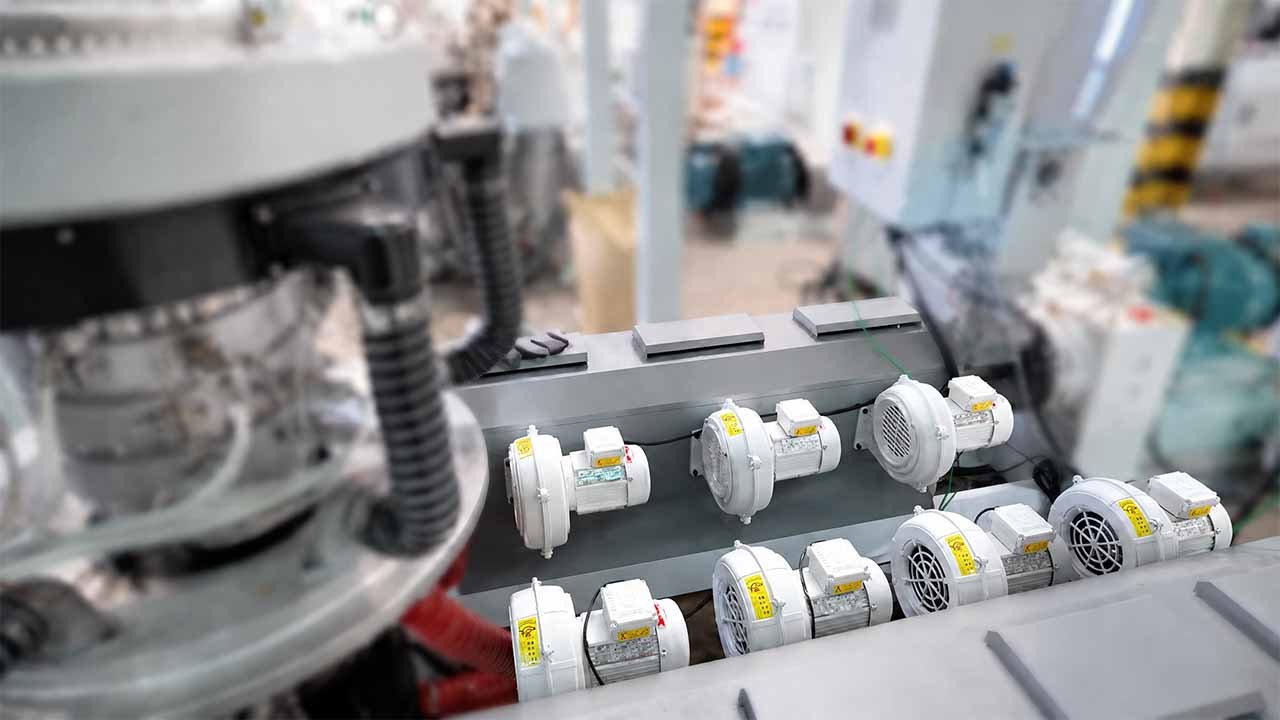
The rotating screw melts and pressurises the resin through precisely controlled heating zones. OMRON PID controllers maintain each zone within ±1°C under stable operating conditions.
Bubble Formation
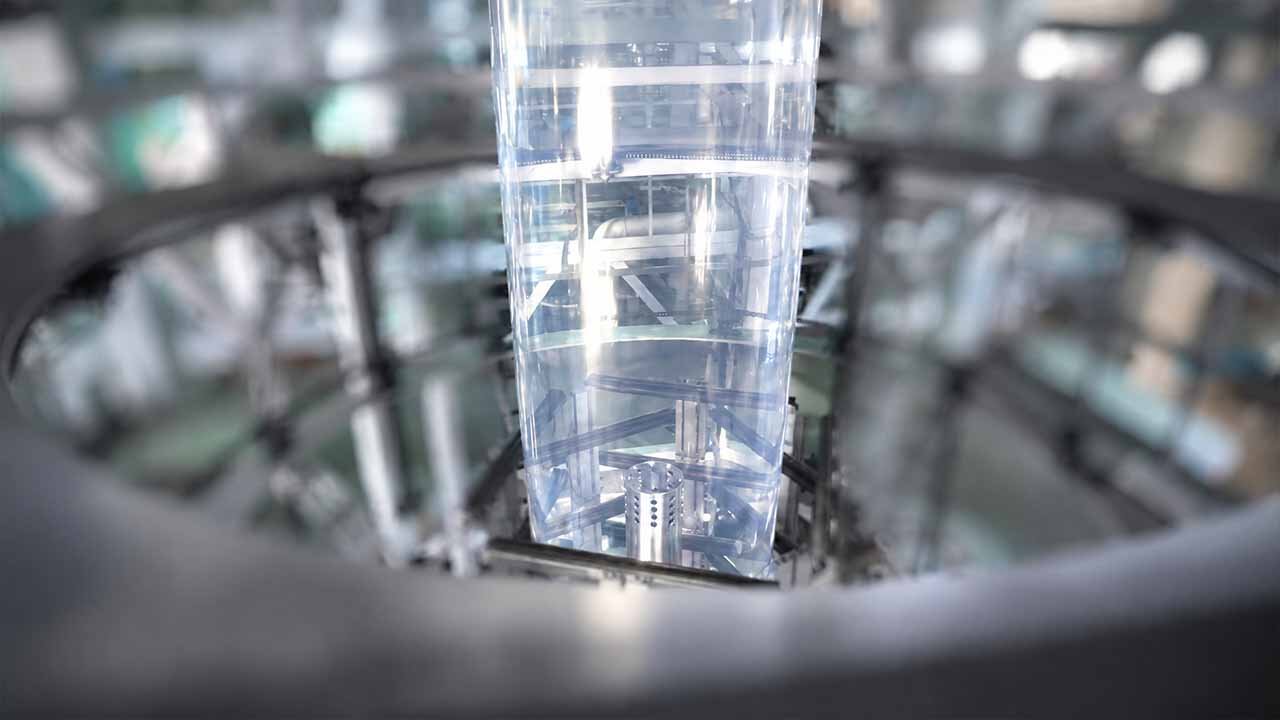
Molten resin is forced upward through the die head and inflated with compressed air into a continuous tubular bubble. In multi-layer configurations, up to nine extruders feed separate streams into a single co-extrusion die simultaneously.
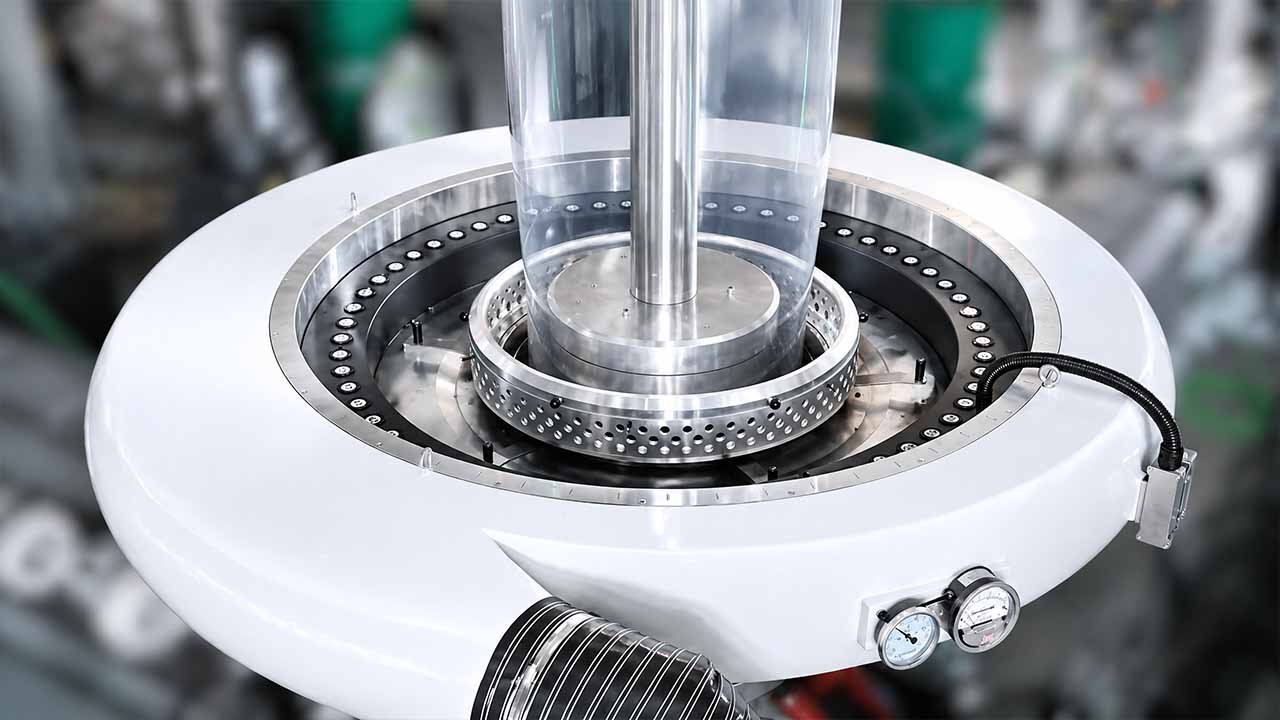
Cooling & Haul-off
An air ring directs controlled airflow around the bubble to cool and stabilise the film. The bubble is then collapsed and pulled through haul-off rollers — roller speed determines final film thickness.
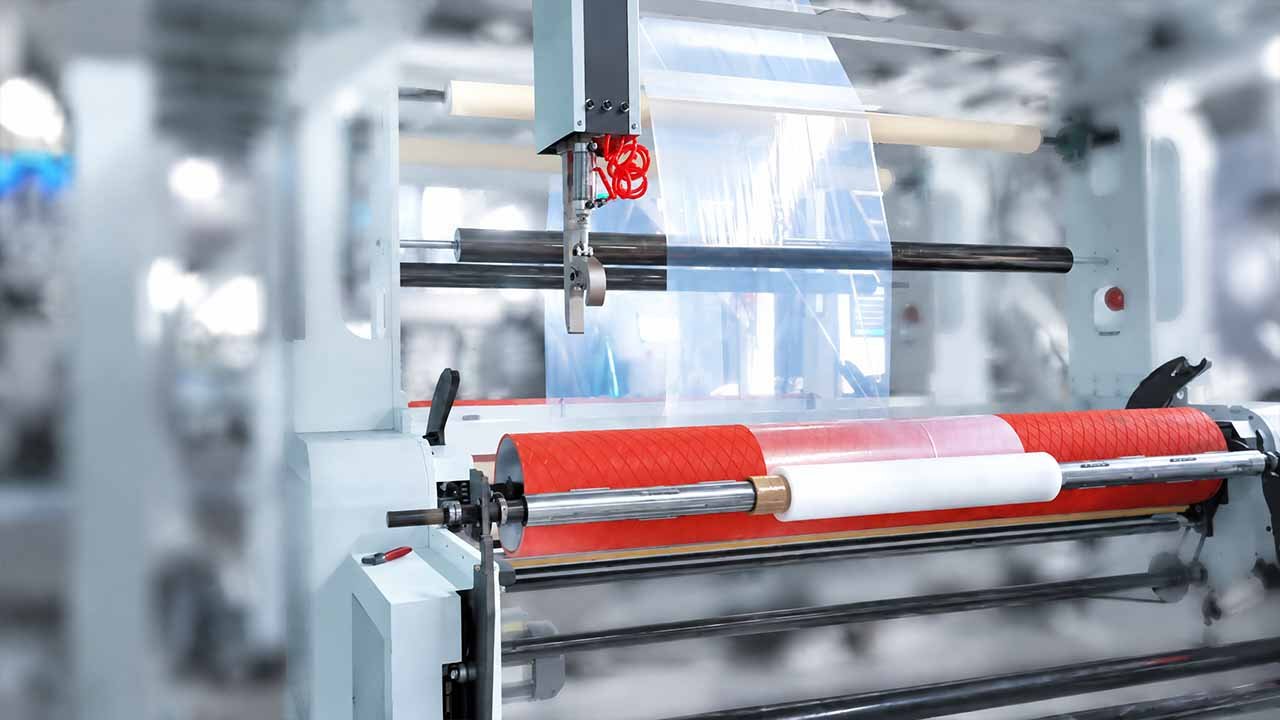
Winding
Film is wound into rolls via surface or centre winding depending on material. Roll diameter, tension and changeover timing are controlled automatically, producing finished rolls ready for printing or bag making.
What's Inside a Blown Film Machine?
Every component affects film quality, output consistency and long-term reliability. Here is what LayerQuestar machines are built with — and why each specification matters.
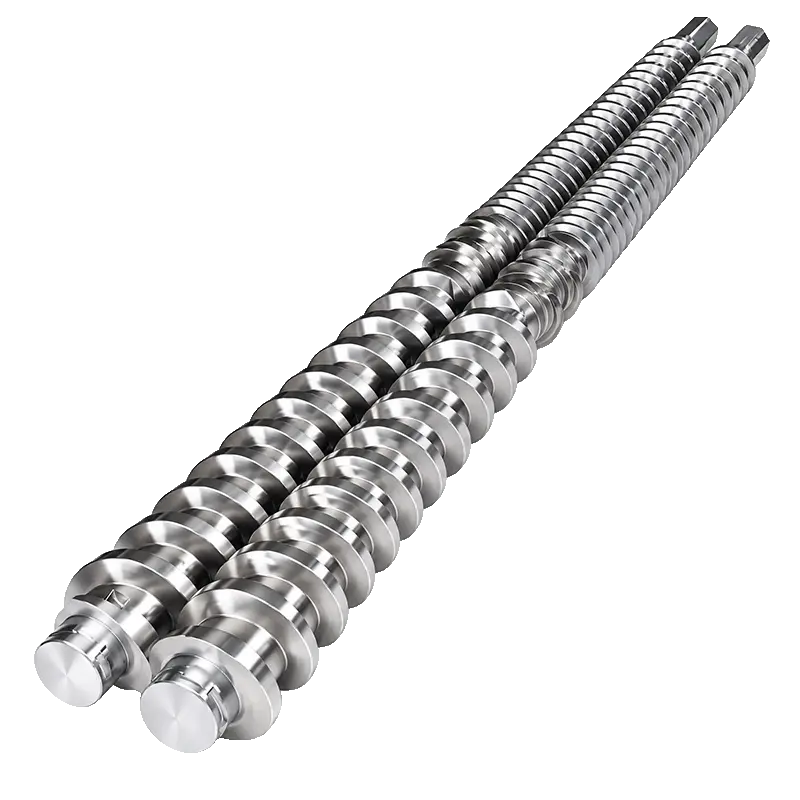
Screw & Barrel
WC Bi-Metallic · 31:1 L/D · HRC 59–65 · 1.5–3mm Alloy Overlay38CrMoAlA nitrided steel base with a 1.5–3mm tungsten carbide overlay, achieving HRC 59–65 surface hardness. The 31:1 L/D ratio ensures complete plasticisation across a wide range of materials including PCR blends and biodegradable compounds.
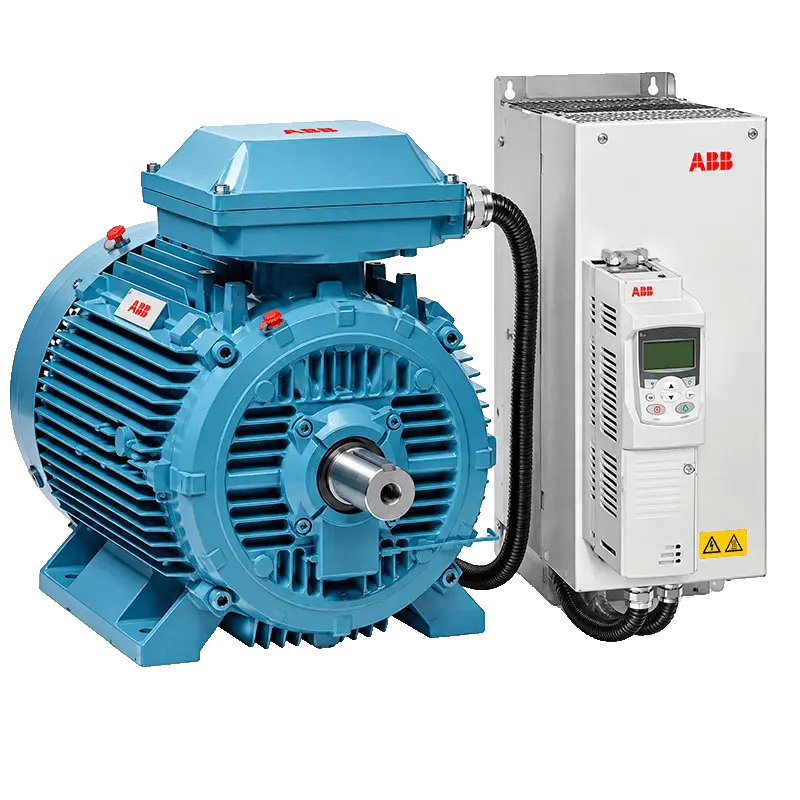
Main Drive Motor
ABB Preferred · Innomotics & Other Brands AvailableABB specified as the preferred motor brand, with Innomotics and other internationally recognised brands available on request. Global distribution networks mean spare parts and service remain accessible in any market.
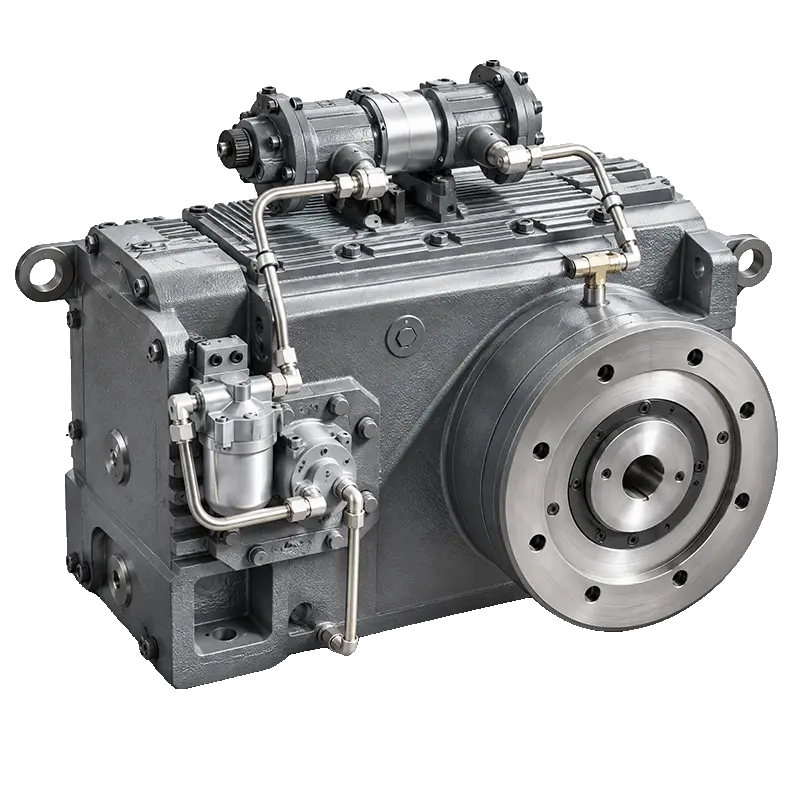
Gearbox
External Oil-Cooled Circulation · 8–10 Year Service Life DesignOil is actively circulated and cooled rather than relying on passive heat dissipation. This keeps operating temperatures stable under continuous production loads, reducing gear wear and extending overhaul intervals.
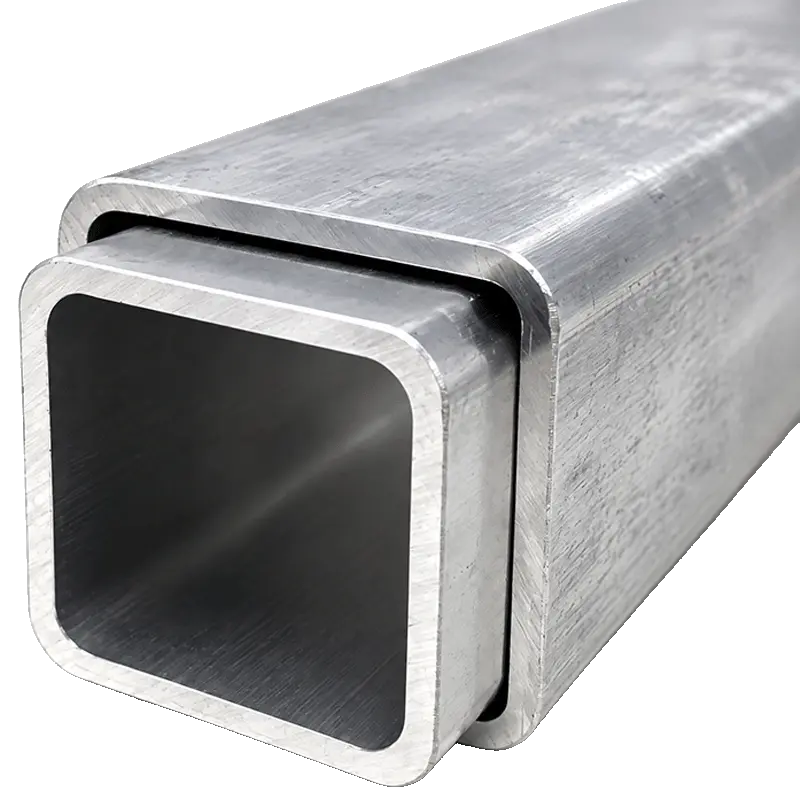
Machine Frame
140mm Heavy-Wall Square Tube · vs 80–100mm Entry-Level140mm heavy-wall square tube construction versus the 80–100mm sections common on entry-level machines. The additional rigidity reduces vibration during high-speed operation, directly improving long-term dimensional accuracy and reducing component fatigue.
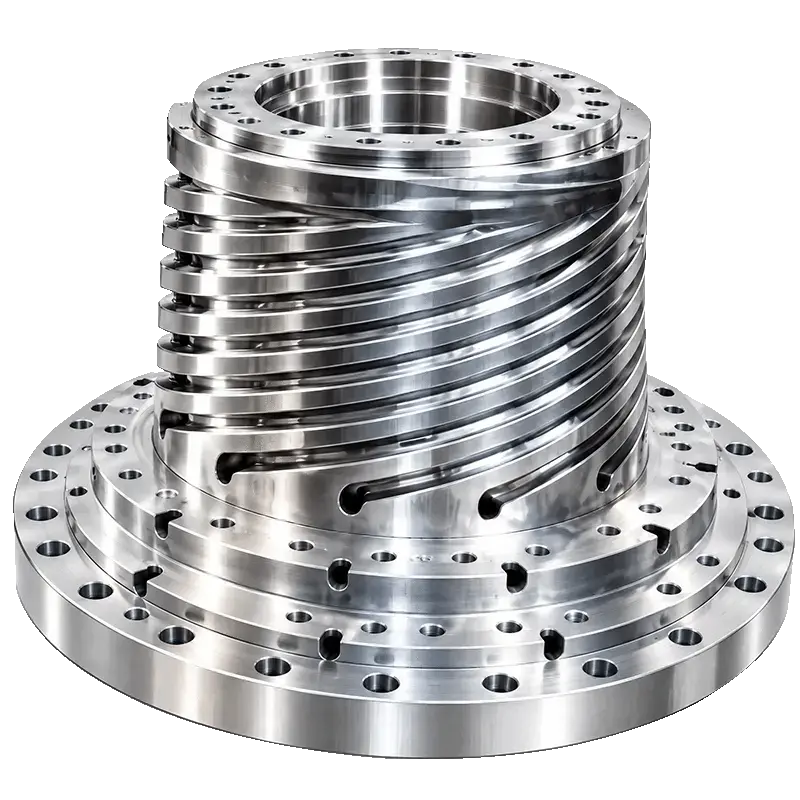
Co-Extrusion Die Head
Single Layer to 9 Layers · Precision-Machined Flow ChannelsPrecision-machined flow channels minimise dead zones — critical when processing heat-sensitive materials such as EVOH or biodegradable compounds. Supports single-layer through 9-layer co-extrusion structures.
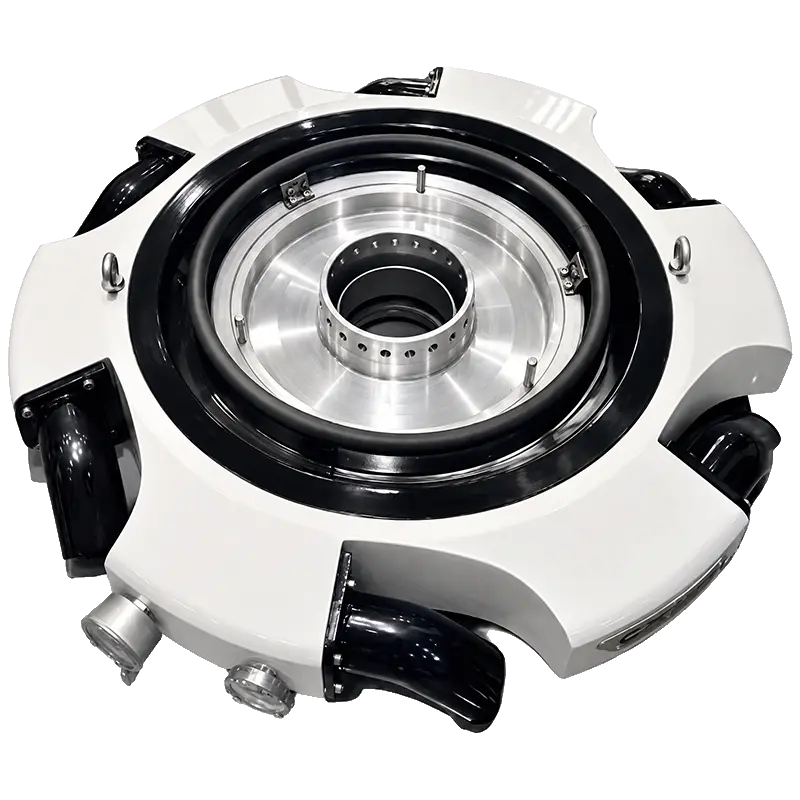
Air Ring & Cooling System
Single-Lip Standard · Dual-Lip Available as OptionCooling rate and airflow uniformity are the primary factors controlling bubble stability and thickness consistency. A dual-lip air ring is available for high-speed lines or thin-gauge film where finer control is required.
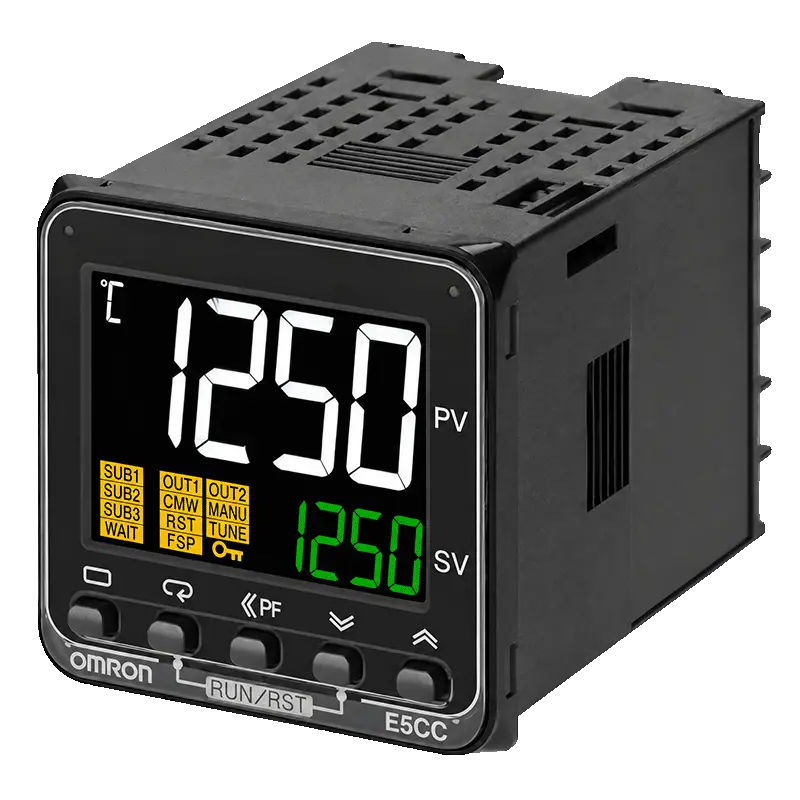
Temperature Control System
OMRON PID Controllers · ±1°C Deviation Under Stable ConditionsEach heating zone is independently controlled by an OMRON PID controller, maintaining deviation within ±1°C under stable conditions. Reduces material degradation risk in heat-sensitive compounds and improves run-to-run thickness consistency.
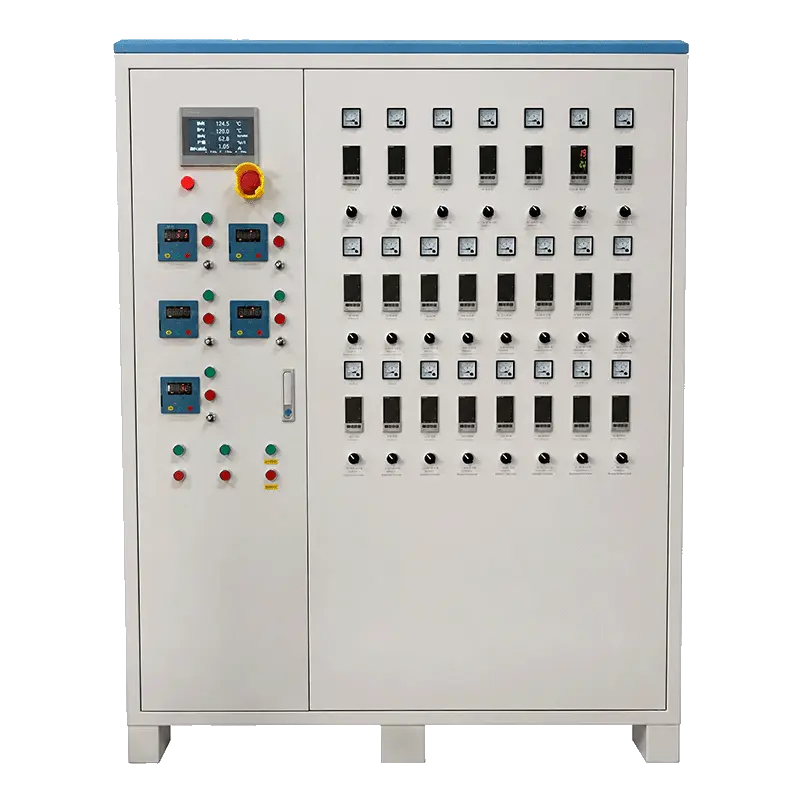
Control Cabinet
Fully English-Labeled · 2–3 Independent Cooling FansAll wiring labels and terminal markings are in English, making on-site troubleshooting accessible in any market. Two to three independent cooling fans maintain safe cabinet temperatures in hot-climate environments.
Choose Your Layer Configuration
The number of layers determines what your film can do — its strength, barrier performance, material flexibility and cost structure.
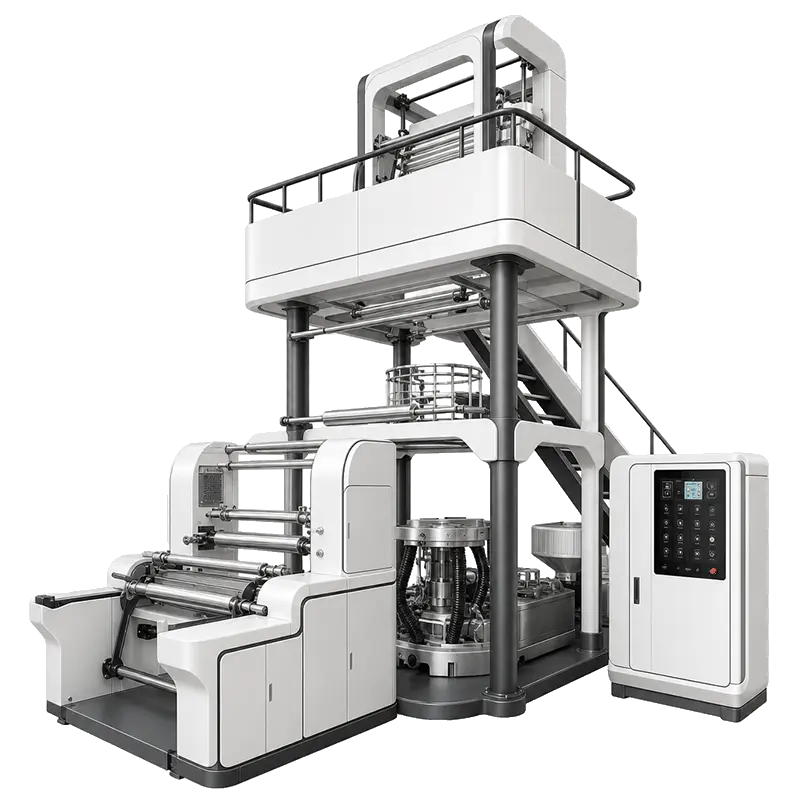
Single-Layer Blown Film Machine
HDPE / LDPE / LLDPE
50–150 kg/h
T-shirt bags · Supermarket bags · Agricultural mulch film · Refuse sacks
Lowest-cost entry point. Ideal for standard commodity bags where barrier performance is not required. Simple to operate and maintain.
View Mono-Layer Line →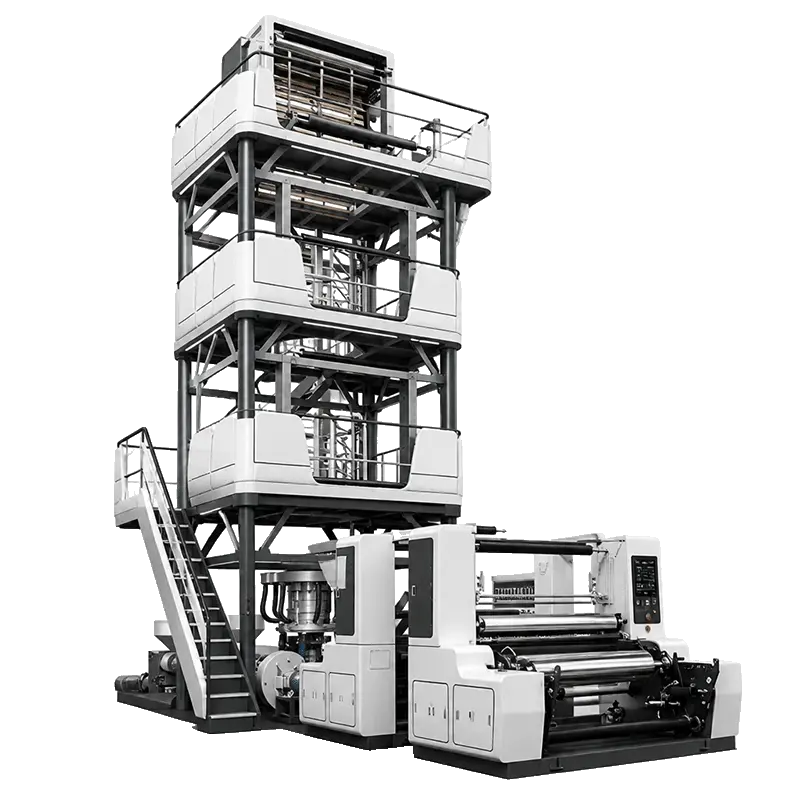
2-Layer AB Blown Film Machine
A / B
100–200 kg/h
General packaging film · PCR-content film · Lamination base film · Entry-level courier bags
Cost-effective step up from mono-layer. Combines two different materials — for example, a virgin skin layer over a PCR core — without the full investment of a 3-layer line.
View 2-Layer AB Line →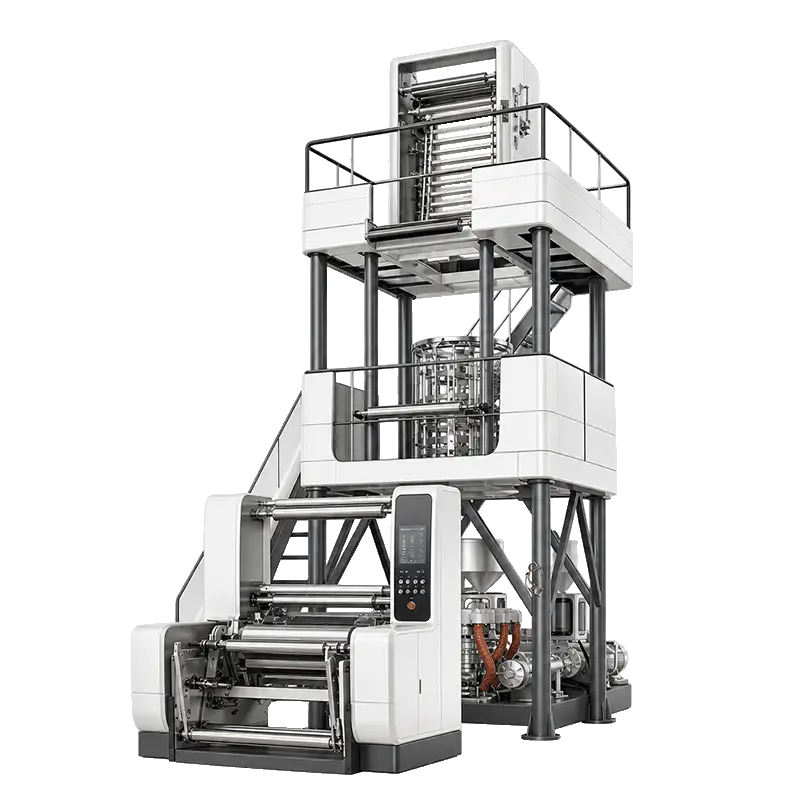
3-Layer ABA / ABC Blown Film Machine
A / B / A · A / B / C
150–450 kg/h
Courier bags · Stretch film · Lamination film · Shopping bags with PCR core
The most widely used co-extrusion configuration. ABA allows PCR or lower-cost resin in the core while maintaining virgin surface quality. The standard choice for courier bag production.
View 3-Layer ABA Line →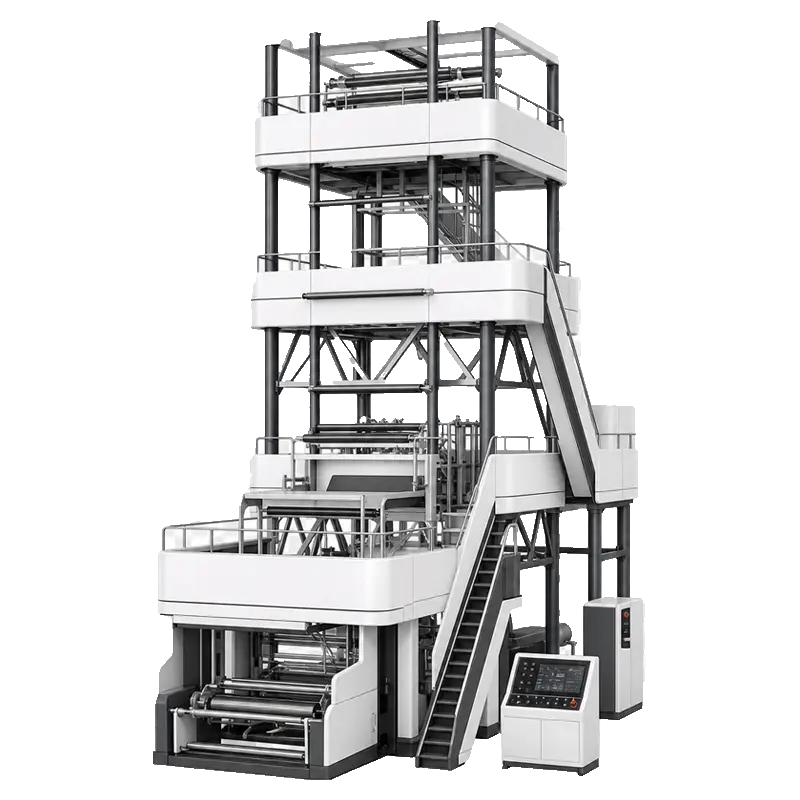
5-Layer Co-Extrusion Blown Film Machine
PE / TIE / PA / TIE / PE
250–500 kg/h
Medium-barrier food packaging · Industrial film · Vacuum pouches · Cheese and processed meat film
Introduces PA (nylon) as a functional barrier layer bonded via TIE adhesive layers. Entry point for food-grade barrier film without the complexity of EVOH processing.
View 5-Layer Line →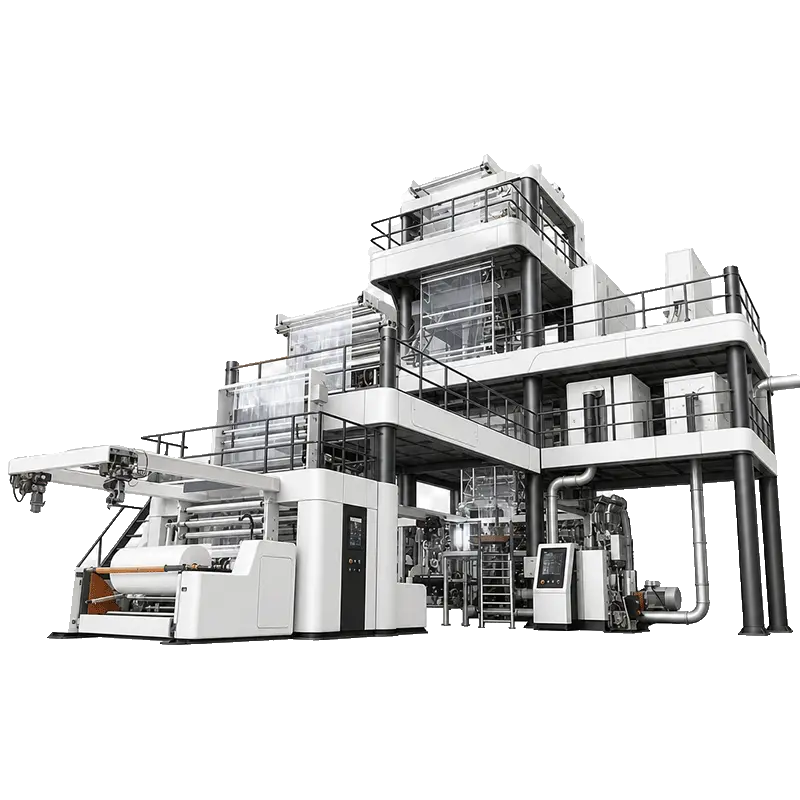
7-Layer EVOH Barrier Blown Film Machine
PE / TIE / PA / EVOH / PA / TIE / PE
300–600 kg/h
High-barrier vacuum packaging · Dairy film · Processed meat · Extended shelf-life food packaging
EVOH at the centre delivers an extremely low oxygen transmission rate. PA layers on both sides protect the moisture-sensitive EVOH and add puncture resistance. Standard structure for high-barrier food packaging.
View 7-Layer EVOH Line →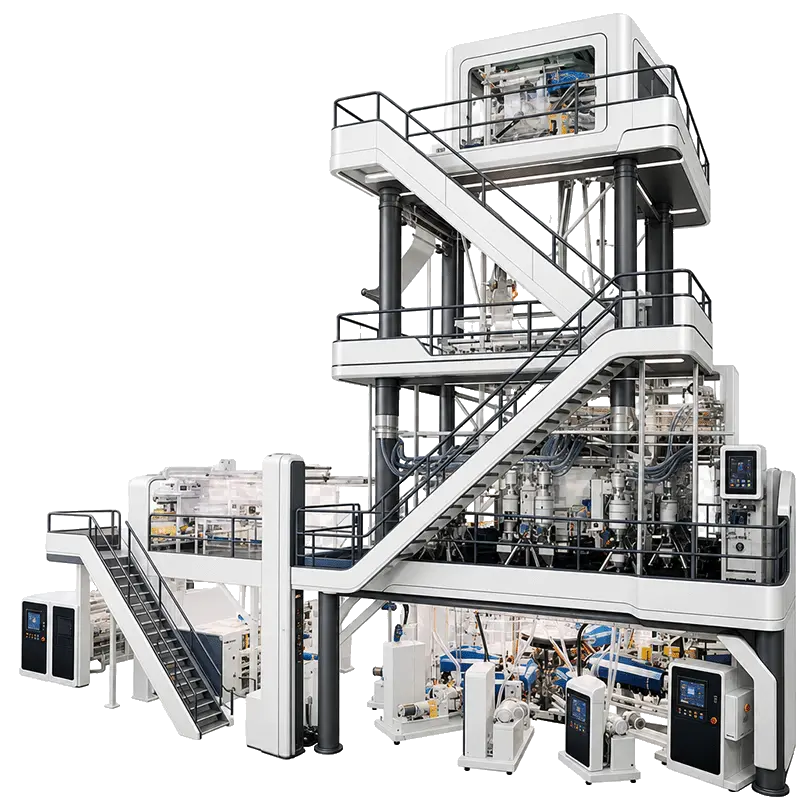
9-Layer Barrier Blown Film Machine
Multi-Barrier + EVOH / PA
400–800 kg/h
Medical packaging · Liquid packaging · Long shelf-life food film · High-specification industrial barrier film
Nine independently controlled extruders allow precise optimisation of each layer's material, thickness and function — for applications where barrier performance, mechanical strength and consistency are all critical.
View 9-Layer Barrier Line →Some film types require a dedicated machine configuration regardless of layer count. These specialist lines are classified by material rather than layer structure.
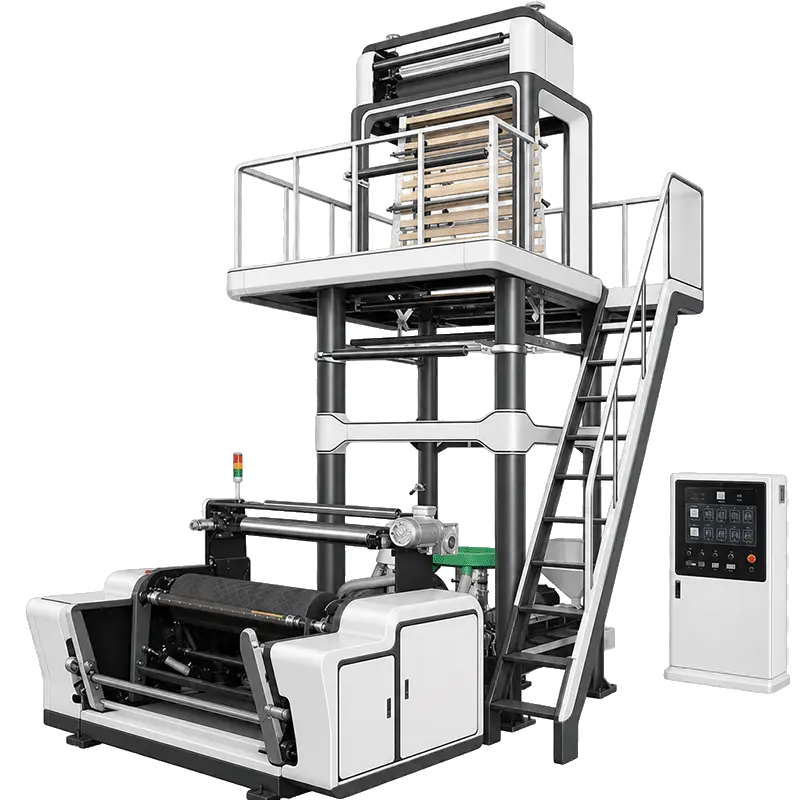
Biodegradable Film Machine
PLA / PBAT Compostable Blends
Compostable shopping bags · Biodegradable courier bags · Eco-packaging film
PLA/PBAT blends require specialist screw geometry, tighter temperature control and non-stick die head treatment. A standard PE blown film machine is not suitable for PLA/PBAT processing.
View Biodegradable Film Machine →Not sure which configuration is right for your product?
Ask a LayerQuestar Engineer →Compatible Materials & Typical Applications
From standard commodity polyethylene to biodegradable compounds and post-consumer recycled content — the table below outlines materials supported across the product range.
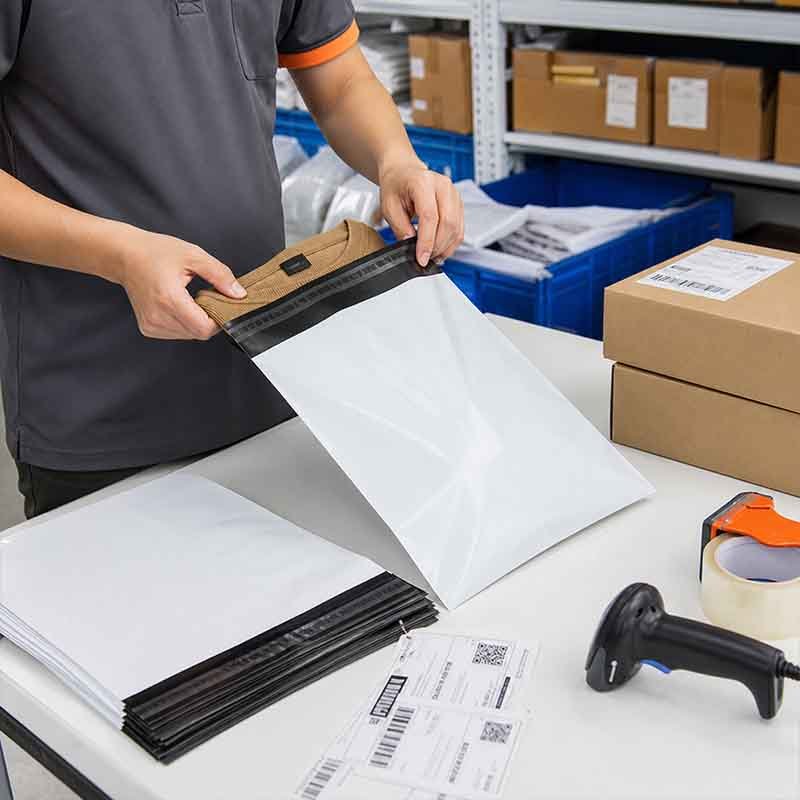 Courier Bags
 Shopping Bags
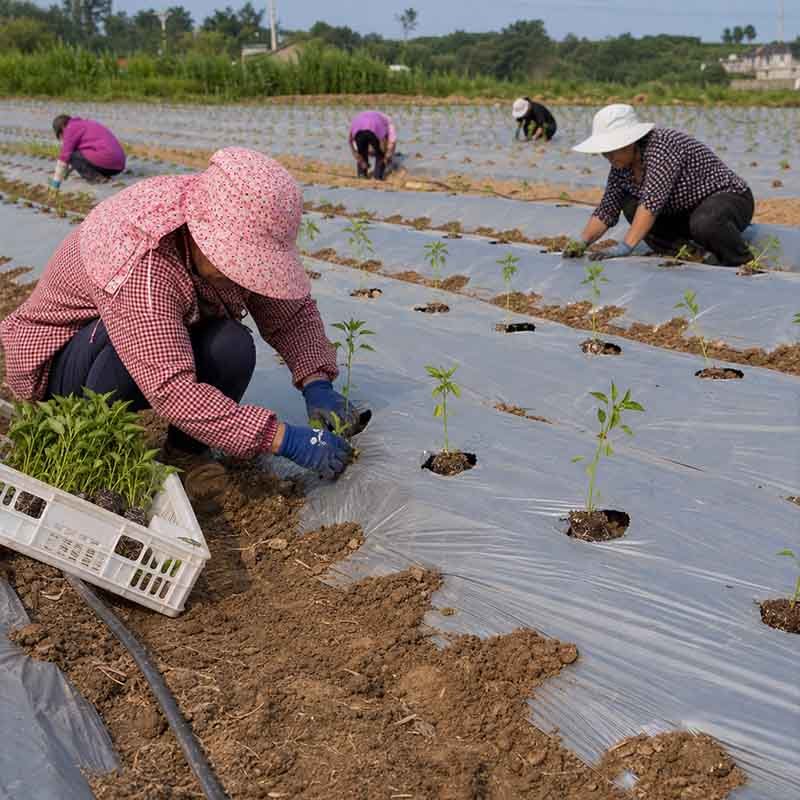 Agricultural Film
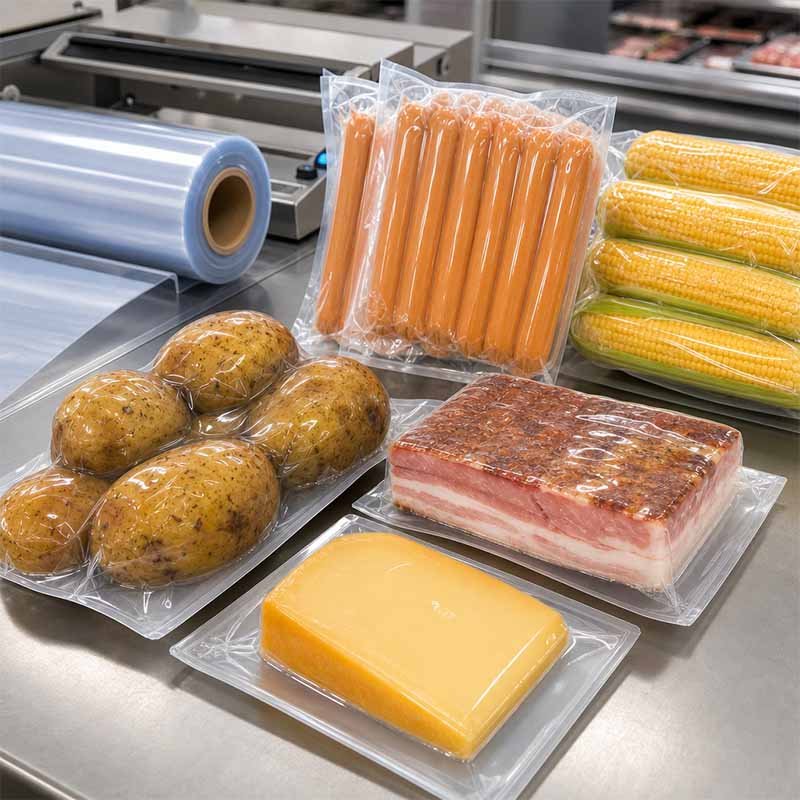 Food Barrier Film
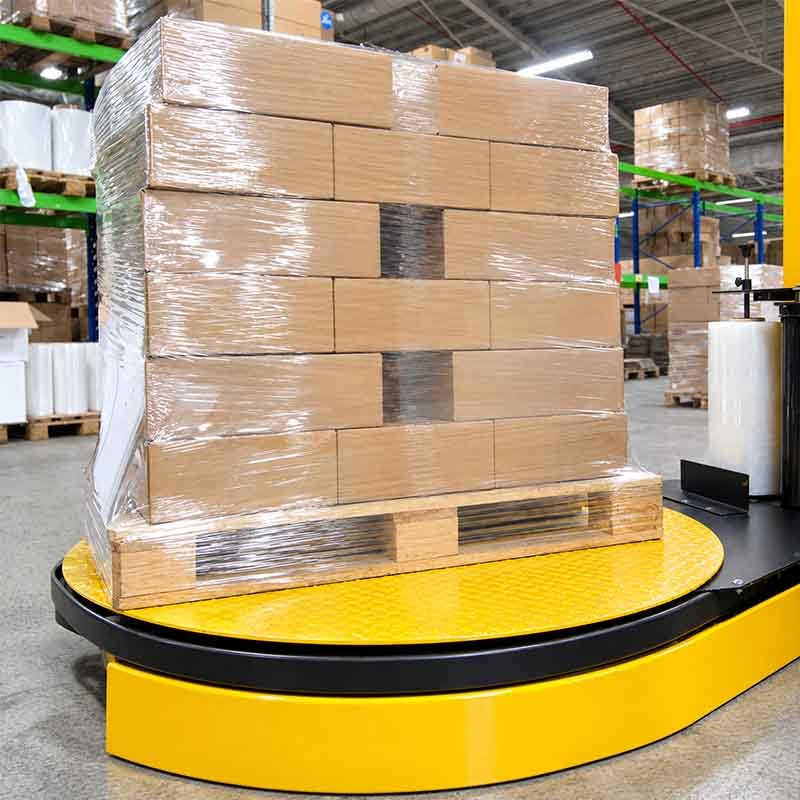 Stretch Film
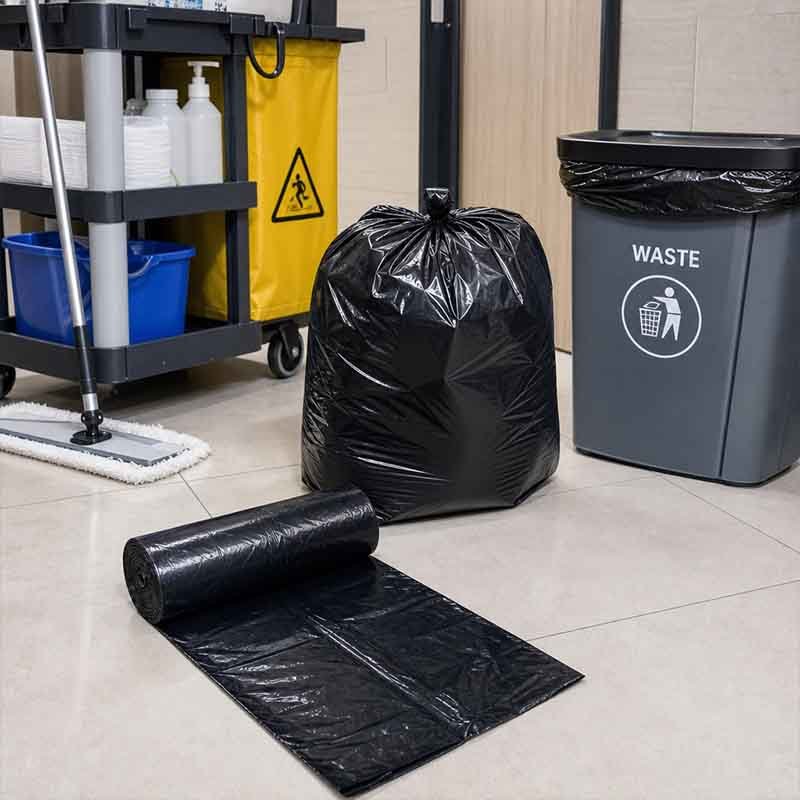 Garbage Bags
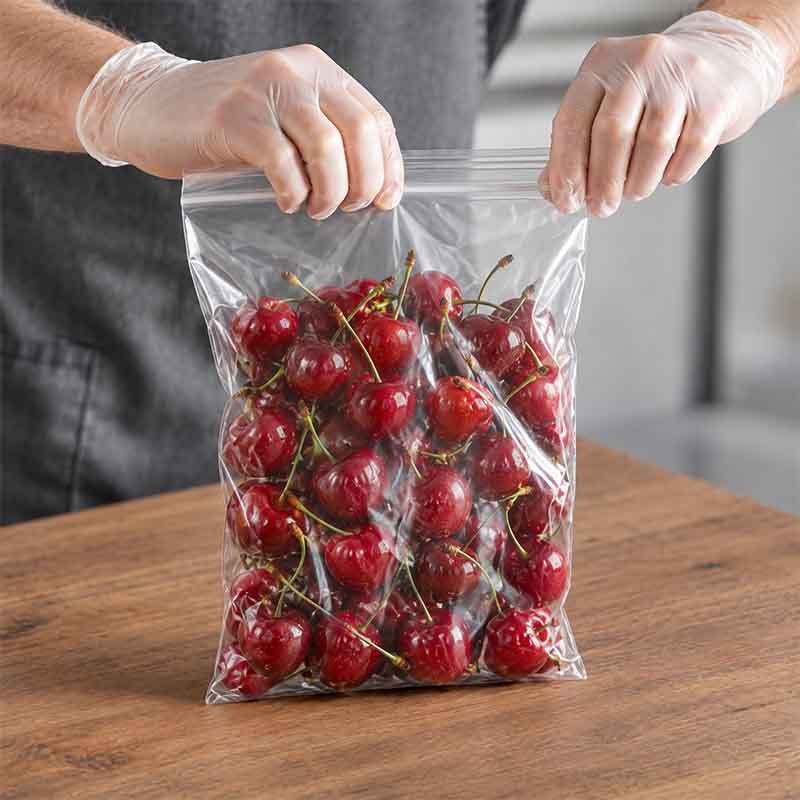 Zipper Bags
 Biodegradable Film
| Material | Full Name | Key Properties | Typical Applications | Typical Layer Position |
|---|---|---|---|---|
| LDPE | Low-Density Polyethylene | Soft and flexible · Excellent heat-seal strength · Good clarity in thin gauges | Shopping bags · Agricultural mulch film · Greenhouse film · Lamination base film | All layers (mono or co-ex) |
| HDPE | High-Density Polyethylene | Stiff and crinkly · High tensile strength · Good chemical resistance | T-shirt / vest bags · Supermarket shopping bags · Refuse sacks | All layers (mono or co-ex) |
| LLDPE | Linear Low-Density Polyethylene | High puncture resistance · Good elongation · Strong tear resistance | Courier bags · Stretch film · Heavy-duty sacks · Silage film | Outer layers · All layers |
| mLLDPE | Metallocene LLDPE | Superior toughness · Allows gauge reduction · Excellent optical properties | Premium stretch film · High-performance courier bags · Thin-gauge packaging | Outer layers · Skin layers |
| PP | Polypropylene | Higher heat resistance than PE · Good stiffness · Better clarity than HDPE | Food packaging film · Industrial protective film · Speciality packaging | All layers (dedicated PP line) |
| EVOH | Ethylene Vinyl Alcohol | Extremely low oxygen transmission rate · Moisture-sensitive (requires PA protection) | Oxygen barrier layer in 7- and 9-layer food and medical packaging structures | Centre barrier layer (always protected by PA on both sides) |
| PA | Polyamide (Nylon) | High puncture resistance · Good oxygen barrier · Excellent abrasion resistance | Vacuum packaging · Processed meat · Cheese · Heavy-duty industrial film | Barrier layers in 5-, 7- and 9-layer structures · Protective layers around EVOH |
| TIE | Adhesive / Tie Layer | Bonds incompatible polymer layers · No standalone film function | Structural adhesive layer in all multi-layer barrier film structures | Between PE and PA, or PE and EVOH in 5-, 7- and 9-layer structures |
| PLA / PBAT | Polylactic Acid / Polybutylene Adipate Terephthalate | Biodegradable and compostable · More heat-sensitive than PE · Requires centre-wind configuration | Biodegradable shopping bags · Compostable agricultural film · Eco-packaging film | All layers (dedicated biodegradable line) |
| PCR | Post-Consumer Recycled Content | Variable melt index · Requires robust screw design · Supports recycled-content strategies | Recycled-content courier bags · PCR shopping bags · Sustainable packaging film | Inner / core layer in ABA or ABC structures (virgin skin layers maintain surface quality) |
Explore solutions by application:
What Do You Need to Run a Blown Film Line?
Factory space, power supply, staffing and auxiliary equipment — the practical requirements for a standard blown film installation.
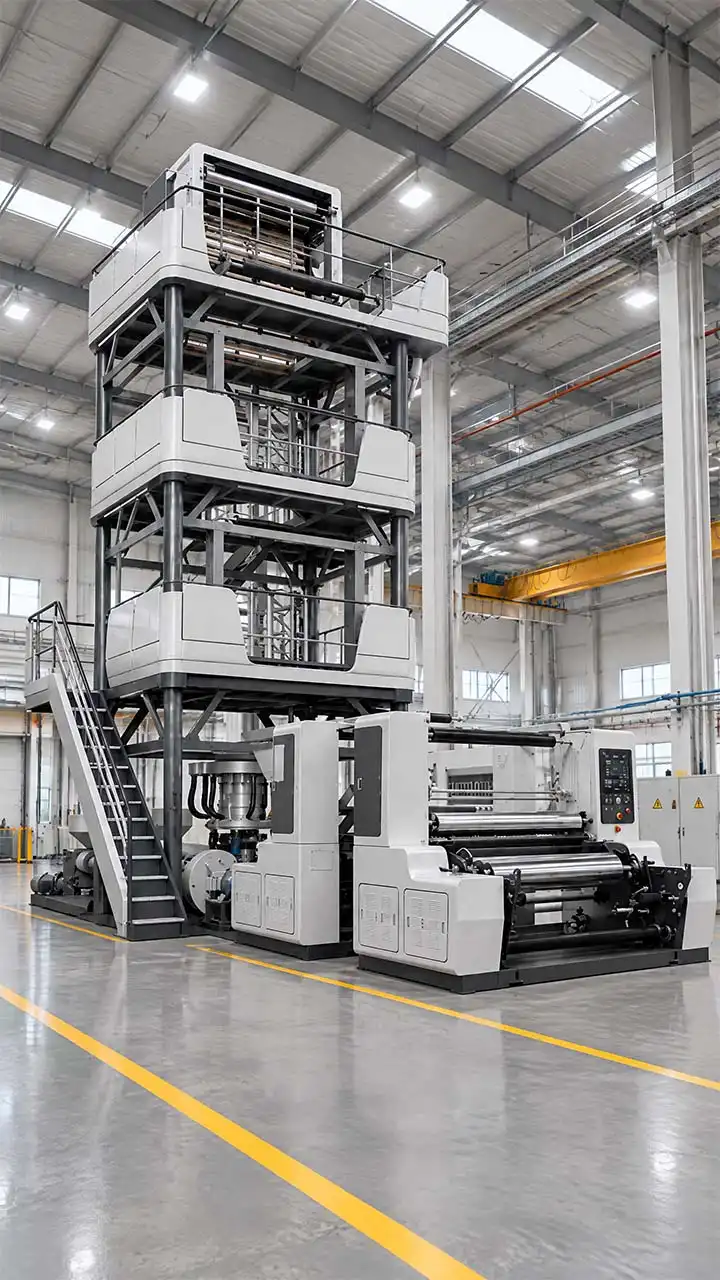
Factory Space
Ceiling height is the most commonly underestimated requirement. Mono-layer lines need 4.5–5m minimum; 3-layer lines require ~7m; 7- and 9-layer lines generally require 10m or more. Floor area ranges from 30m² for a small single-layer line to over 80m² for a wide-width multi-layer line.
Power Supply
Three-phase power supply required. Configurable for 380V/50Hz or 440V/60Hz depending on destination. Installed power demand ranges from 15–30 kW for a small single-layer line to over 150 kW for a large multi-layer co-extrusion line.
Operators
A standard blown film line requires 2–3 operators per shift. On machines with automatic winding and centralised control, a single experienced operator can manage 2–3 machines simultaneously. Operator training is included in LayerQuestar's on-site commissioning service.
Auxiliary Equipment
A water chiller is required to cool the screw, barrel and gearbox. If IBC internal bubble cooling is specified, a dedicated air compressor is also required. A forklift or overhead crane is recommended for loading resin and moving finished rolls exceeding 200 kg.
Raw Material Storage
Polyethylene pellets should be stored dry, away from sunlight and moisture. Hygroscopic materials — particularly PA and EVOH — must be dried before processing. A dedicated desiccant hopper dryer is required for PA and EVOH processing.
Time to First Production
Installation and commissioning takes 5–7 days for a standard configuration. Most operators reach independent operation within 1–2 weeks. Full production efficiency typically develops over the first 2–4 weeks as operators build familiarity with specific material formulas.
Blown Film vs Cast Film — Which Process Do You Need?
Both processes produce plastic film from extruded resin, but differ in how the film is formed and cooled — leading to meaningful differences in film properties, equipment cost and suitable applications.
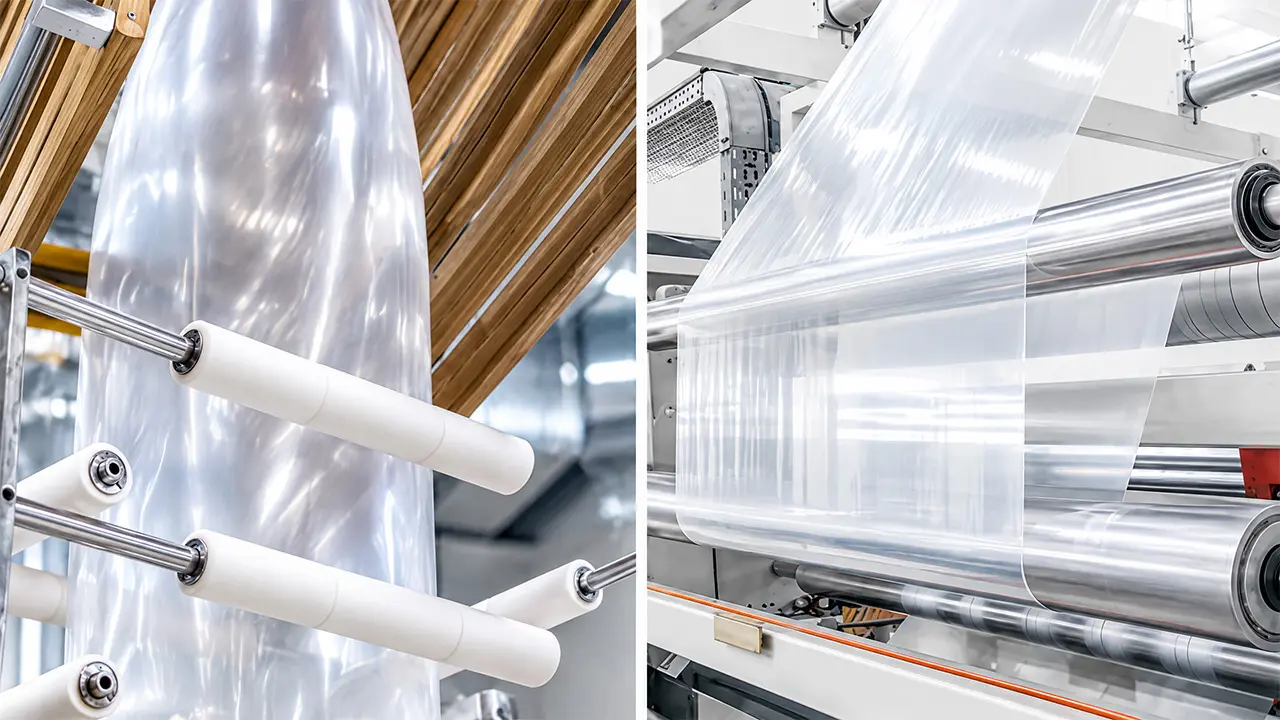
In blown film extrusion, molten resin is extruded upward through an annular die and inflated into a bubble with compressed air, cooled by an air ring. In cast film extrusion, the melt is extruded horizontally through a flat die directly onto a temperature-controlled chill roll. The difference in cooling rate and film orientation produces films with distinct characteristics.
| Comparison | Blown Film | Cast Film |
|---|---|---|
| Film Orientation | Biaxially oriented — strength balanced in both directions | Primarily machine-direction orientation — lower transverse strength |
| Optical Clarity | Lower clarity due to slower air cooling — higher haze, less gloss | Higher clarity and gloss due to rapid chill roll quenching |
| Thickness Range | Approx. 8–200 microns | Approx. 10–100 microns |
| Equipment Cost | Generally lower capital cost | Generally higher capital cost |
| Multi-Layer Co-Extrusion | Supported — up to 9 layers on LayerQuestar lines | Supported — typically up to 3–5 layers |
| Typical Applications | Shopping bags · Courier bags · Agricultural film · Stretch film · Barrier food packaging | Cling film · CPP film · Cast stretch film · High-clarity food wrapping |
| Choose This When | Your products are bags, pouches, agricultural or industrial film — or when balanced strength and lower equipment cost are priorities | You need maximum optical clarity, cling properties, or are producing CPP / cast stretch film specifically |
For the vast majority of bag, pouch and industrial film applications, blown film extrusion is the appropriate process — greater flexibility in film width, layer count and material combinations, at a lower equipment investment than cast film lines of comparable output.
If you are unsure which process suits your target product, LayerQuestar engineers can review your requirements and recommend the appropriate configuration.
Discuss Your Application →From Order to First Production
The full project timeline from contract signing to first production run — helping you plan factory launch, staffing and raw material procurement.
Contract & Engineering Confirmation
Week 1–2
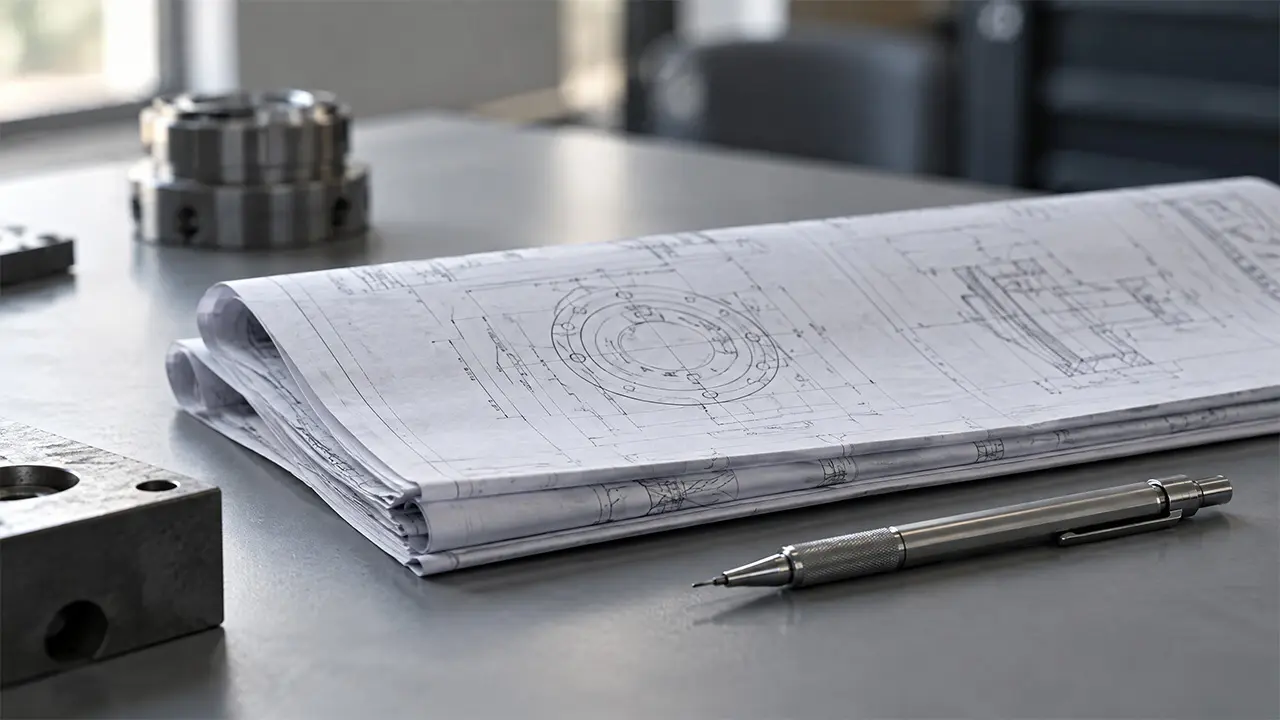
LayerQuestar's engineering team confirms the full machine configuration — screw diameter, layer count, film width, material requirements and electrical standard. A production schedule is issued and the order enters the manufacturing queue.
Manufacturing
30–45 Days (Standard Configuration)
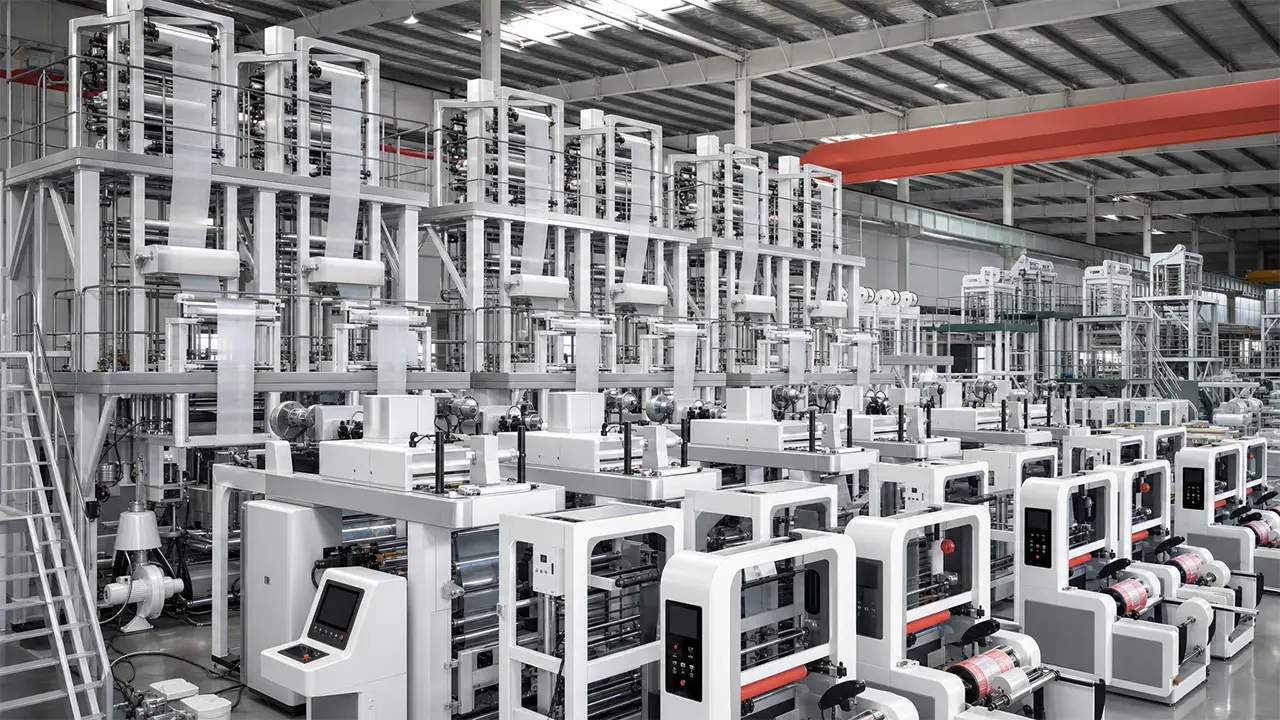
Covers screw and barrel machining, frame fabrication, die head assembly, electrical wiring and full mechanical assembly. Non-standard configurations or custom specifications may require additional lead time confirmed at the engineering stage.
72-Hour Factory Acceptance Test
3 Days
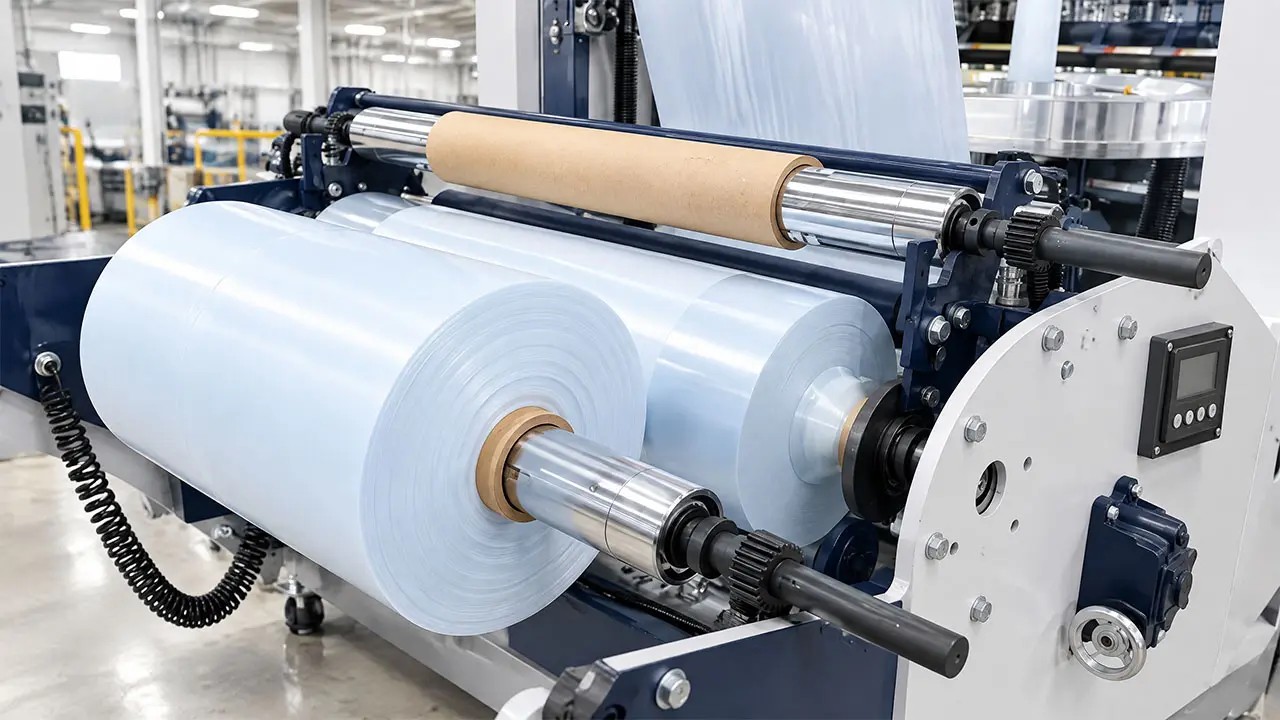
Every machine undergoes a 72-hour continuous production run before shipment, verified against output rate, zone temperature stability and film thickness tolerance (±5% standard). Buyers can attend in person or witness remotely via live video.
Learn more about our FAT process →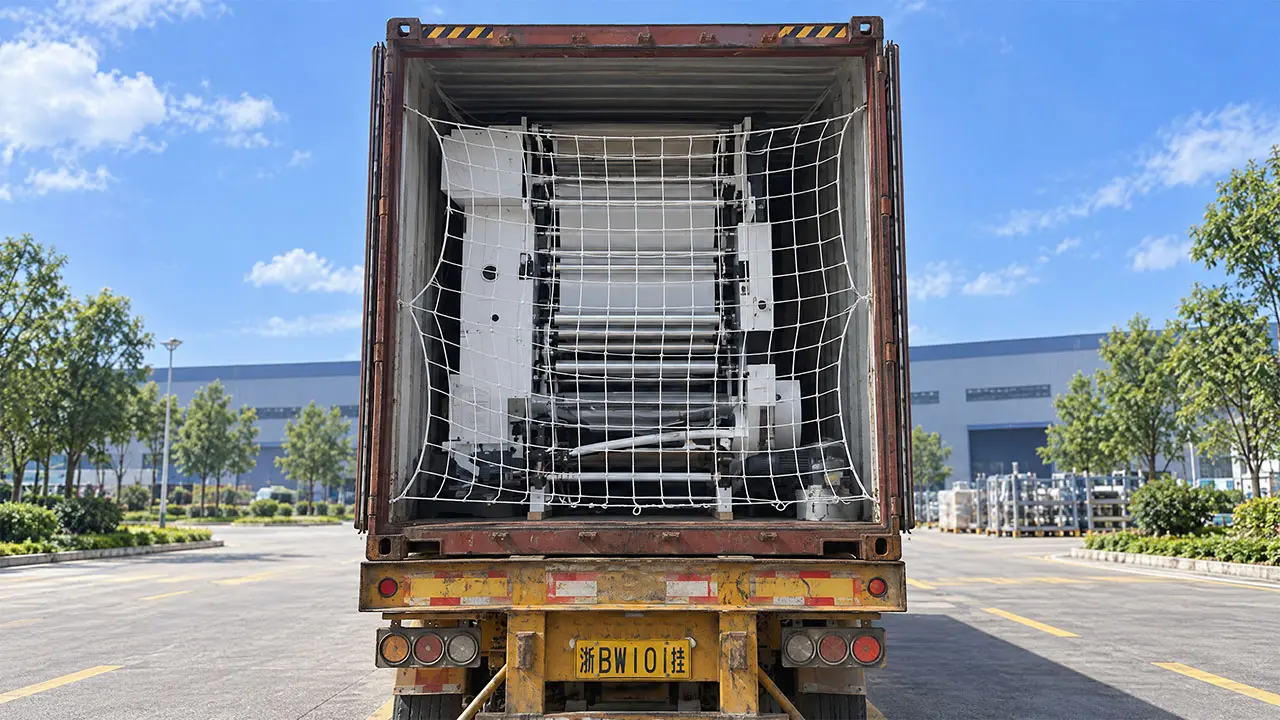
Export Packaging & Sea Freight
7–25 Days (Varies by Destination)
Machine is disassembled, protected and loaded into containers. LayerQuestar handles export documentation and FOB shipment from Zhejiang port. Transit time: 7–12 days to Southeast Asia, 15–20 days to the Middle East or South Asia, 20–25 days to Africa or South America.
On-Site Installation & Commissioning
5–7 Days
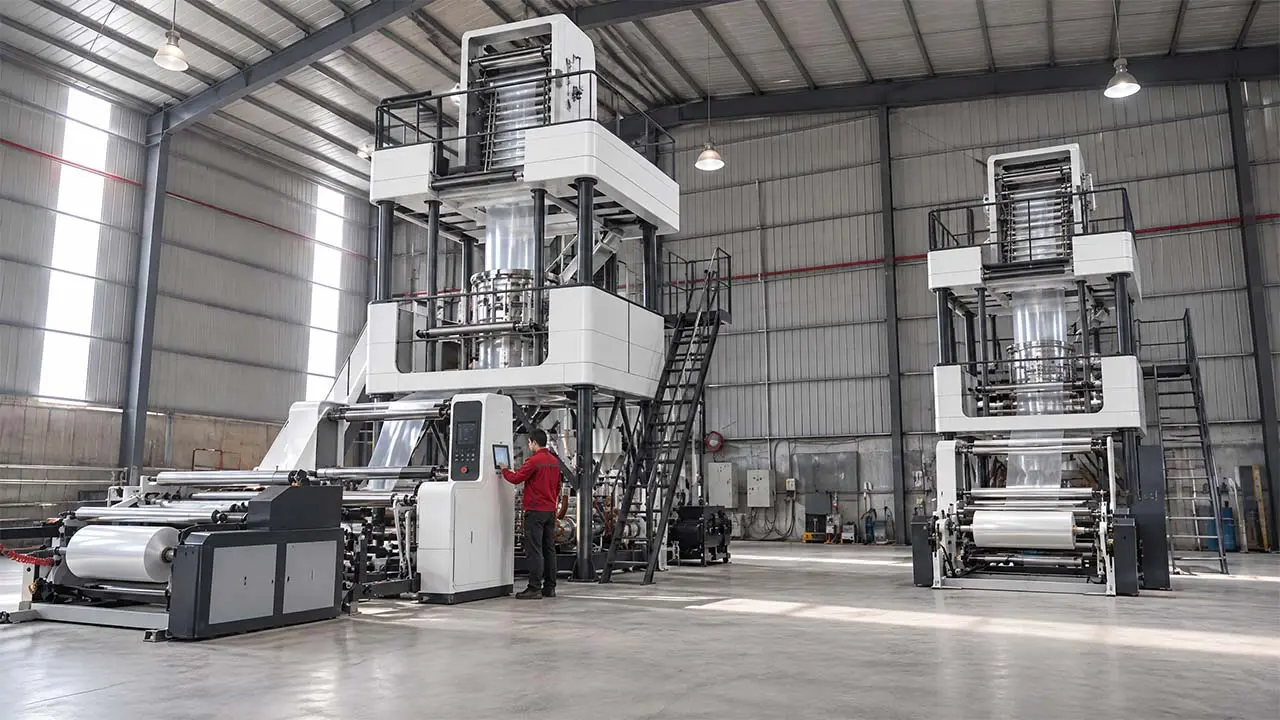
A LayerQuestar engineer supervises installation, completes electrical connections, calibrates to local power supply conditions and runs the first production trials. Operator training is conducted during this period. Most operators reach independent operation within 1–2 weeks of commissioning.
Typical Total Timeline
60–90 Days
From contract signing to first production run, for a standard configuration shipped to Southeast Asia or the Middle East. Actual timeline varies by machine complexity, destination port and local installation conditions.
How Does LayerQuestar Compare
to Entry-Level Configurations?
The table below compares a standard LayerQuestar ABA 3-layer blown film line against typical entry-level market configurations across eight production-critical dimensions. Figures are based on factory-tested configurations under standard operating conditions — actual results vary by film width, thickness and material formula.
| Comparison Item | Typical Entry-Level Configuration | LayerQuestar Configuration |
|---|---|---|
| Film Thickness Tolerance | ±8–12% | ±5% |
| Screw Surface Hardness | Standard nitrided steel · HRC ~55 | WC bi-metallic · HRC 59–65 |
| Temperature Zone Deviation | ±3–5°C typical | ±1°C under stable conditions |
| Machine Frame Section | 80–100mm square tube | 140mm heavy-wall square tube |
| Gearbox Cooling | Passive / splash lubrication | External oil-cooled circulation · 8–10 yr design life |
| Pre-Shipment Run Test | Not standard · 30–60 min bench test | 72-hour continuous production run · every machine |
| On-Site Commissioning | Extra charge or not offered | Up to 7 days · engineer on-site · included |
| Core Component Warranty | 1 year standard | 3 years · 5 core components |
* "Typical Entry-Level Configuration" figures represent general market observations and are provided for reference only. Actual performance varies by manufacturer, screw diameter, film width and material formula. LayerQuestar makes no claim regarding any specific competitor's equipment.
Frequently Asked Questions
Answers to the questions buyers ask most often before selecting a blown film machine.
What is a blown film machine and how does it work?
A blown film machine converts plastic resin pellets into continuous tubular film in five stages: resin is fed into a heated barrel where a rotating screw melts and pressurises it; the melt is forced upward through an annular die and inflated with compressed air to form a bubble; the bubble is cooled by an air ring, collapsed by a nip board and wound into rolls. In multi-layer co-extrusion machines, two to nine extruders feed separate material streams into a single die simultaneously, producing a film with distinct functional layers fused in the melt state.
How many layers do I need for courier bag production?
A 3-layer ABA configuration is the standard for courier bag production. The two outer A layers — typically LLDPE or mLLDPE — provide tensile strength, puncture resistance and a printable surface. The inner B layer can carry PCR content or lower-cost resin blends without affecting outer surface quality. A 2-layer AB machine is a lower-cost entry point if PCR content is not a requirement.
What is the difference between ABA and ABC 3-layer blown film?
In an ABA structure, the two outer layers use the same material and the inner layer uses a different one — the most common configuration for courier bags where outer layers need identical properties. In an ABC structure, all three layers use different materials independently, giving more flexibility where inner and outer surfaces need different properties. ABA machines use two extruders; ABC machines require three independent extruders.
How does screw diameter affect blown film machine output?
Screw diameter determines the volume of resin that can be melted per revolution, setting the output ceiling of the machine. A larger diameter screw processes more material per unit time but requires more motor power, a larger footprint and a taller factory ceiling. Actual output also depends on film thickness, material formula, line speed and cooling efficiency. As a general reference, LayerQuestar's ABA range covers from approximately 85 kg/h at Φ45×2mm to 280–300 kg/h at Φ80×2mm under standard polyethylene conditions.
What materials can a blown film machine process?
LayerQuestar blown film machines are configured to process LDPE, HDPE, LLDPE and mLLDPE for standard bag and film applications; PP for food and industrial film; EVOH and PA as barrier layers in 5-, 7- and 9-layer structures; PLA/PBAT blends for biodegradable film; and PCR content in co-extrusion core layers. Different materials require different screw geometries and temperature profiles — biodegradable compounds require centre-wind winding, and hygroscopic materials such as PA and EVOH require pre-drying before processing.
What is the difference between blown film and cast film?
Blown film is formed by inflating extruded melt into a bubble and cooling it with air — producing a biaxially oriented film with balanced strength and lower optical clarity. Cast film is formed by extruding melt through a flat die directly onto a chill roll — producing higher clarity and gloss but primarily machine-direction orientation. Blown film is appropriate for bags, pouches, agricultural and industrial film. Cast film is preferred for cling wrap, CPP film and applications where maximum optical clarity is the primary requirement.
How long does it take to commission a blown film line?
On-site installation and commissioning of a standard LayerQuestar blown film machine typically takes 5–7 days, covering mechanical assembly, electrical connection, calibration and operator training. Most operators reach independent operation within 1–2 weeks. The total timeline from contract signing to first production run — including manufacturing (30–45 days), the 72-hour factory acceptance test and sea freight — is typically 60–90 days depending on destination and machine complexity.
What optional upgrades are available for blown film machines?
Available optional upgrades include: IBC (Internal Bubble Cooling) for increased output on the same footprint; Automatic Thickness Control (ATC) for real-time die gap adjustment; an online thickness gauge for continuous measurement and quality data logging; a rotating die head for improved film roll flatness; a dual-lip air ring for finer cooling control on high-speed or thin-gauge lines; and a quick screen changer that reduces screen replacement to within seconds, minimising downtime when processing PCR or contaminated materials.

Ready to Configure Your
Blown Film Line?
Tell us your target product, daily output requirement and factory conditions — LayerQuestar engineers will recommend the right screw diameter, layer configuration and optional upgrades for your application, at no obligation.