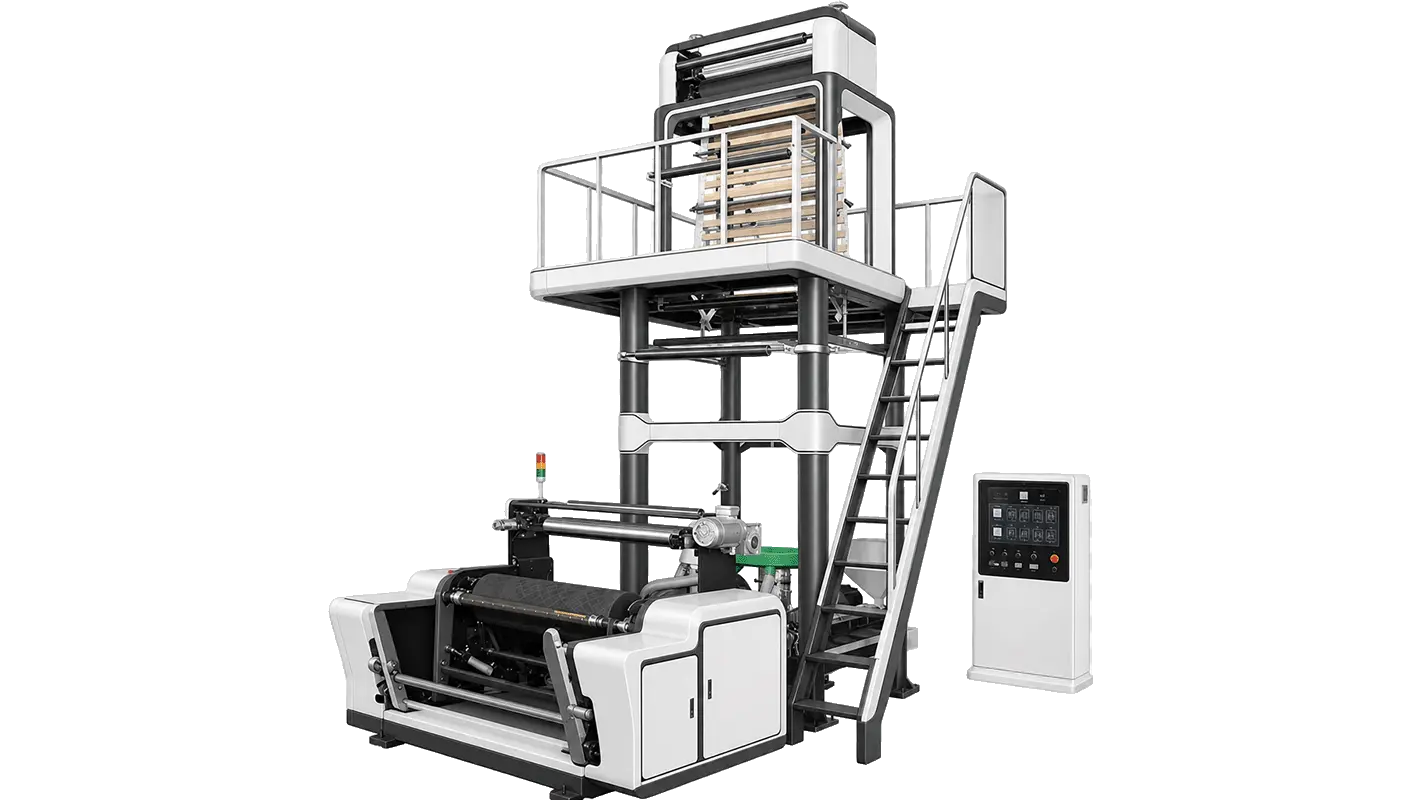
LayerQuestar sustainable film production line — PCR and biodegradable PLA PBAT blown film
Sustainable Film Solutions

Your Market Is Changing.
Your Film Line Needs to Keep Up.

Plastic regulations, brand sustainability commitments and government procurement standards are redefining what film can be sold — and to whom. LayerQuestar provides two clear compliance paths, matched to your existing equipment and target market.

120+ Countries Served
123+ Patents Granted
PCR Multi-Layer Compatible
PLA/PBAT Specialist Line Available
Regulatory Context

Why Factories Are Being Pushed to Act Now

The pressure to change is not coming from one direction. Three separate forces are converging simultaneously — and each one points to a different compliance requirement.

Force 1 — Government Regulation

Plastic Bag Bans & Single-Use Directives

The EU Single-Use Plastics Directive (2019/904) bans specific single-use plastic items across all member states. The EU Packaging and Packaging Waste Regulation (PPWR) sets mandatory recycled content targets — 25% recycled content in plastic packaging by 2025, rising to 30% by 2030. Over 60 countries have enacted some form of plastic bag restriction as of 2025.

PCR route addresses this PLA/PBAT route addresses this
Force 2 — Brand Requirements

Retailer & Brand PCR Content Mandates

Major global retailers and consumer brands have made public commitments to increase recycled content in their packaging. These commitments flow down the supply chain as supplier requirements — meaning bag factories supplying these brands must be able to certify PCR content in their film. Factories that cannot demonstrate PCR capability risk losing supply contracts to competitors who can. [TIER 3 — client should verify specific brand requirements with their buyer contacts before publishing]

PCR route addresses this
Force 3 — Market Access

Compostability Certification for New Markets

In markets where plastic bags are banned outright — including parts of the EU, South Asia and East Africa — the only legal alternative is certified compostable bags. EN 13432 (Europe) and ASTM D6400 (North America) are the primary certification standards. Producing certified compostable bags requires PLA/PBAT film — which requires a dedicated specialist machine, not a standard PE blown film line. [TIER 3 — verify current certification requirements in your target market before publishing]

PLA/PBAT route addresses this
The critical distinction before you choose a path:

"Reduce plastic" regulations → PCR content is the answer. Your film stays plastic — it just contains recycled material. "Ban non-degradable plastic" regulations → PLA/PBAT biodegradable film is the answer. This is a fundamentally different material that requires different equipment. Choosing the wrong path wastes investment.

Two Compliance Paths

Which Requirement Are You Responding To?

Identify your situation — then follow the path that applies to you. The equipment implications are completely different.

Route A — PCR Film

Recycled Content Film: What Changes, What Doesn't

Adding PCR content to your film is a material formulation decision first, and an equipment decision second. The right approach depends on how much PCR your buyers require — and what film performance you need to maintain.

What Is PCR Film?

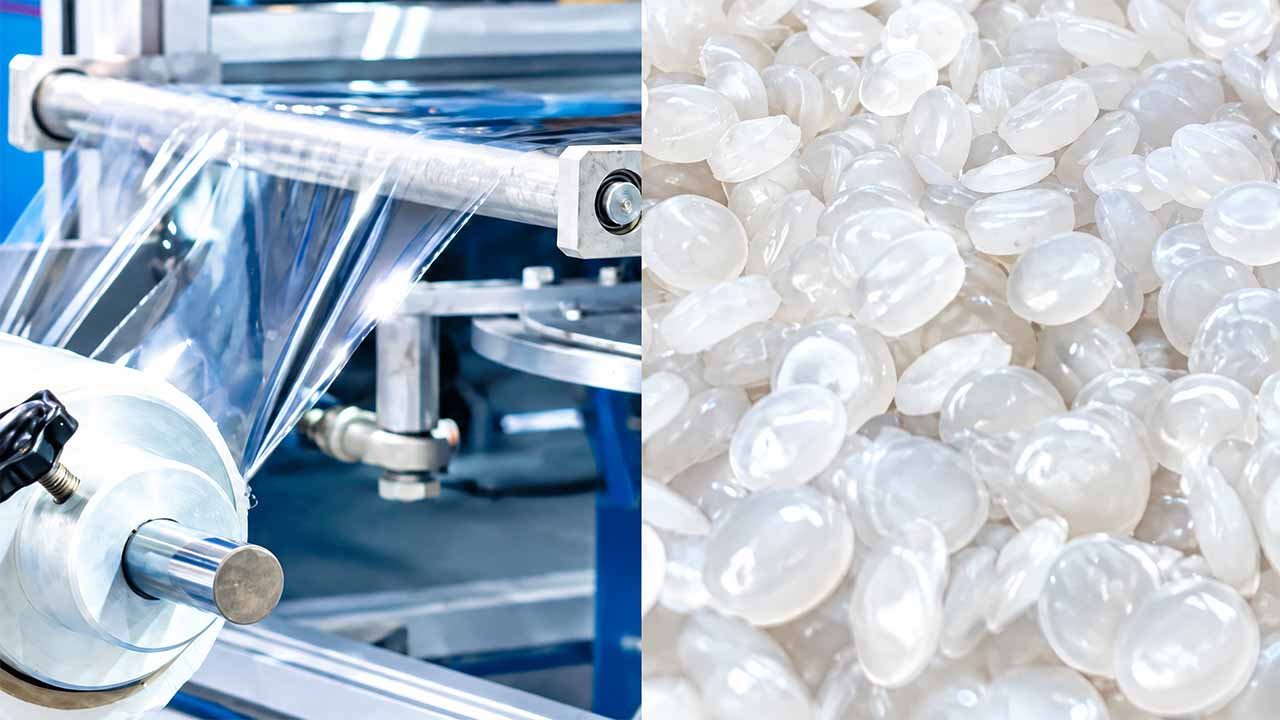
Post-Consumer Recycled (PCR) film incorporates resin derived from collected and reprocessed plastic waste — typically from used plastic bags, agricultural film or industrial PE scrap — back into new film production. The resulting film contains a measurable percentage of recycled material, which can be certified and documented for regulatory or buyer compliance purposes.

PCR resin typically has higher contamination variability than virgin resin, which affects film appearance (colour, clarity) and can introduce processing inconsistencies if not managed through correct layer architecture. This is why layer structure matters significantly when running PCR content.

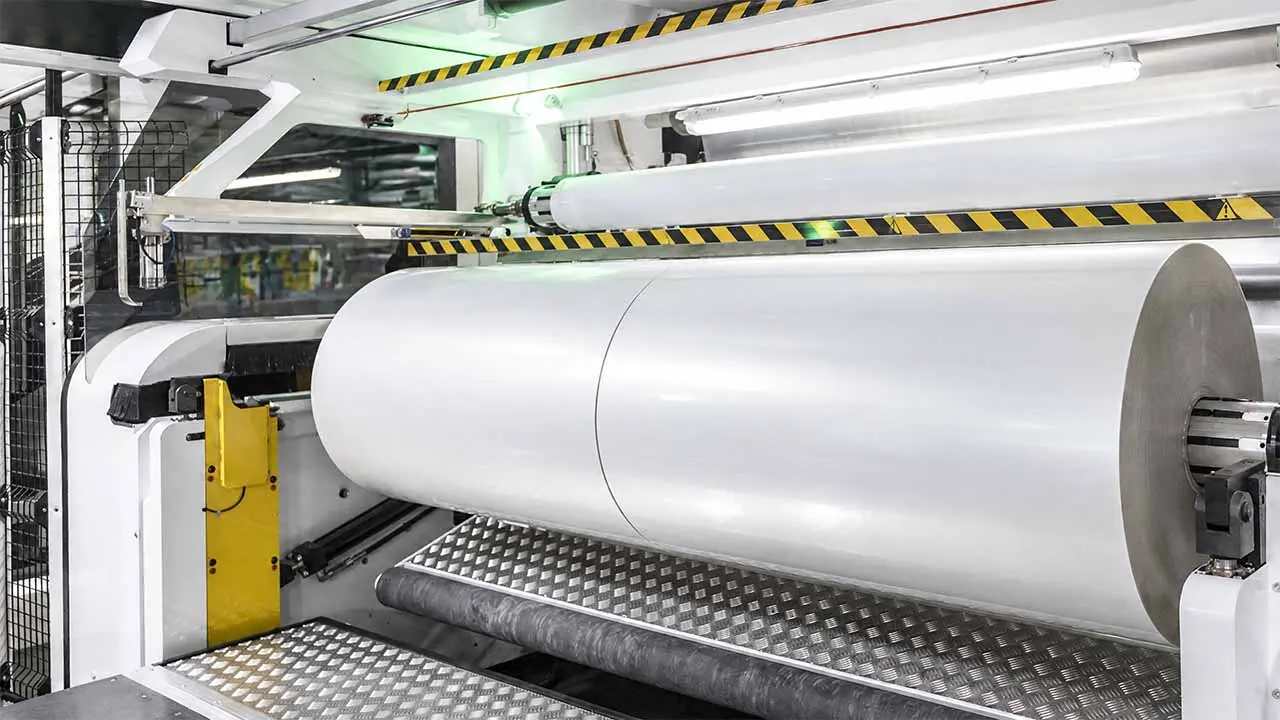
PCR content film production on LayerQuestar 3-layer ABA blown film line

PCR Content Level vs Film Performance

PCR Content Level Typical Regulatory Use Film Appearance Mechanical Performance Recommended Layer Structure
Up to 20% General brand sustainability commitments Minimal visible change; slight grey tint possible Negligible impact on tensile strength and seal performance Mono-layer or ABA (PCR blended into main layer)
20–30% EU PPWR 2025 target (25%); many brand mandates Noticeable grey tint; reduced clarity in clear film Moderate reduction in puncture resistance; manageable 3-Layer ABA or ABC — PCR isolated to centre B layer
30–50% EU PPWR 2030 target (30%); premium sustainability claims Grey/dark appearance; not suitable for clear film applications Requires mLLDPE or virgin LLDPE outer layers to compensate 3-Layer ABC or 5-Layer — PCR fully isolated in inner layers
50%+ High-recycled-content product lines; niche markets Dark grey to black appearance; opaque film only Requires careful formulation; performance varies by PCR source quality 5-Layer recommended — maximum layer isolation and control

Performance figures are indicative. Actual results vary by PCR resin source, contamination level, processing temperature and film thickness. All figures require validation under your specific operating conditions.

Which LayerQuestar Machine Is Right for Your PCR Target?

1L
Mono-Layer

Suitable for up to ~20% PCR blended directly into the single layer. Simple operation. Limited ability to isolate PCR appearance effects.

Suitable for low PCR targets
View Mono-Layer Machine →
5L
5-Layer Co-Extrusion

Maximum PCR isolation. Two independent inner layers allow high PCR loading without affecting outer surface properties. Optimal for 30–50%+ PCR targets or where film performance cannot be compromised.

Optimal for 30–50%+ PCR
View 5-Layer Machine →
Route B — Biodegradable Film

PLA/PBAT Compostable Film: This Is Not a Material Swap

The most important thing to understand about PLA/PBAT film production: you cannot run PLA or PBAT blends on a standard PE blown film machine. This is a dedicated equipment decision.

Running PLA/PBAT on a standard PE machine will damage your equipment

PLA degrades thermally at temperatures used for standard PE processing. PBAT blends require a different screw geometry optimised for lower shear. Attempting to run PLA/PBAT on a standard PE screw causes thermal degradation of the material, premature screw and barrel wear, and inconsistent film quality. The purging protocol is also fundamentally different. This is not a temperature adjustment — it requires a machine designed specifically for biodegradable resins.

Why PLA/PBAT Requires a Dedicated Machine

Screw Geometry

PLA and PBAT blends require a lower compression ratio screw with modified mixing zones. Standard PE screws generate excessive shear heat that degrades PLA chains before the die head.

Temperature Control

PLA has a narrow processing window. LayerQuestar's OMRON PID temperature control holds deviation to ±1°C under stable conditions — critical for consistent PLA melt flow without degradation.

Purging Protocol

PLA cannot be left in the barrel during shutdowns — it degrades and carbonises. The purging sequence for PLA/PBAT machines is different from PE machines and must be followed precisely to prevent barrel damage.

Certification Traceability

EN 13432 and ASTM D6400 compostability certification requires documented process control data. A dedicated machine with traceable temperature logs and material records supports the certification audit trail.

LayerQuestar Specialist Line

Biodegradable Film Machine (PLA/PBAT)

LayerQuestar's dedicated biodegradable film machine is engineered specifically for PLA/PBAT blends — with the correct screw geometry, temperature control precision, and purging protocol built in from the ground up. Full technical specifications, layer structure options and configuration details are on the product page.

View Biodegradable Film Machine
LayerQuestar biodegradable PLA PBAT blown film machine — dedicated specialist line
Common Questions

Sustainable Film FAQ

Questions we hear from factory owners evaluating a switch to PCR or biodegradable film production.

PCR Film Questions
How much PCR content is required to meet EU regulations?

The EU Packaging and Packaging Waste Regulation (PPWR) sets mandatory recycled content targets for plastic packaging: 25% by 2025, rising to 30% by 2030. However, specific requirements vary by packaging category and end market. Your buyer's own sustainability commitments may set higher targets than the regulatory minimum. Always verify the specific requirement with your customer or the relevant regulatory authority in your target market. [TIER 3 — verify current PPWR implementation status before publishing]

Will PCR content affect my bag machine's sealing temperature?

When PCR content is isolated in the centre layer of a 3-layer ABA or ABC structure, the outer layers — which contact the bag machine's sealing bar — remain virgin LLDPE or LDPE. In this configuration, sealing temperature requirements are effectively unchanged. If PCR is blended into the surface layers, some adjustment to seal temperature and dwell time may be needed, depending on the PCR resin grade and contamination level.

Can my existing mono-layer machine run PCR content?

Yes, up to approximately 20% PCR content blended directly into the single layer, depending on the PCR resin quality. Above 20%, the visual impact (grey tint, reduced clarity) and mechanical performance reduction become significant enough that a 3-layer structure — which isolates PCR in the centre layer — is strongly recommended. If your PCR target is 25% or above, a mono-layer machine is not the optimal platform.

Where does PCR resin come from and how consistent is it?

PCR resin is produced by recycling and pelletizing post-consumer plastic waste — primarily collected PE film, bags and agricultural film. Quality and consistency vary significantly by source, collection method and recycling process. Higher-grade PCR from dedicated film-to-film recycling streams is more consistent than mixed-source PCR. LayerQuestar's recycling and pelletizing lines can produce PCR pellets from your own collected film waste, giving you a controlled, traceable PCR feedstock. [NEEDS CLIENT DATA — confirm if LayerQuestar offers PCR sourcing guidance]

PLA/PBAT Film Questions
What is the difference between PLA and PBAT?

PLA (Polylactic Acid) is a rigid, bio-based polymer derived from corn starch or sugarcane. It is compostable but brittle on its own — not suitable for flexible bag film without modification. PBAT (Polybutylene Adipate Terephthalate) is a flexible, petroleum-based biodegradable polymer. In practice, PLA and PBAT are blended together — typically 40–60% PLA with 40–60% PBAT — to achieve the flexibility, tear resistance and compostability needed for bag film applications. The blend ratio affects both film properties and compostability certification compliance.

Why can't I run PLA/PBAT on my existing PE machine?

Three reasons: (1) Screw geometry — standard PE screws have a compression ratio and mixing zone design optimised for polyethylene melt behaviour. PLA requires lower shear to avoid thermal degradation. (2) Temperature sensitivity — PLA degrades rapidly above its processing window. Standard PE machines do not have the temperature precision required. (3) Purging — PLA cannot be left in the barrel during shutdowns. Standard PE purging procedures are not appropriate and will result in carbonised PLA residue that is difficult to remove and damages the barrel surface.

What certifications do compostable bags need?

The two primary standards are EN 13432 (European standard for compostability of packaging) and ASTM D6400 (US standard). Both require that the material biodegrades under industrial composting conditions within a defined timeframe, leaves no toxic residue, and does not impair the composting process. Certification is issued by accredited third-party bodies — the machine supplier does not provide certification. The film producer applies for certification based on their specific material formulation and production process. [TIER 3 — verify current certification body requirements in your target market]

Is PLA/PBAT film more expensive to produce than PE film?

Yes — PLA and PBAT resins are currently priced significantly higher than commodity PE resins. Production output rates are also generally lower due to the narrower processing window and more careful temperature management required. However, in markets where conventional plastic bags are banned, PLA/PBAT bags command a substantial price premium that reflects this higher production cost. The business case depends entirely on your target market's regulatory environment and the price premium your buyers are willing to pay. [TIER 3 — resin price differential varies by market and time; verify current pricing before publishing]

Start Your Compliance Assessment

Not Sure Which Path Is Right for You?

Tell us your target market, your current equipment, and what your buyers are asking for. LayerQuestar's engineers will give you a specific compliance path recommendation — not a brochure.

From Recycling to Finished Bags — One Supplier. One Line. One Responsibility.