Two configurations. One decision point. LayerQuestar's 3-layer line covers symmetric ABA structures for courier and shopping bag film, and fully independent ABC structures for applications that require three distinct material layers. Output from 85 to 380 kg/h depending on configuration.
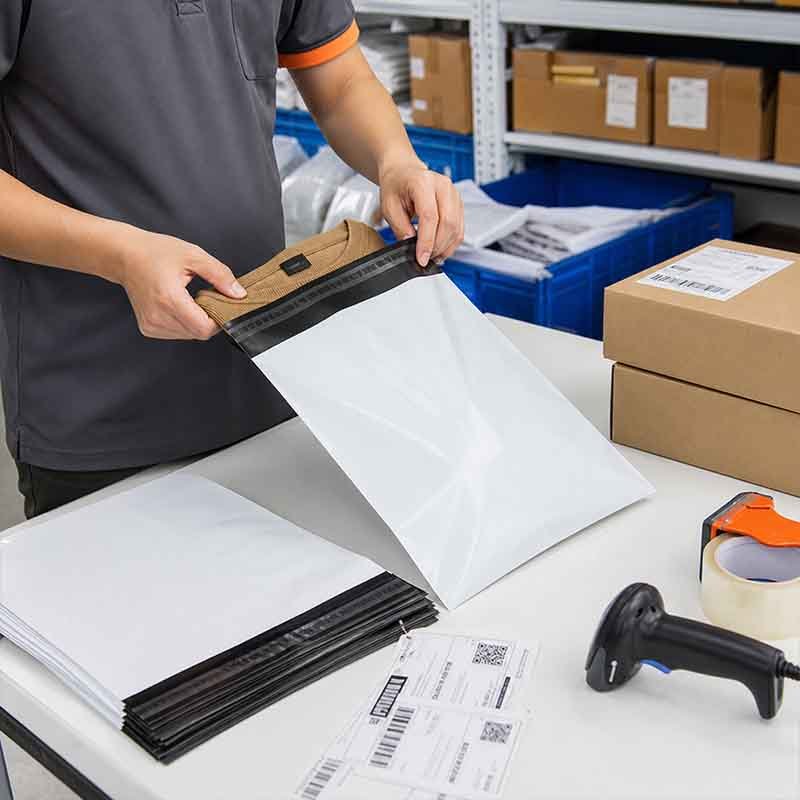
The 3-layer configuration unlocks material combinations that a single-layer or 2-layer line cannot achieve — giving each face and core of the film a dedicated function.
Symmetric A/B/A structure — HDPE outer layers for stiffness and printability, LDPE core for flexibility and seal strength.
Identical outer layers for consistent appearance; differentiated core for cost optimisation or PCR content.
Clean, consistent outer surfaces for downstream adhesive lamination or extrusion lamination processes.
mLLDPE outer layers for cling performance; LLDPE core for puncture resistance and elongation.
Three fully independent layers — different materials, different additive packages, different thicknesses — where outer layer A and outer layer C serve different functions.
Heavy-duty sack film, agricultural mulch film, and industrial liner film requiring independent optimisation of each surface and core.
PCR in the B core, virgin resin with specific slip or anti-block formulation on Layer A, and a heat-seal optimised resin on Layer C — all independently controlled.
Outer Layer A formulated for corona treatment and ink adhesion; Layer C formulated for sealing — without compromising core layer composition.
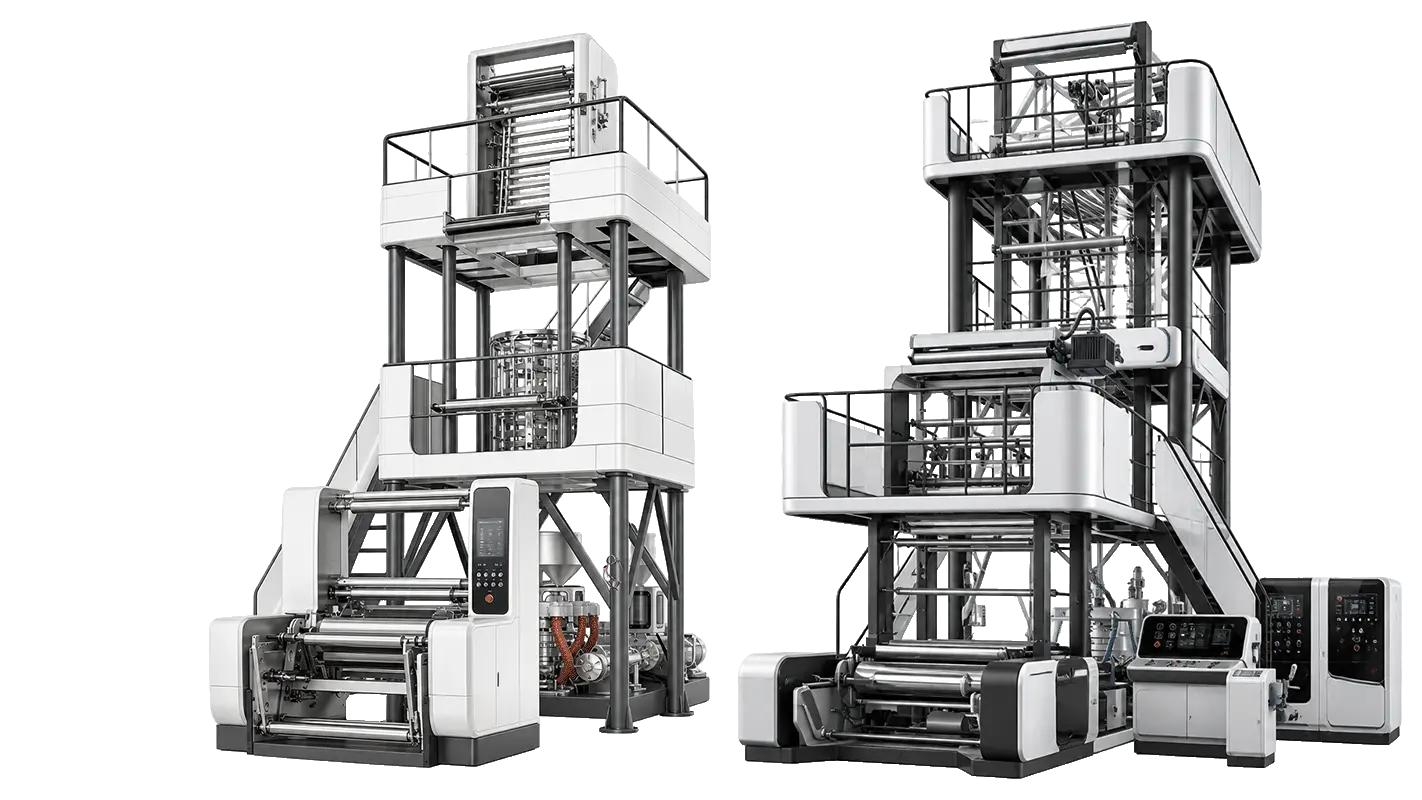
LayerQuestar Machinery's 3-layer blown film machines are available in two architecturally distinct configurations: the ABA (2-extruder, 3-layer) and the ABC (3-extruder, 3-layer). Both produce 3-layer co-extruded film, but the die head design and extruder count differ — and that difference determines which applications each configuration can serve. The ABA is the standard choice for symmetric-structure film such as courier bags and shopping bags. The ABC is specified when all three layers must carry independent material formulas, such as asymmetric barrier or functional packaging film. LayerQuestar supplies both configurations from its Zhejiang manufacturing base, with machines shipped to 120+ countries and regions.
Both configurations produce 3-layer film. The difference is in how many extruders are used and whether the two outer layers can carry different materials.
| Layer | Position | Source | Material | Typical Function |
|---|---|---|---|---|
| A | Outer (top) | Extruder A | HDPE / LDPE / mLLDPE | Surface, printability, stiffness |
| B | Core (center) | Extruder B | LDPE / LLDPE / PCR blend | Flexibility, seal strength, cost layer |
| A | Outer (bottom) | Extruder A | Same as top A layer | Identical to top outer layer |
| Layer | Position | Source | Material | Typical Function |
|---|---|---|---|---|
| A | Outer (top) | Extruder A | Any — independent | Print surface, corona treatment, slip |
| B | Core (center) | Extruder B | Any — independent | Bulk, PCR content, structural layer |
| C | Outer (bottom) | Extruder C | Any — independent | Heat seal, anti-block, different from A |
| Configuration | Extruders | Die Channels | Film Layers | Outer Layers | Best For |
|---|---|---|---|---|---|
| ABA | 2 | 3 | 3 | A = A (identical) | Courier bags, shopping bags, lamination film, stretch film |
| ABC | 3 | 3 | 3 | A ≠ C (independent) | Asymmetric functional film, independent surface control, specialty packaging |
A common misconception in the blown film industry is that a 3-layer machine always requires 3 extruders. This is not accurate. The ABA configuration uses only 2 extruders: the die head splits Extruder A's melt stream into two outer flow channels, producing a symmetric A/B/A film structure. The ABC configuration uses 3 extruders, each feeding one dedicated die channel independently, allowing all three layers to carry different materials. LayerQuestar Machinery manufactures both configurations and can advise on which architecture is appropriate for your specific film product and production requirements.
Discuss your layer structure with our engineersAll output figures are under standard operating conditions. Actual throughput varies by film thickness, material formula and haul-off speed. Contact LayerQuestar for a configuration matched to your production target.
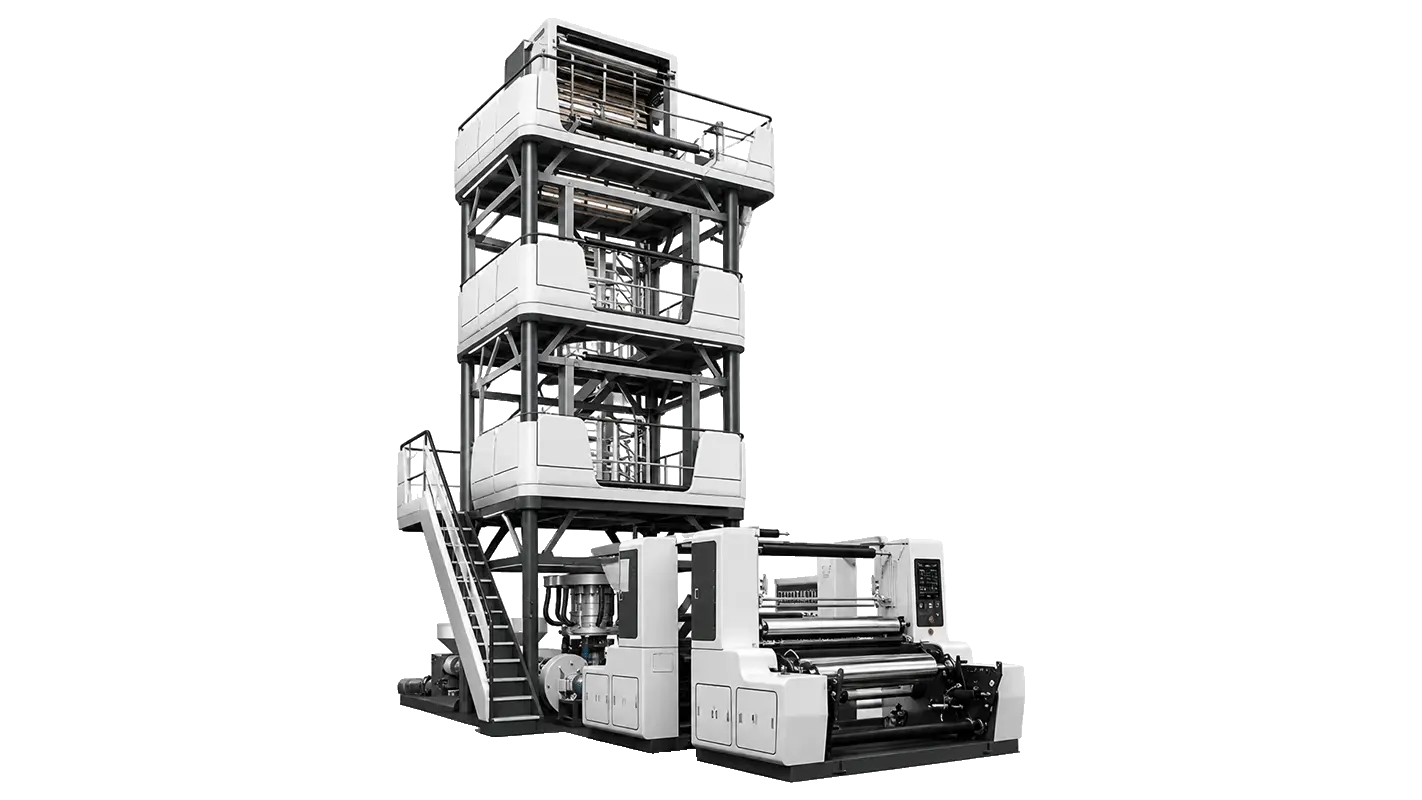
Symmetric A/B/A structure. Both outer layers from Extruder A. Core from Extruder B. Screw notation ×2 indicates identical paired screws.
| Model | Output (kg/h) | Motor (kW) | Screw Dia. | Die Head | Blower (kW) | Gearbox | Footprint L×W×H (m) |
|---|---|---|---|---|---|---|---|
| LQ-ABA-700 | 85 | 15×2 | Φ45×2 mm | 120 mm | 4 | 146×2# | 5×3.5×5.2 |
| LQ-ABA-900 | 100 | 15×2 | Φ50×2 mm | 150 mm | 5.5 | 173×2# | 5.5×4×5.2 |
| LQ-ABA-1100 | 120 | 18.5×2 | Φ55×2 mm | 200 mm | 5.5 | 173×2# | 5×4.5×6.2 |
| LQ-ABA-1300 | 150 | 22×2 | Φ60×2 mm | 280 mm | 7.5 | 180×2# | 6.5×5.5×7.2 |
| LQ-ABA-1600 | 180 | 30×2 | Φ65×2 mm | 350 mm | 7.5 | 200×2# | 7×6×8.5 |
| LQ-ABA-1800 | 200 | 45×2 | Φ65×2 mm | 350 mm | 11 | 225×2# | 7×6×8.5 |
| LQ-ABA-2200 | 260 | 37×2 | Φ75×2 mm | 450 mm | 11 | 225×2# | 7×6.5×9.5 |
| LQ-ABA-2500 | 280 | 45×2 | Φ80×2 mm | 500 mm | 11 | 275×2# | 7×6.5×9.5 |
| LQ-ABA-3200 | 300 | 55×2 | Φ80×2 mm | 600 mm | 11 | 275×2# | 7×6.5×9.5 |
High-density polyethylene configuration. Suitable for courier bag film, vest bag film and HDPE shopping bags requiring a symmetric 3-layer structure.
| Model | Output (kg/h) | Motor (kW) | Screw Dia. | Die Head | Blower (kW) | Gearbox | Footprint L×W×H (m) |
|---|---|---|---|---|---|---|---|
| LQ-ABA-700 | 70 | 15×2 | Φ45×2 mm | 60 mm | 4 | 146×2# | 5×3.5×5.2 |
| LQ-ABA-900 | 85 | 15×2 | Φ50×2 mm | 80 mm | 5.5 | 173×2# | 5.5×4×5.2 |
| LQ-ABA-1100 | 100 | 18.5×2 | Φ55×2 mm | 100 mm | 5.5 | 173×2# | 5×4.5×6.2 |
| LQ-ABA-1300 | 120 | 22×2 | Φ55×2 mm | 120 mm | 7.5 | 180×2# | 6.5×5.5×7.2 |
| LQ-ABA-1600 | 150 | 30×2 | Φ65×2 mm | 150 mm | 7.5 | 200×2# | 7×6×8.5 |
| LQ-ABA-1800 | 200 | 45×2 | Φ65×2 mm | 180 mm | 11 | 225×2# | 7×6×8.5 |
| LQ-ABA-2200 | 220 | 37×2 | Φ75×2 mm | 200 mm | 11 | 225×2# | 7×6.5×9.5 |
| LQ-ABA-2500 | 260 | 45×2 | Φ80×2 mm | 250 mm | 11 | 275×2# | 7×6.5×9.5 |
| LQ-ABA-3200 | 280 | 55×2 | Φ80×2 mm | 300 mm | 11 | 275×2# | 7×6.5×9.5 |
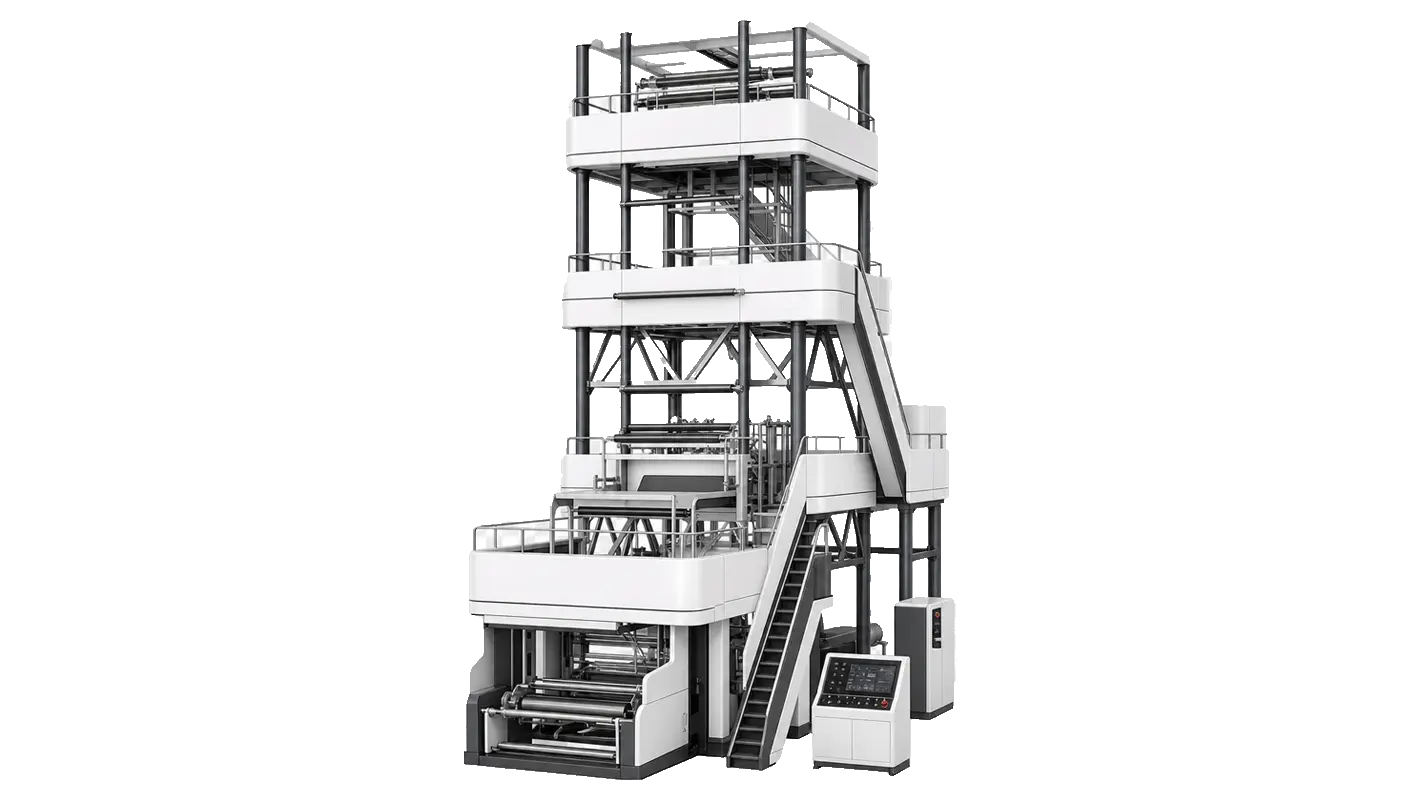
Three independent extruders. Motor notation A/B/C indicates individual extruder powers. Screw notation Φ A/B/C indicates individual screw diameters — centre extruder B is typically larger.
| Model | Output (kg/h) | Motor A/B/C (kW) | Screw Dia. A/B/C | Die Head | Blower | Gearbox | Footprint L×W×H (m) |
|---|---|---|---|---|---|---|---|
| LQ-ABC-900 | 120 | 15/18.5/15 | Φ45/50/45 mm | 200 mm | 5.5KW×1 / 4KW×2 | 146×2 / 173×1 | 6.5×5×6.2 |
| LQ-ABC-1100 | 150 | 15/18.5/15 | Φ50/55/50 mm | 250 mm | 7.5KW×1 / 5.5KW×2 | 173×2 / 180×1 | 7×5×6.8 |
| LQ-ABC-1300 | 180 | 22/30/22 | Φ55/60/55 mm | 280 mm | 11KW×1 / 5.5KW×2 | 180×3 | 8×5.5×6.8 |
| LQ-ABC-1400 | 180 | 22/30/22 | Φ55/60/55 mm | 280 mm | 11KW×1 / 5.5KW×2 | 173×2 / 180×1 | 8×5.5×7.2 |
| LQ-ABC-1600 | 220 | 30/37/30 | Φ60/65/60 mm | 350 mm | 11KW×1 / 7.5KW×2 | 180×2 / 200×1 | 8.5×6.5×7.8 |
| LQ-ABC-1800 | 240 | 37/45/37 | Φ65/70/65 mm | 380 mm | 11KW×1 / 7.5KW×2 | 180×2 / 200×1 | 9×6.5×7.2 |
| LQ-ABC-2100 | 280 | 45/55/45 | Φ70/75/70 mm | 500 mm | 11KW×1 / 7.5KW×2 | 200×2 / 225×1 | 9×6.5×9.2 |
| LQ-ABC-2200 | 280 | 45/55/45 | Φ65/75/65 mm | 500 mm | 11KW×1 / 7.5KW×2 | 200×2 / 225×1 | 9×7.5×9.2 |
| LQ-ABC-2400 | 300 | 45/55/45 | Φ75/85/75 mm | 600 mm | 11KW×1 / 7.5KW×2 | 250×2 / 275×1 | 10×10.5×11.5 |
| LQ-ABC-2500 | 300 | 45/55/45 | Φ75/85/75 mm | 600 mm | 11KW×1 / 7.5KW×2 | 250×2 / 275×1 | 10×10.5×11.5 |
| LQ-ABC-2800 | 320 | 55/60/55 | Φ75/90/75 mm | 650 mm | 11KW×1 / 7.5KW×2 | 250×2 / 275×1 | 10×10.5×11.5 |
| LQ-ABC-3200 | 380 | 90/132/90 | Φ90/120/90 mm | 750 mm | 15KW×1 / 11KW×2 | 280×2 / 315×1 | 10×10.5×11.5 |
Three independent extruders, HDPE configuration. Suitable for high-stiffness asymmetric film structures and applications requiring independent HDPE layer control.
| Model | Output (kg/h) | Motor A/B/C (kW) | Screw Dia. A/B/C | Die Head | Blower | Gearbox | Footprint L×W×H (m) |
|---|---|---|---|---|---|---|---|
| LQ-ABC-900 | 100 | 15/18.5/15 | Φ45/50/45 mm | 80 mm | 5.5KW×1 / 4KW×2 | 146×2 / 173×1 | 6.5×5×6.2 |
| LQ-ABC-1100 | 120 | 15/18.5/15 | Φ50/55/50 mm | 100 mm | 7.5KW×1 / 5.5KW×2 | 173×2 / 180×1 | 7×5×6.8 |
| LQ-ABC-1300 | 150 | 22/30/22 | Φ55/60/55 mm | 120 mm | 11KW×1 / 5.5KW×2 | 180×3 | 8×5.5×6.8 |
| LQ-ABC-1400 | 150 | 22/30/22 | Φ55/60/55 mm | 120 mm | 11KW×1 / 5.5KW×2 | 173×2 / 180×1 | 8×5.5×7.2 |
| LQ-ABC-1600 | 160 | 30/37/30 | Φ60/65/60 mm | 150 mm | 11KW×1 / 7.5KW×2 | 180×2 / 200×1 | 8.5×6.5×7.8 |
| LQ-ABC-1800 | 160 | 37/45/37 | Φ65/70/65 mm | 160 mm | 11KW×1 / 7.5KW×2 | 180×2 / 200×1 | 9×6.5×7.2 |
| LQ-ABC-2100 | 160 | 45/55/45 | Φ70/75/70 mm | 200 mm | 11KW×1 / 7.5KW×2 | 200×2 / 225×1 | 9×6.5×9.2 |
| LQ-ABC-2200 | 200 | 45/55/45 | Φ65/75/65 mm | 220 mm | 11KW×1 / 7.5KW×2 | 200×2 / 225×1 | 9×7.5×9.2 |
| LQ-ABC-2400 | 250 | 45/55/45 | Φ75/85/75 mm | 250 mm | 11KW×1 / 7.5KW×2 | 250×2 / 275×1 | 10×10.5×11.5 |
| LQ-ABC-2500 | 250 | 45/55/45 | Φ75/85/75 mm | 250 mm | 11KW×1 / 7.5KW×2 | 250×2 / 275×1 | 10×10.5×11.5 |
All output figures under standard operating conditions. Actual throughput varies by film thickness, haul-off speed and material formula.
Standard voltage: 380V / 50Hz. 440V / 60Hz available on request.
Film thickness tolerance: ±8% under stable running conditions.
Core tube diameter: 76 mm. Maximum roll diameter: 1,000 mm.
ABA and ABC are different machines designed for different production requirements. This guide helps you identify which configuration matches your film product and business situation.
| Criteria | ABA | ABC |
|---|---|---|
| Number of extruders | 2 | 3 |
| Film layers produced | 3 | 3 |
| Outer layers — same material? | Always identical (same extruder) | Fully independent (different extruders) |
| Layer thickness ratio control | A:B ratio via extruder speed | A:B:C ratio independently controlled |
| Typical output range | 70–300 kg/h | 100–380 kg/h |
| Courier & shopping bag film | Primary application | Possible, but over-specified |
| Asymmetric functional film | Not possible | Primary application |
| PCR core with clean outer layers | Supported | Supported |
| Capital cost relative to each other | Lower (2 extruders) | Higher (3 extruders) |
Not sure which configuration suits your product? LayerQuestar's engineers can review your film specification and recommend the right architecture.
Ask an Engineer
Practical operating parameters for factory planning — staffing, changeover, roll handling and downstream compatibility.
2 persons per shift
One operator manages the extruder controls and material feed; one handles the winding station and roll changes. No specialist certification required — LayerQuestar provides operator training documentation with every machine.
Approximately 1 hour
Typical changeover from HDPE to LDPE (or equivalent material switch) takes approximately 1 hour under standard purging procedure. Changeover time varies depending on the degree of colour or additive difference between the outgoing and incoming material.
76 mm core · 1,000 mm max roll diameter
Standard core tube inner diameter is 76 mm, compatible with most downstream bag making and printing machine mandrels. Maximum finished roll diameter is 1,000 mm. Roll weight capacity depends on film thickness and width — confirm with LayerQuestar for your specific model.
Direct feed to bag making & printing lines
Film produced on the 3-layer line feeds directly into LayerQuestar's bag making machines (T-shirt, courier, zipper, bottom-seal) and flexographic printing lines without intermediate processing. Confirm roll width and core specification when planning a full line.
ABC requires managing 3 independent material feeds
On the ABA machine, the operator manages 2 material hoppers (Extruder A and Extruder B). On the ABC machine, 3 independent hoppers must be managed — each with its own resin, masterbatch and additive dosing. This increases operational complexity and the importance of consistent material supply for all three extruders simultaneously.
±8% under stable running conditions
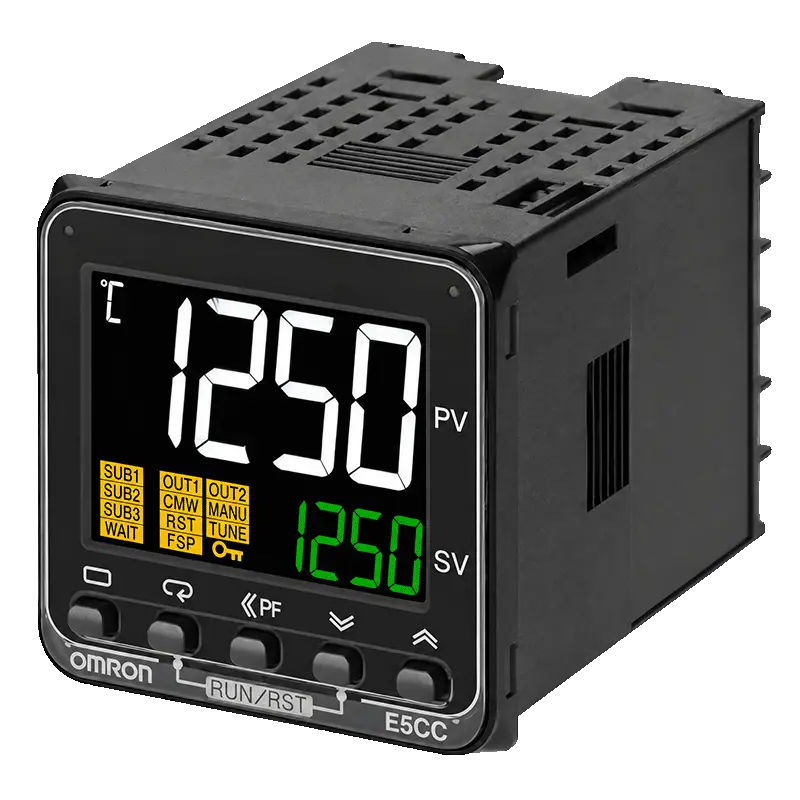
Achieved through OMRON PID temperature control (deviation ±1°C under stable conditions) and consistent haul-off speed. Layer thickness ratio is controlled by adjusting relative extruder speeds at the control panel — no mechanical die adjustment required for ratio changes.
Five hardware specifications that define the mechanical quality of every 3-layer machine leaving the LayerQuestar factory floor.
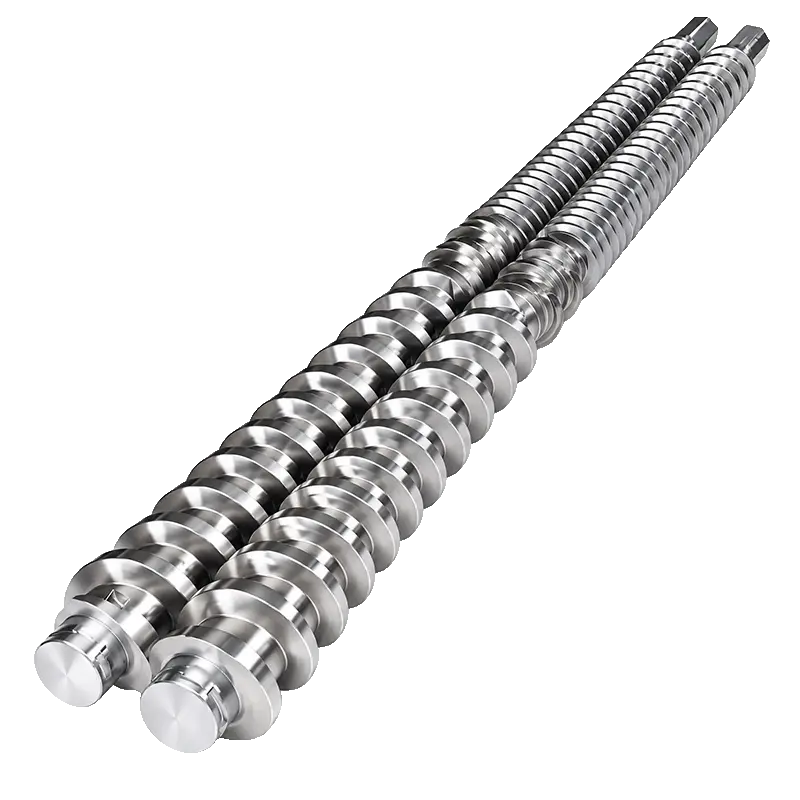
Base material: 38CrMoAlA nitrided steel. Surface: 1.5–3 mm tungsten carbide alloy overlay. Hardness: HRC 59–65. Applied to all extruders on both ABA and ABC configurations. Designed for extended service life with PCR blends and high-filler masterbatch.
Each heating zone is controlled by an OMRON PID controller. Temperature deviation under stable running conditions: ±1°C. Critical for maintaining consistent melt viscosity across all extruders — particularly important on the ABC configuration where three independent melt streams must be balanced at the die head.
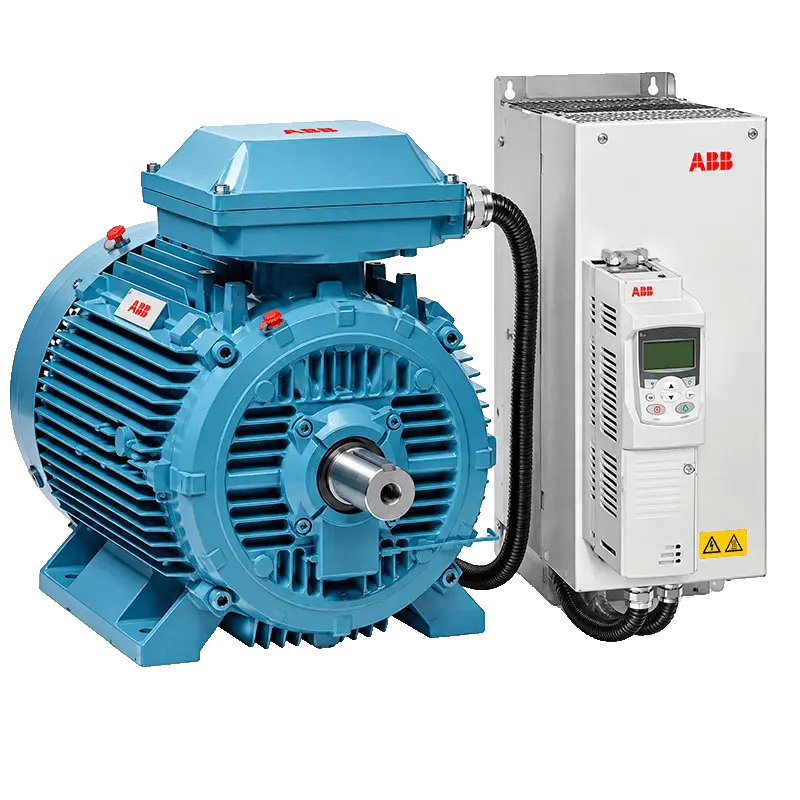
ABB is the preferred main motor brand. Innomotics and other internationally recognised brands are available depending on configuration and market. All motors are paired with variable frequency drives for precise speed control of each extruder independently.
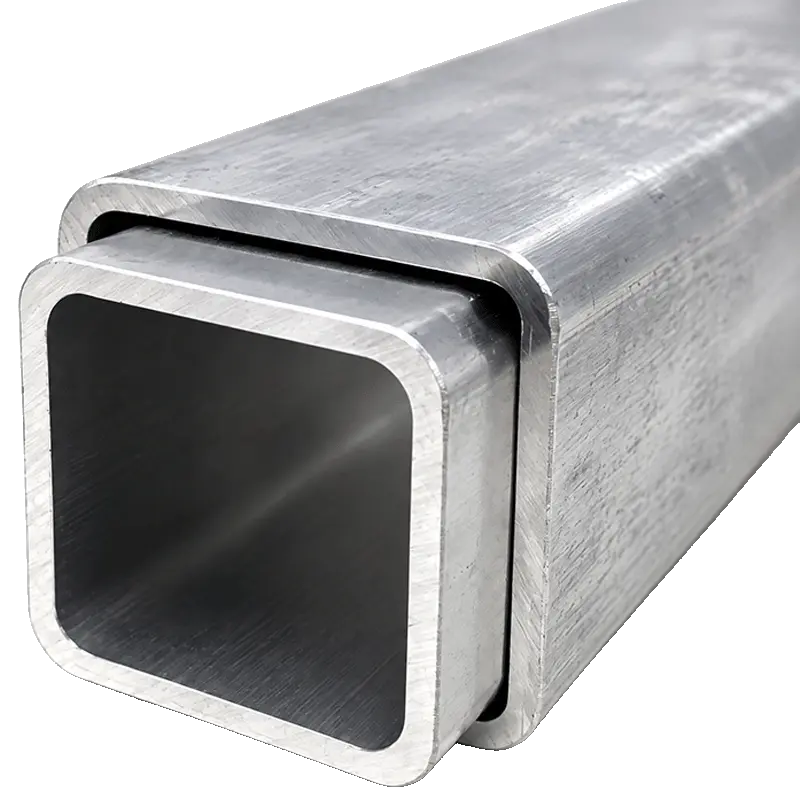
Machine frame constructed from 140 mm heavy-wall square tube steel. Provides the structural rigidity required to maintain die head alignment and bubble stability under continuous multi-extruder operation. Frame geometry is consistent across ABA and ABC configurations.
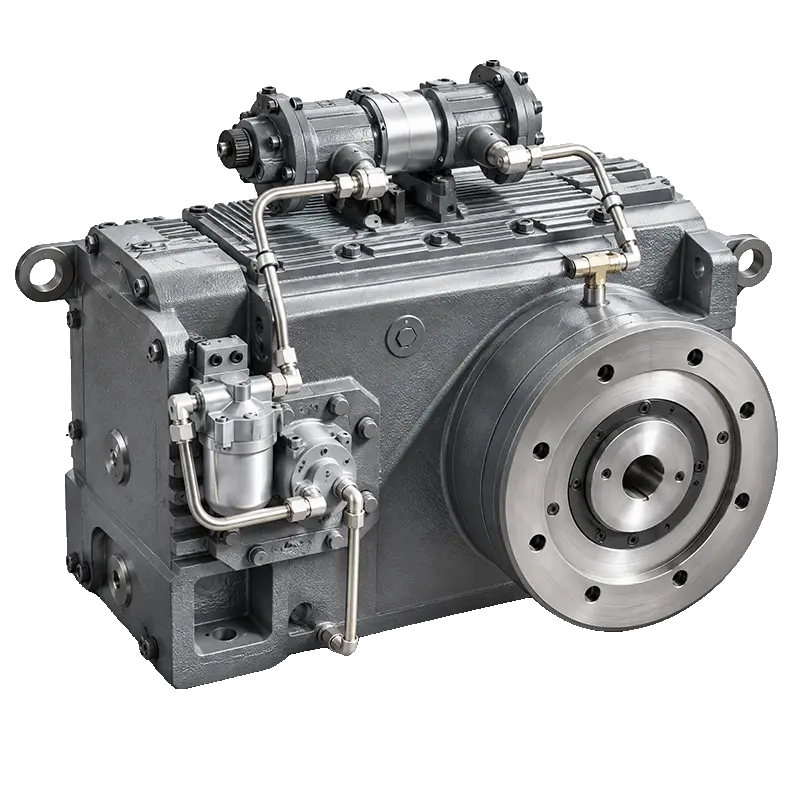
External oil-cooled circulation gearbox on each extruder. Designed for 8–10 years of service life under continuous operation. The ABC configuration carries three independent gearboxes — one per extruder — each with its own cooling circuit.
Every machine — ABA and ABC — undergoes a 72-hour continuous production run at the LayerQuestar factory before shipment. The test runs all extruders simultaneously under load, verifying temperature stability, output consistency, layer ratio accuracy and control system function. Results are documented and provided with the machine. Customers are welcome to witness the FAT in person at the Zhejiang facility.
Every LayerQuestar 3-layer machine is backed by a structured warranty, a standard spare parts kit, and direct technical support.
Applies to all extruders on both ABA (×2) and ABC (×3) configurations.
Every ABA and ABC machine ships with the following starter kit. Note: ABA ships with parts for 2 extruders; ABC ships with parts for 3 extruders.
Replacement parts dispatched within 7 days of order confirmation.
LayerQuestar's engineering team provides remote troubleshooting via video call, email and WhatsApp. On-site service visits available for commissioning and major fault diagnosis. [NEEDS CLIENT DATA — confirm response time commitment]
All control cabinet labels, HMI screens and documentation are in English. 2–3 independent cooling fans fitted to the cabinet. Reduces reliance on local technical support for routine operation and fault diagnosis.
Common questions about the 3-layer ABA and ABC blown film machine — answered directly.
The difference is in extruder count and whether the two outer layers can carry different materials. The ABA machine uses 2 extruders: the die head splits Extruder A's melt stream into two outer channels, producing a symmetric A/B/A structure where both outer layers are always the same material. The ABC machine uses 3 extruders, each feeding one dedicated die channel independently — all three layers can be different materials, different formulas, and different thicknesses. Both configurations produce 3-layer film, but they serve different applications.
The ABA die head has 3 internal flow channels. Extruder A's melt stream enters the die head and is split by the internal geometry into two separate outer channels — one feeding the top outer layer and one feeding the bottom outer layer simultaneously. Extruder B feeds the single centre channel. The result is a 3-layer A/B/A film produced by 2 extruders. Because both outer layers originate from the same extruder, they are always identical in material composition.
For courier bags, ABA is the standard and recommended configuration. Courier bag film typically uses HDPE outer layers for stiffness, opacity and printability, with an LDPE or LLDPE core for flexibility and seal strength. The ABA structure — where both outer layers are identical HDPE — is exactly suited to this requirement. The ABC configuration adds a third independent extruder, which increases capital cost and operational complexity without providing additional benefit for a symmetric courier bag structure.
No. On an ABA machine, both outer layers come from the same extruder (Extruder A). Because they share the same melt source, they are always the same material and the same formula. If your application requires the two outer surfaces to carry different materials — for example, one surface optimised for printing and the other for heat sealing — you need the ABC configuration with 3 independent extruders.
On the ABC machine, Extruder B (the centre layer) typically has a larger screw diameter than Extruders A and C. This is because the centre layer usually carries the bulk of the film mass — it is the thickest layer in most structures. A larger centre extruder provides higher output capacity for the core layer while the two outer extruders handle thinner, functional surface layers.
Yes. Both ABA and ABC configurations support PCR content in the core layer (Layer B). The WC bi-metallic screw — standard on all LayerQuestar extruders — is specified for the higher abrasion associated with PCR blends and contaminated recycled material. On the ABA machine, PCR is placed in the B layer while both A layers provide clean virgin-resin surfaces. On the ABC machine, PCR can be placed in the B layer while Layers A and C are independently formulated for their respective surface functions.
Yes. Layer thickness ratios are controlled by adjusting the relative speeds of the extruders at the control panel — no mechanical die adjustment is required. On the ABA machine, you adjust the A:B speed ratio. On the ABC machine, all three extruder speeds are independently adjustable. Changes can be made during production without stopping the line.
2 operators per shift. One manages the extruder controls and material feed; one handles the winding station and roll changes. The ABC configuration requires managing 3 independent material hoppers rather than 2, which adds a small amount of operational complexity, but the staffing requirement remains the same.
Five core components carry a 3-year warranty: main motor, variable frequency drive, die head, blower and gearbox. This applies to all extruders on the machine — meaning the ABC configuration's three motors, three drives and three gearboxes are all covered under the same 3-year term. Wear and consumable parts carry a 1-year warranty. Replacement parts are dispatched within 7 days of order confirmation.
Tell LayerQuestar's engineers your target film structure, material and output requirement. We will confirm whether ABA or ABC is the right architecture for your product, recommend the correct model, and provide a detailed configuration proposal with layout drawing and lead time.
From Recycling to Finished Bags — One Supplier. One Line. One Responsibility.
Leave your contact and we will send the spec sheet download link instantly.