8-Color Flexo Printing Machine — LQ-8S Series | LayerQuestar Machinery
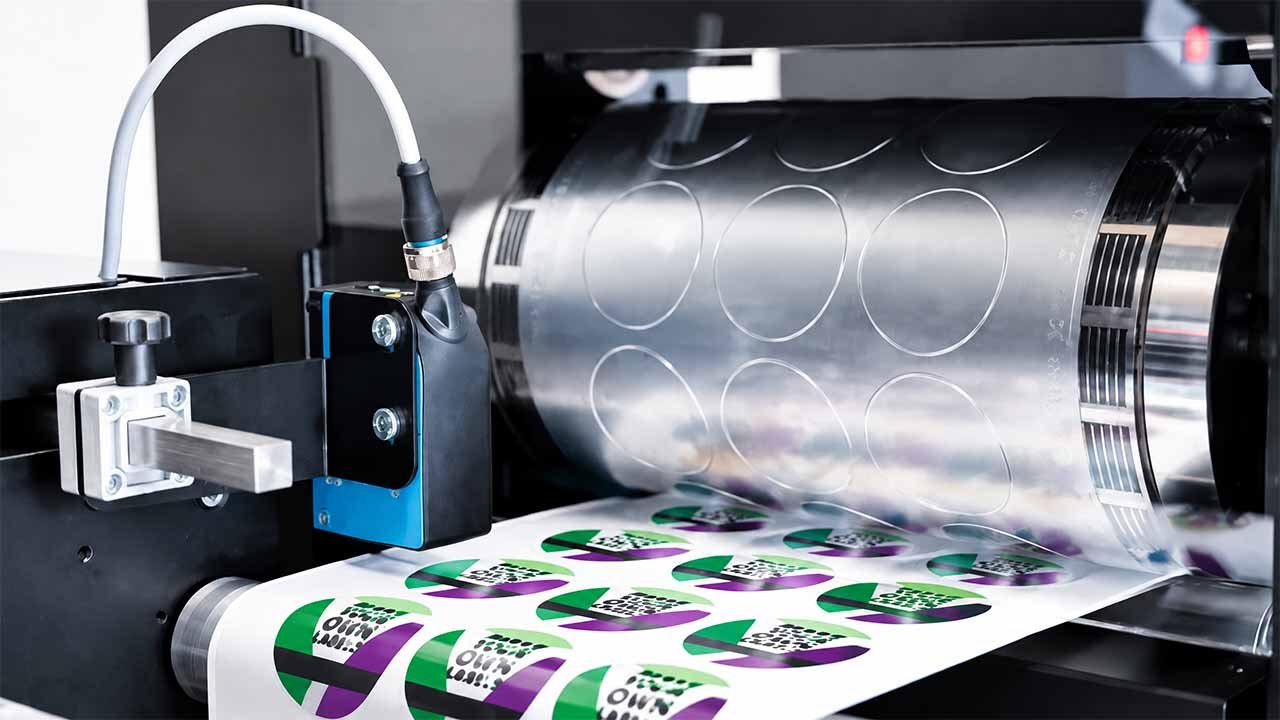
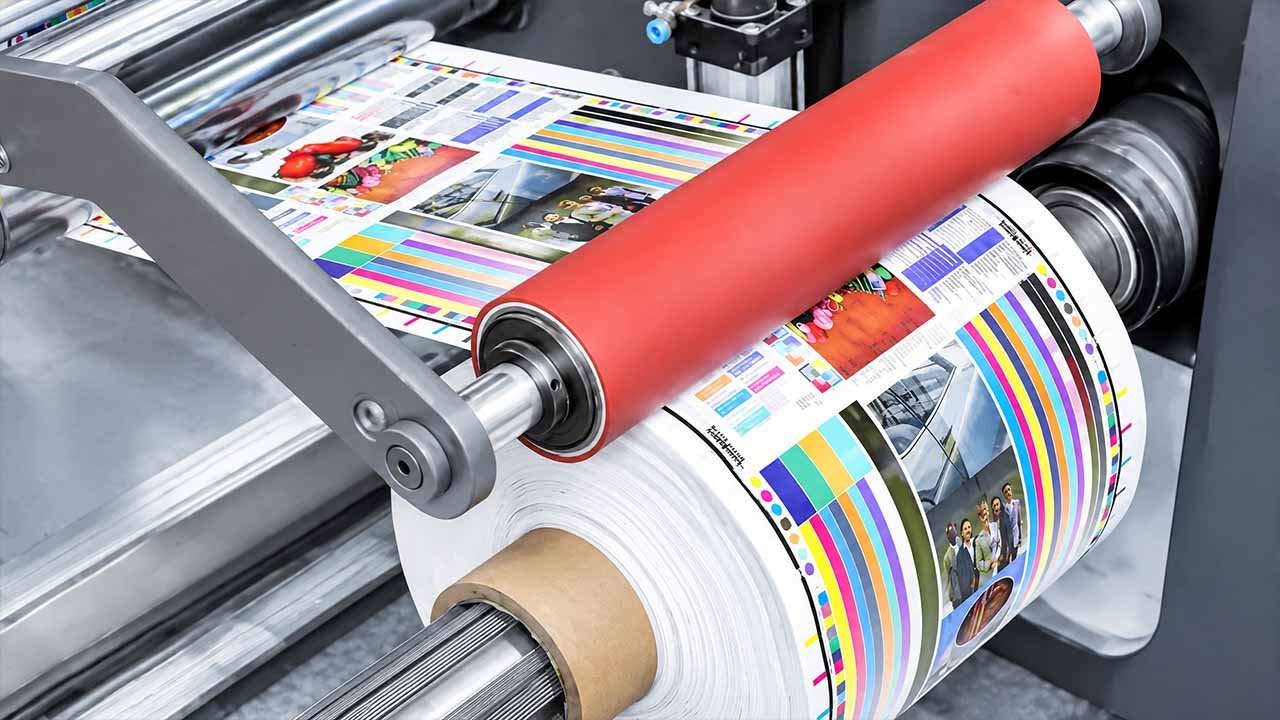
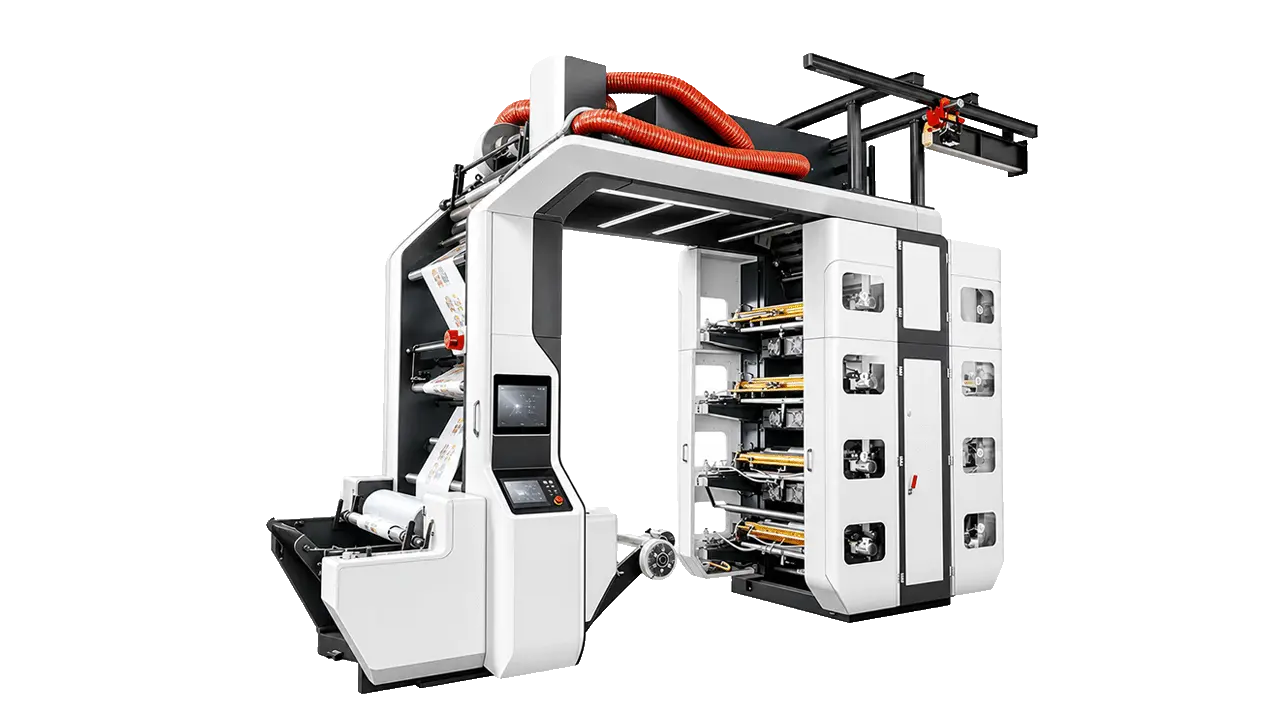
LayerQuestar LQ-8S 8-color high-speed flexo printing machine in operation
8 Print Stations · Stack-Type Flexo · Up to 1200mm

8-Color Flexo
Printing Machines

The LQ-8S Series gives converters eight independently configurable print stations — the only LayerQuestar flexo line available in 1200mm width. Run extended gamut, triple Pantone spot colors, or dual white base on dark substrates. One machine architecture, four width models.

120
m/min Production Speed
1200
mm Max Substrate Width
8
stations Print Stations
120+
countries Machines Operating
Why 8 Colors

What the Extra Two Stations Actually Do

A 6-color machine runs CMYK plus two additional stations. An 8-color machine adds two more — but the value is not "more color." The value is configurability: eight stations that can be assigned to any combination of process colors, spot colors, white base coats, or extended gamut inks depending on the job.

Machine type: The LQ-8S is a stack-type flexographic printing machine — eight print stations arranged vertically in a single frame, with the substrate passing through each station in sequence. This is a different architecture from central impression (CI) flexo presses used in thin-film flexible packaging. Stack-type flexo is the standard for PE/PP bags, paper bags, woven bags, and non-woven fabric. If you are evaluating CI flexo for laminated flexible packaging film, that is a different category of equipment.

01

Three Real Reasons to Choose 8 Colors

These are the three scenarios where 8 stations solve a problem that 6 stations cannot. If none of these apply to your operation, a 6-color machine is the more cost-effective choice.

Extended Gamut Printing (ECG)

Standard CMYK covers approximately 55–60% of the visible color spectrum. Extended gamut printing adds orange, green, and violet inks to the four CMYK stations, expanding coverage to approximately 85–90% of the Pantone color library — without mixing custom Pantone inks for each job.

On an 8-color machine, a typical ECG configuration uses seven stations (CMYK + O + G + V) and reserves the eighth for white base coat or a critical brand spot color that falls outside even the extended gamut. This allows a converter to run a wide variety of brand colors from a fixed set of seven inks, reducing ink changeover time significantly compared to mixing individual Pantone inks per job.

Right for you if: You print many different brand colors across a high volume of short-to-medium runs and want to reduce per-job ink mixing and changeover time. [NEEDS CLIENT VERIFICATION: confirm ECG ink compatibility with LQ-8S anilox spec]

Dual White Base on Dark Substrates

Printing on black PE film, dark kraft paper, or natural woven bags requires a white base coat before the CMYK stations. A single white station provides partial opacity — sufficient for light colors, but inadequate for bright reds, yellows, and blues on very dark substrates.

A dual white base configuration uses two consecutive stations for white ink, doubling the opacity of the base coat before the CMYK colors are applied. The result is measurably brighter, more accurate CMYK colors on dark substrates — without slowing the machine down or requiring a second pass. On a 6-color machine, two white stations consume half the available non-CMYK capacity, leaving no room for spot colors. On an 8-color machine, two white stations plus four CMYK stations still leave two stations free for Pantone spot colors.

Right for you if: You print on black PE film, dark woven bags, or natural kraft paper and require bright, accurate CMYK colors plus at least one Pantone spot color in the same pass.

CMYK + White Base + Three Pantone Spot Colors

High-end brand packaging — cosmetics, food retail, luxury goods — frequently specifies multiple Pantone colors that must be reproduced exactly, not approximated through CMYK mixing. A typical premium bag design might require a white base coat, four CMYK process colors, and three distinct Pantone spot colors: a brand primary, a secondary accent, and a metallic or fluorescent ink.

This configuration requires eight stations. A 6-color machine can handle white base plus CMYK plus one spot color — but the second and third spot colors require either a second machine pass (doubling production time) or compromising the design by substituting CMYK approximations for the spot colors. The LQ-8S handles this in a single pass.

Right for you if: Your customers specify packaging designs with three or more Pantone colors plus a white base coat, and a second machine pass is not commercially viable.
02

Three Ways to Configure 8 Stations

The eight stations are not fixed to specific colors. Each station is independently loaded with whatever ink the job requires. These are the three most common production configurations.

Config A

Extended Gamut (ECG)

W White
C Cyan
M Magenta
Y Yellow
K Black
O Orange
G Green
V Violet

White base coat + CMYK + Orange/Green/Violet extended gamut. Covers ~85–90% of the Pantone library from a fixed 8-ink set. Minimizes per-job ink changeover for converters running diverse brand colors at high volume.

Best for: High-volume converters supplying multiple brand customers with varied Pantone requirements.
Config B

Dual White Base + CMYK + 2 Spot

W White 1
W White 2
C Cyan
M Magenta
Y Yellow
K Black
S1 Spot 1
S2 Spot 2

Double white base for maximum opacity on dark substrates, plus full CMYK process, plus two Pantone spot colors. Produces bright, accurate colors on black PE film, dark woven bags, and natural kraft paper in a single pass.

Best for: Dark substrate printing where color accuracy and brightness are non-negotiable.
Config C

White Base + CMYK + 3 Pantone Spot

W White
C Cyan
M Magenta
Y Yellow
K Black
S1 Spot 1
S2 Spot 2
S3 Spot 3

Single white base coat plus full CMYK process plus three independent Pantone spot colors — all in a single machine pass. The configuration for premium brand packaging that specifies multiple exact-match colors alongside full-process imagery.

Best for: Premium cosmetics, food retail, and luxury goods packaging with complex multi-Pantone brand specifications.
03

What 1200mm Unlocks

The LQ-1200S is the only model in the LayerQuestar flexo range with a 1200mm substrate capacity. This is not simply a wider version of the 1000mm machine — it opens production formats that are physically impossible on any narrower machine.

Dual-Lane Production

Print two 560mm bags side-by-side in a single pass. Effective throughput per hour doubles compared to a 1000mm machine running the same bag format in a single lane.

Wide-Format Woven & Non-Woven Bags

Agricultural, building materials, and chemical packaging frequently uses woven polypropylene bags wider than 1000mm. The LQ-1200S is the only machine in this range that can print these formats in a single pass.

Large-Format Retail Bags

European and North American retailers increasingly specify large reusable non-woven shopping bags wider than 1000mm. The LQ-1200S handles these formats with full 8-color print capability.

Upgrade Path Without Changing Floor Space

If you currently run a 1000mm machine and need more capacity, the LQ-1200S adds 20% more substrate width — enabling new bag formats and dual-lane production — without requiring a second machine footprint.

Not sure whether 8-color is necessary for your operation? If your customers require Pantone spot colors but not more than two in addition to CMYK, and your substrate width requirement is 1000mm or below, a 6-color machine is the more cost-effective choice. See the 6-Color Flexo Printing Machines page for the full decision framework.
Decision Framework

8-Color vs 6-Color — The Real Decision

The question most buyers actually face is not "8-color vs 6-color." It is: "Should I buy one 8-color machine, or two 6-color machines?" Both answers are correct depending on your production model.

Dimension 6-Color LQ-6CH Series 8-Color LQ-8S Series Why It Matters
Print Stations 6 8 2 extra stations = white base + 3 Pantone, or dual white + 2 Pantone, or ECG configuration
Max Substrate Width 1000mm 1200mm 1200mm enables dual-lane production and wide-format woven/non-woven bags not possible on 1000mm
Production Speed 120 m/min 120 m/min Identical rated production speed — throughput difference comes from substrate width, not speed
Dual White Base Possible, but uses 2 of 6 stations — no spot color capacity remaining Dual white + CMYK + 2 spot colors — all in one pass Critical for dark substrate printing with brand spot color requirements
Triple Pantone Spot Not possible with white base in single pass White + CMYK + 3 Pantone spot — single pass Eliminates second-pass requirement for premium brand packaging
Full Job Changeover 60–120 min 90–150 min 8 stations take longer to change. 8-color economics favor long runs, not frequent short-run job changes
Machine Weight 5,000–6,000 kg 5,000–6,500 kg Floor load capacity must be verified for the 1200mm model (6,500 kg)
Machine Footprint 6.8 × 1.8–2.0 × 2.9m 6.8 × 1.8–2.5 × 2.9m Same machine length. Width increases with substrate width. 1200mm model requires 2.5m machine width

The Decision Most Buyers Actually Face

If you are already running a 6-color line at full capacity, the real question is whether to buy a second 6-color machine or upgrade to an 8-color machine. These are not equivalent choices.

Two LQ-6CH Machines

  • Combined throughput: 240 m/min — double a single 8-color machine
  • Run two different jobs simultaneously — no scheduling conflict
  • Operators already trained — no new learning curve
  • Redundancy — one machine down does not stop production
  • Cannot print white base + CMYK + 3 Pantone in a single pass
  • Maximum substrate width remains 1000mm
  • Requires double the floor space
Choose this if: You are capacity-constrained and your current 6-color capability already satisfies all customer requirements.

One LQ-8S Machine

  • Handles print jobs that 6-color machines cannot do in a single pass
  • Up to 1200mm substrate — opens new bag formats and dual-lane production
  • Single machine footprint — half the floor space of two 6-color machines
  • Positions your factory to win premium brand packaging contracts
  • Single machine throughput — no redundancy if machine is down
  • Longer changeover time per job — not suited to very short runs
  • Higher operator skill requirement for 8-station color management
Choose this if: You are capability-constrained — losing orders because customers require print complexity that your 6-color line cannot deliver in a single pass.
Technical Specifications

LQ-8S Series — Four Width Models

All four models share the same 8-station architecture and 120 m/min production speed. Select the width that matches your largest substrate requirement.

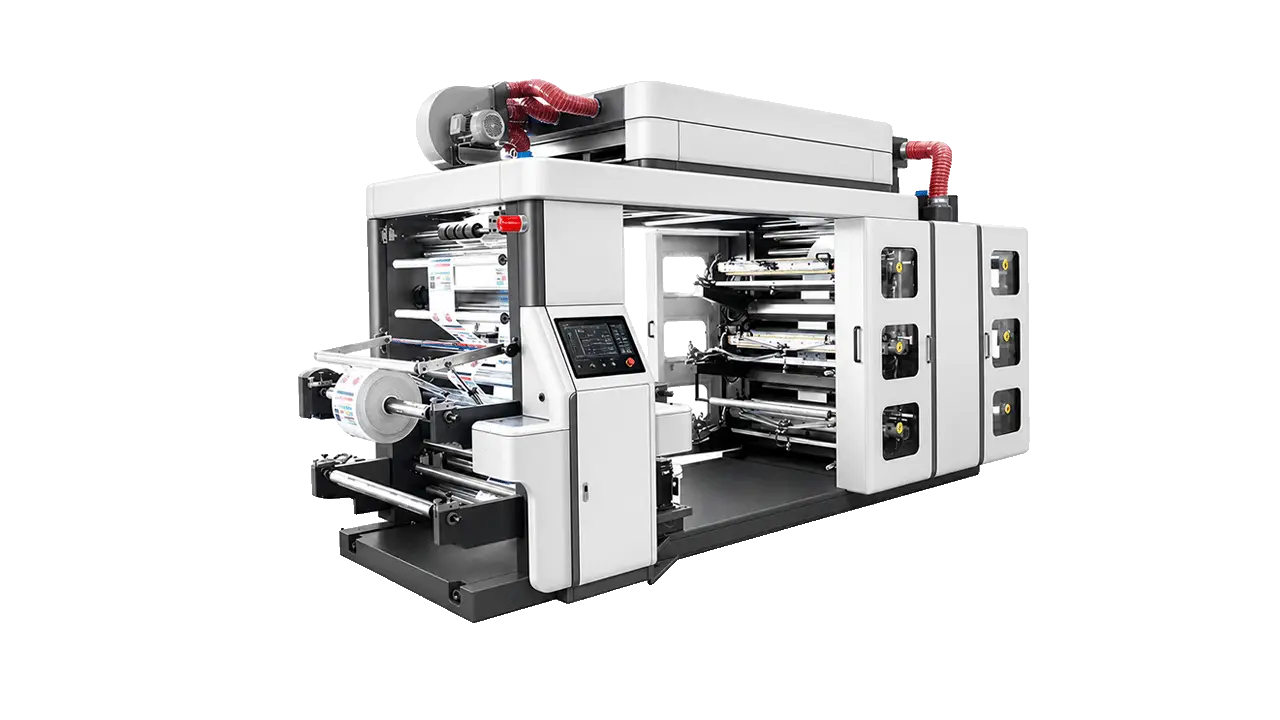
LayerQuestar LQ-8S Series 8-color high-speed flexo printing machine exterior view
Parameter LQ-600S 600mm LQ-800S 800mm LQ-1000S 1000mm LQ-1200S 1200mm Widest
Max Substrate Width 600mm (23.6") 800mm (31.5") 1,000mm (39.4") 1,200mm (47.2")
Max Printing Width 560mm (22.0") 760mm (29.9") 960mm (37.8") 1,160mm (45.7")
Machine Body Width 1,800mm 2,000mm 2,000mm 2,500mm
Machine Weight 5,000 kg 5,500 kg 6,000 kg 6,500 kg
Number of Print Stations 8 stations — all models
Production Speed 120 m/min — all models
Machine Length 6,800mm — all models
Machine Height 2,900mm — all models
Plate Thickness 1.14 – 3.94mm — all models
Compatible Substrates PE film, PP film, paper, woven bags, non-woven fabric
Optional Inline Finishing Laminating + die-cutting (factory-configured)

LQ-1200S facility note: Machine body width is 2,500mm — allow a minimum 4m floor width including operator clearance on both sides. Floor load capacity must support 6,500 kg — verify with your facility engineer before ordering. Ceiling height minimum 3.2m recommended. Allow 9–10m total floor length including feed and exit clearance. Confirm all facility dimensions with LayerQuestar before ordering.

Which width model do you need?

600mm

Narrow-format premium bag printing. Suited for factories where 8-station capability is required but floor width is limited. Most compact configuration at 1,800mm machine body width.

1000mm

Maximum throughput for wide-format or multi-lane branded bag printing. Same 2,000mm machine body width as the 800mm model — no additional floor space required in the width dimension.

Widest 1200mm

Dual-lane production, wide-format woven bag printing, and large-format non-woven retail bags. Requires 2,500mm machine body width — confirm floor plan before ordering.

Request a Proposal

Tell us your substrate width and monthly volume — we'll confirm which model fits your line.

Build Standard

How the LQ-8S Is Built

Eight print stations at 120 m/min places demanding requirements on every mechanical system. These are the five hardware decisions that determine whether an 8-color machine holds registration across all eight stations at full production speed.

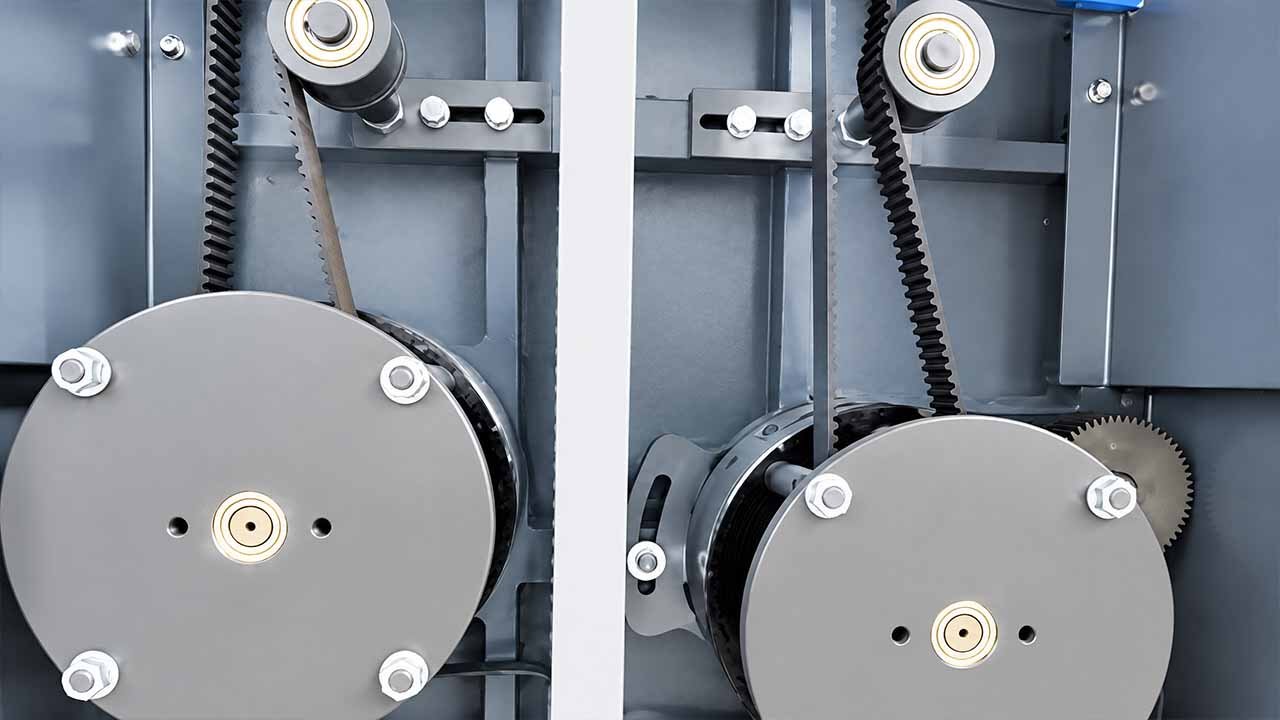
Synchronous belt transmission system — LayerQuestar LQ-8S 8-color flexo printing machine

Synchronous Belt Transmission

All eight print stations are driven by synchronous belt transmission — not chain or gear drive. At 120 m/min across eight stations, any speed variation between stations causes color-to-color misregistration. Synchronous belt eliminates the speed variation that occurs during acceleration and deceleration, maintaining consistent registration across all eight stations throughout the print run. This is especially critical for Pantone spot color stations (stations 6–8), which print after the CMYK base and must land precisely on the image already printed by the earlier stations.

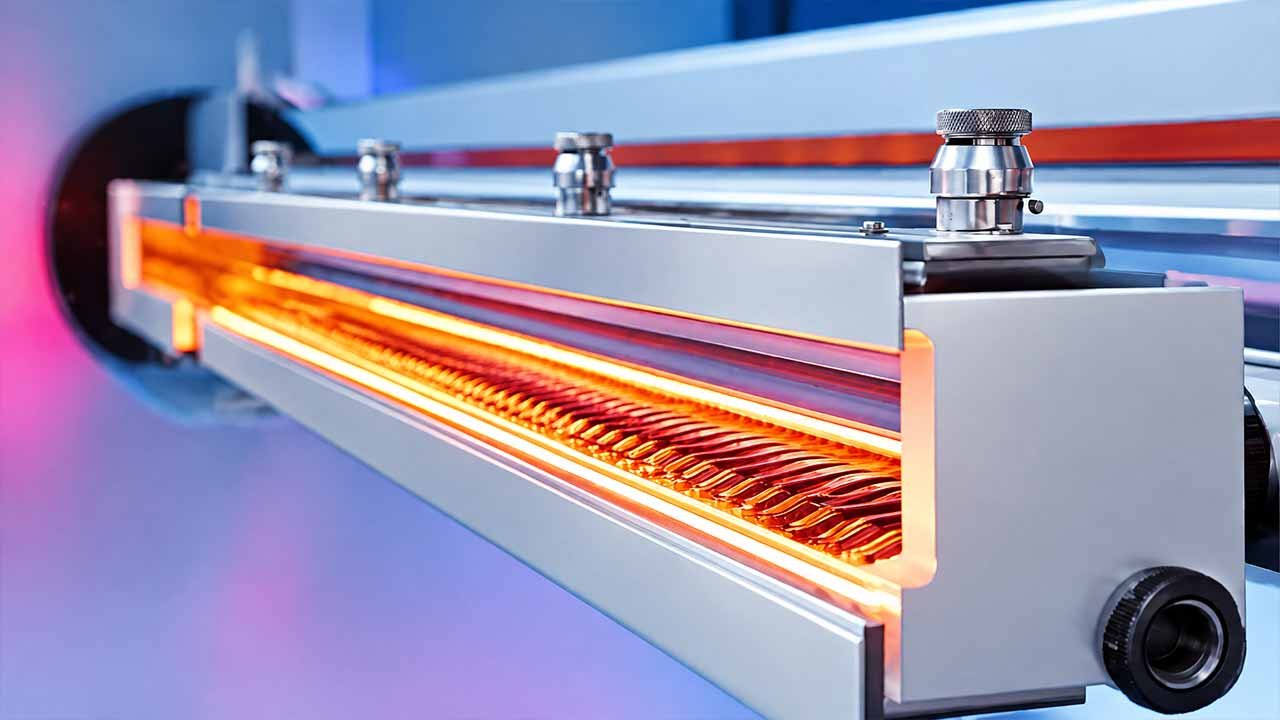
8-station independent drying system with cold air bellows — LayerQuestar LQ-8S

8-Station Inter-Station Drying

Eight stations require complete ink cure between each consecutive station — a more demanding drying requirement than a 6-color machine. The LQ-8S uses a central constant-temperature heating system with two sets of blowing and heating devices per station, plus a cold air shaping bellows system that rapidly sets the ink immediately after each print station. The drying system auto-shuts when the machine stops, preventing ink from baking onto the substrate during downtime. For dual white base configurations, the drying system must fully cure the first white layer before the second white station applies — incomplete cure between the two white stations causes mixing and reduces opacity.

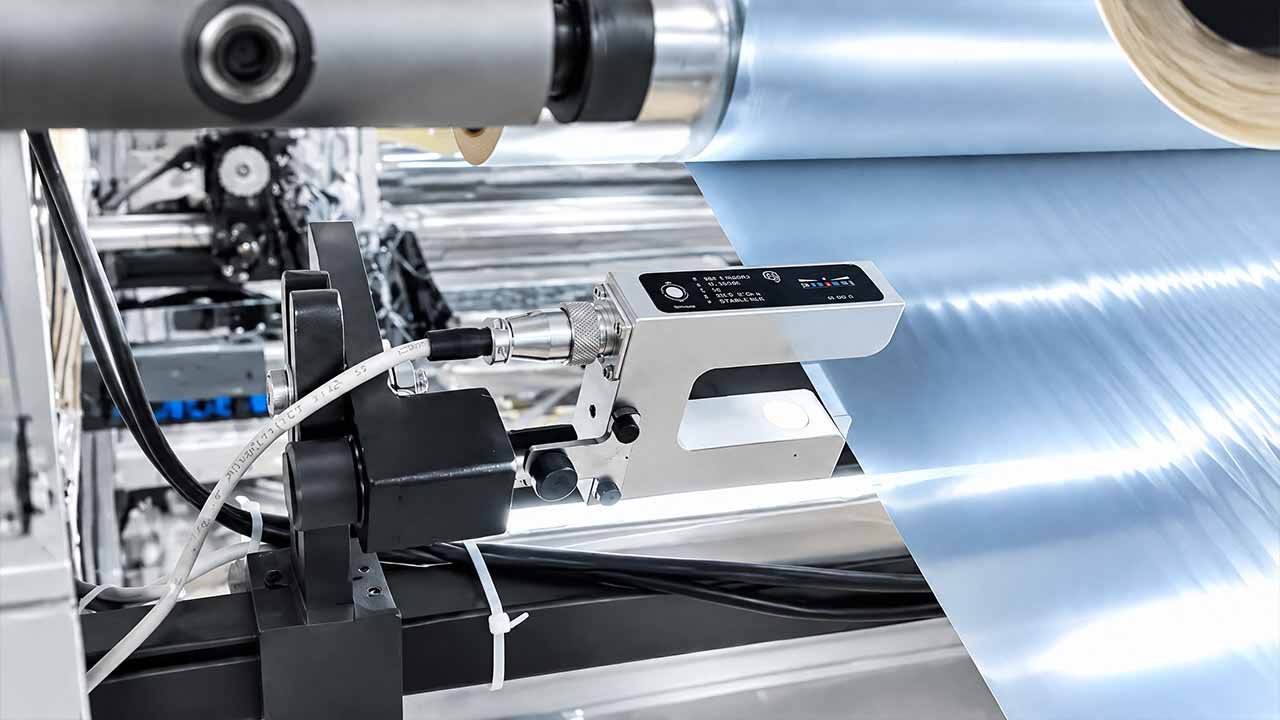
Hydraulic EPC edge position control — LayerQuestar LQ-8S 8-color flexo printer

Hydraulic EPC Edge Position Control

Hydraulic edge position control automatically corrects lateral substrate drift in real time. In 8-color printing, lateral drift is more damaging than in 6-color: the spot color stations (stations 6, 7, 8) print last, so any drift that accumulates across the eight stations produces compounding misregistration on the final spot colors. At 120 m/min, a 0.5mm drift that goes uncorrected for 10 seconds results in 20 meters of defective print. EPC is standard on the LQ-8S — not optional — because 8-station registration at full production speed requires active lateral correction throughout the run.

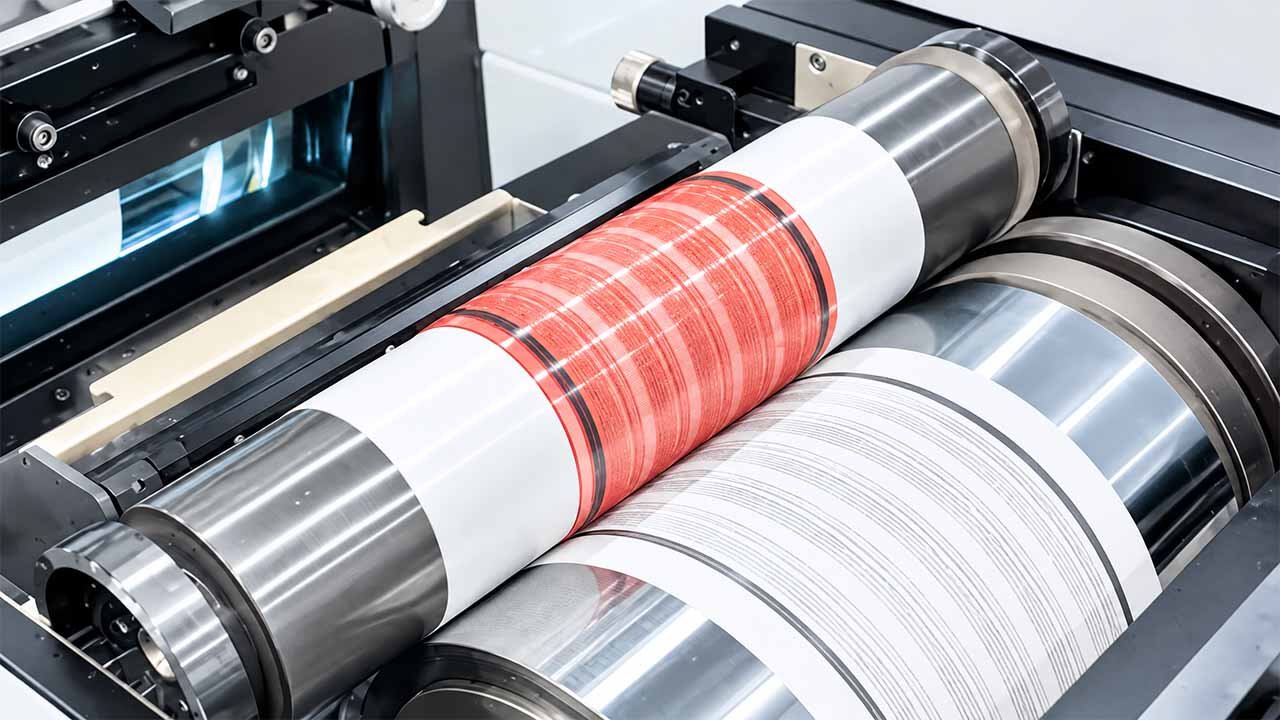
Precision anilox roller ink metering — LayerQuestar LQ-8S 8-color flexo printing machine

Precision Anilox Ink Metering

Each of the eight stations uses an independently adjustable precision anilox roller for ink metering. The lower roller is made from special steel with a 10-wire thick hard chromium electroplating layer, providing consistent ink transfer and wear resistance across the full production run. For extended gamut configurations, anilox roller specification is critical: the cell volume and line count must be matched to the specific viscosity of each extended gamut ink (orange, green, violet) to achieve consistent color density across the substrate width. Anilox rollers are a scheduled wear component — LayerQuestar supplies replacements as standard spare parts. Confirm the specification for your ink system when ordering.

Optional inline laminating and die-cutting unit — LayerQuestar LQ-8S 8-color flexo printer

Inline Laminating & Die-Cutting

Both laminating and die-cutting units are available as factory-configured options on the LQ-8S, enabling printing, laminating, and die-cutting in a single pass. For premium brand bag converters, inline finishing eliminates two separate downstream operations — reducing handling, floor space, and labor cost per finished bag. This option must be specified at the time of ordering and cannot be retrofitted after delivery. For the LQ-1200S, inline finishing in dual-lane configuration produces two finished die-cut bags per machine cycle — the highest per-hour output of any configuration in this range. Discuss your bag format, laminating requirements, and die-cut shape with LayerQuestar's team when requesting a proposal.

LayerQuestar factory acceptance test — 72-hour continuous run on LQ-8S 8-color flexo printing machine
Factory Acceptance Test

72-Hour Continuous Run — Every LQ-8S

Every LayerQuestar LQ-8S undergoes a 72-hour continuous factory run test before shipment. For 8-color machines, the test protocol covers: eight-station registration accuracy across the full speed range from startup to 120 m/min, inter-station drying performance at maximum speed, EPC correction response time and accuracy, white ink opacity and cure verification for both single and dual white base configurations, anilox ink transfer consistency across the full substrate width, and tension stability during acceleration and deceleration. Test results are documented and provided with the machine.

National High-Tech Enterprise Provincial Innovative SME 123+ Patents Granted
Is This Right For You

Who Buys the LQ-8S — and Who Doesn't

The LQ-8S is a high-capability machine. It is the right choice for a specific type of converter. It is the wrong choice for most bag factories — and that is worth stating clearly.

Premium Brand Packaging Converter

You supply packaging to brand owners who specify Pantone colors, require color consistency across production runs, and audit your output with a spectrophotometer. Your customers include cosmetics brands, food retailers, fashion labels, or luxury goods companies. You regularly receive briefs specifying more than two Pantone spot colors plus a white base coat — a combination that requires 8 stations to complete in a single pass.

The LQ-8S is built for this production model.

Wide-Format Woven & Non-Woven Producer

You produce agricultural, building materials, or chemical packaging on woven polypropylene bags wider than 1000mm, or large-format non-woven retail bags for European or North American markets. Your current 1000mm machine is a production bottleneck because it cannot handle these formats without slitting or folding the substrate — adding cost and reducing print quality. The LQ-1200S eliminates this constraint.

The LQ-1200S specifically addresses this production constraint.

High-Volume Multi-Brand Converter

You run long production runs for multiple brand customers, each with different Pantone color requirements. You are evaluating extended gamut printing to reduce per-job ink changeover time — running a fixed set of 7–8 inks that cover the majority of your customers' Pantone requirements without mixing custom inks for each job. [NEEDS CLIENT VERIFICATION: confirm ECG ink compatibility with LQ-8S anilox specification before committing to this production model]

The LQ-8S supports this configuration — verify ink system compatibility first.

Standard Bag Factory — CMYK or 1–2 Spot Colors

If your customers require standard CMYK printing, or CMYK plus one or two Pantone spot colors, a 6-color machine handles this completely. The two additional stations on the LQ-8S will sit idle on most of your jobs, and the longer changeover time (90–150 min vs 60–120 min on a 6-color machine) will reduce your effective machine utilization on short-run jobs.

After-Sales & Support

Warranty

12-month warranty on mechanical and electrical components from date of commissioning. [NEEDS CLIENT VERIFICATION]

Wear Parts Supply

Anilox rollers, doctor blades, impression rollers, and ink trays stocked as standard spare parts. Long-term supply guaranteed for the full service life of the machine.

Remote Technical Support

Video-assisted remote diagnostics available for registration, drying, and EPC issues. English-labeled control cabinet and full English documentation supplied with every machine.

Operator Training

On-site installation and commissioning training included. 8-color operation training covers station-by-station registration setup, ink viscosity management across 8 stations, and EPC calibration.

FAQ

Questions Buyers Ask Before Choosing 8-Color

The most common questions when evaluating an 8-color machine — from technical configuration to the "1 × 8-color vs 2 × 6-color" investment decision.

What is the practical difference between a 6-color and 8-color flexo machine?

The practical difference is configurability. A 6-color machine gives you four CMYK stations plus two additional stations — enough for white base plus one Pantone spot color, or two Pantone spot colors without white base. An 8-color machine gives you four CMYK stations plus four additional stations. This means you can run white base plus CMYK plus three Pantone spot colors in a single pass, or dual white base plus CMYK plus two spot colors on dark substrates, or a full extended gamut configuration with orange, green, and violet inks alongside CMYK. The value is not "more color" — it is the ability to complete complex multi-color jobs in a single pass that would require two passes on a 6-color machine.

What is extended gamut (ECG) printing, and does the LQ-8S support it?

Extended gamut printing (also called ECG or expanded gamut) adds orange, green, and violet inks to the standard CMYK set, expanding the printable color range to cover approximately 85–90% of the Pantone color library from a fixed set of inks — without mixing custom Pantone inks for each job. The LQ-8S has eight independently loaded print stations, which is the hardware requirement for ECG printing (CMYK + O + G + V + white base = 8 stations). However, ECG also requires extended gamut ink sets and color management software (RIP) that are separate from the machine. The LQ-8S supports ECG as a production workflow — but the ink system and color management setup must be confirmed with your ink supplier and prepress team before committing to this production model. [NEEDS CLIENT VERIFICATION: confirm anilox roller specification compatibility with ECG ink viscosity requirements]

Why does dual white base require 8 stations? Can't I just run white twice on a 6-color machine?

You can run dual white base on a 6-color machine — but it consumes two of your six stations, leaving only four stations for the rest of the job. Four stations gives you CMYK only, with no capacity for any Pantone spot colors. If your job requires dual white base plus CMYK plus at least one spot color, a 6-color machine cannot complete it in a single pass. You would need to run the job twice — first pass for dual white base, second pass for CMYK and spot colors — which doubles production time and introduces registration risk between the two passes. On an 8-color machine, dual white base uses two stations and still leaves six stations for CMYK plus two spot colors, all in a single pass.

Should I buy one LQ-8S or two LQ-6CH machines?

Two LQ-6CH machines give you 240 m/min combined throughput, the ability to run two jobs simultaneously, operator redundancy, and machine redundancy — if one machine goes down, the other keeps running. One LQ-8S gives you print capability that two 6-color machines cannot match (white base + CMYK + 3 Pantone in a single pass), up to 1200mm substrate width, and half the floor space of two machines. The decision depends on whether you are capacity-constrained or capability-constrained. If your current 6-color line already satisfies all customer print requirements and you simply need more output, buy a second 6-color machine. If you are losing orders because customers require print complexity that your 6-color line cannot deliver in a single pass, buy the 8-color machine.

How long does a full job changeover take on the LQ-8S?

A full job changeover on the LQ-8S — replacing all eight plates, cleaning eight ink trays and anilox rollers, loading new inks including Pantone spot colors and white base, and re-calibrating registration across eight stations — typically takes 90–150 minutes depending on operator experience and job complexity. This is approximately 30–40% longer than a comparable 6-color changeover. The practical implication is that 8-color economics are most favorable on long continuous runs of the same design. If your production model involves many different designs in short runs with frequent changeovers, the changeover time per job becomes a significant portion of your total machine time and reduces effective utilization. Discuss your typical job mix — number of designs, run length per design, changeover frequency — with LayerQuestar's team when deciding between the LQ-8S and a 6-color alternative.

What substrates can the LQ-8S print on?

The LQ-8S is compatible with PE film, PP film, paper (including kraft paper and coated paper), woven polypropylene bags, and non-woven fabric. The machine is a stack-type flexographic printer — it is designed for these substrate types. It is not a CI (central impression) flexo press and is not designed for thin laminated flexible packaging film that requires the precision tension control of a CI architecture. If you are printing on PE or PP bags, paper bags, woven bags, or non-woven fabric, the LQ-8S is the appropriate machine type.

What floor space does the LQ-1200S require?

The LQ-1200S machine body is 6,800mm long × 2,500mm wide × 2,900mm high and weighs 6,500 kg. For practical floor planning: allow a minimum 9–10m floor length (machine 6,800mm plus feed and exit clearance), a minimum 4m floor width (machine 2,500mm plus operator clearance on both sides), and a minimum ceiling height of 3.2m (machine height 2,900mm plus service clearance). Floor load capacity must be verified with your facility engineer — 6,500 kg concentrated load requires structural confirmation before ordering. The 600mm, 800mm, and 1000mm models are narrower (1,800mm, 2,000mm, and 2,200mm machine width respectively) and have lower floor load requirements.

Is EPC (edge position control) standard or optional on the LQ-8S?

EPC is standard on the LQ-8S. At 8 print stations and 120 m/min, active lateral correction is a requirement, not an option. Lateral substrate drift that accumulates across eight stations produces compounding misregistration on the final spot color stations — the stations where Pantone accuracy is most critical. A 0.5mm uncorrected drift at 120 m/min produces 20 meters of defective print in 10 seconds. The hydraulic EPC system continuously monitors and corrects the substrate edge position throughout the run, maintaining registration accuracy across all eight stations from startup to full production speed.

Get Started

Ready to Configure Your
8-Color Flexo Printer?

Tell us your substrate type, your Pantone color requirements, your target bag format, and your monthly print volume. LayerQuestar's team will confirm which width model and station configuration matches your production requirements — and whether the LQ-8S or a 6-color alternative is the right investment for your operation.

Machines operating in 120+ countries
72-hour factory run test on every machine
123+ patents granted