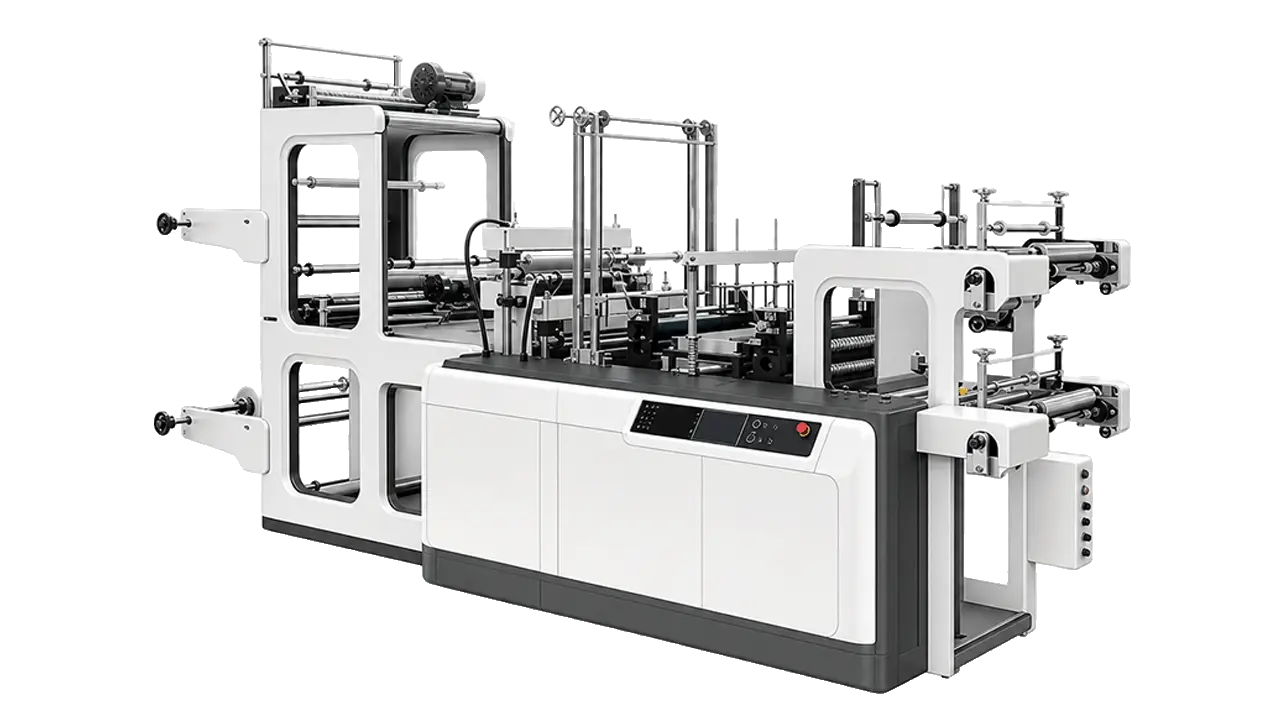
The LQ-2LR series is a computer-controlled two-layer rolling bag making machine available in four width configurations — 500, 600, 700, and 800 — covering bag widths from 400 mm up to 700 mm and lengths up to 1,000 mm. All four models share the same mechanical platform: 5 kW power, 800 kg frame, and a 3,500 mm machine length.
The 500 and 600 models run dual-lane production, processing two bags side by side per cycle for maximum throughput on small-to-medium bags. The 700 and 800 models switch to single-lane wide-format production, handling larger grocery and merchandise bags up to 700 mm wide. Across all models, each cutting cycle produces two finished bags simultaneously from stacked film layers.
Servo-driven length control and photoelectric eye tracking handle both plain and pre-printed film. Auto-stop with alarm triggers on registration errors, preventing wasted material. The CNC length adjustment system eliminates manual changeover when switching bag sizes. Film thickness range of 10–100 microns covers ultra-thin HDPE grocery bags through heavy-duty LDPE merchandise carriers on a single machine platform.
Core engineering decisions that determine output consistency, precision and long-term running cost.
One platform, four configurations: 400 mm×2, 500 mm×2, 600 mm single, 700 mm single — buyers select the model matching their target bag width without compromising on speed or power.
Every cutting cycle produces two finished bags simultaneously from stacked film layers, doubling effective output relative to single-output machines running at the same cycle speed.
The 500 and 600 models process two film lanes side by side, maximising throughput for small-to-medium bags without increasing machine footprint or power draw.
CNC length setting with servo motor drive minimises sealing and cutting dimension errors across the full 20–200 pcs/min speed range, with no manual adjustment required when changing bag lengths.
Optical registration sensor detects print marks on pre-printed film and adjusts feed length in real time, maintaining consistent cut-to-print alignment on every bag.
If the photoelectric sensor loses the registration mark, the machine stops and triggers an alarm immediately — preventing a run of mis-cut printed bags and reducing film waste.
Handles 10–100 microns in a single machine, covering ultra-thin HDPE supermarket bags through heavy-duty LDPE merchandise carriers without platform changes.
All four models weigh 800 kg and draw only 5 kW — a low energy-per-bag footprint suited to factories where power infrastructure and floor space are both constraints.
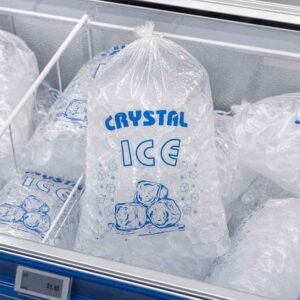
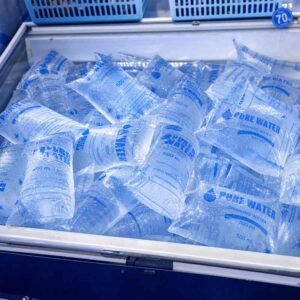
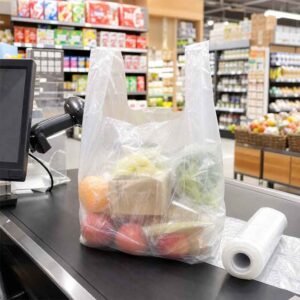
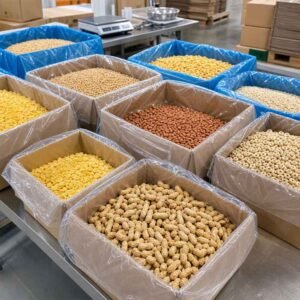
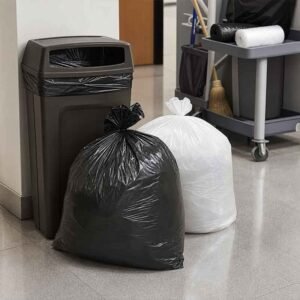
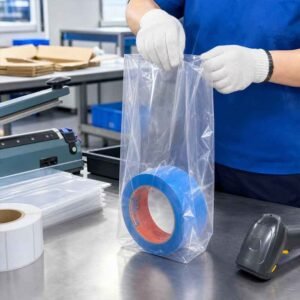
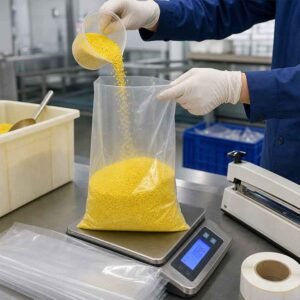
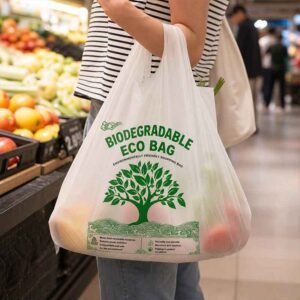
Confirmed output types for this machine configuration. Actual results depend on film specification and tooling selection.
Not sure if this machine covers your specific product? Send us your sample or drawing
All specifications are under standard operating conditions and may vary depending on film material, bag size and configuration.
| Model Number | LQ-2LR-500-800 |
|---|---|
| Total Power | 5 kW |
| Machine Weight | 800 kg |
| Cut Type | Hot Cut |
| Lines / Channels | 1/2 |
| Max Bag Width | 700 mm |
| Speed | 20–200 pcs/min × 2 |
| Film Thickness | 0.010–0.100 mm(10–100 µm) |
| Materials | HDPE, LDPE, LLDPE |
Specifications subject to change without notice. Contact LayerQuestar for the latest confirmed datasheet for this model.
Common questions about the LQ-2LR-500-800. For configuration-specific questions, contact our engineering team directly.
The four models differ in maximum bag width and lane configuration. The LQ-2LR-500 and LQ-2LR-600 run dual-lane production (400 mm×2 and 500 mm×2 respectively) for high-volume small-to-medium bags. The LQ-2LR-700 and LQ-2LR-800 are single-lane wide-format machines handling bags up to 600 mm and 700 mm respectively. All four models share the same 5 kW power, 800 kg frame, and 3,500 mm machine length.
Two-layer refers to the film feed configuration: the machine processes two stacked layers of film simultaneously, producing two finished bags per cutting cycle. This doubles effective output compared to a single-layer machine running at the same cycle speed.
Maximum bag length across all models is 1,000 mm. Maximum bag width depends on model: 400 mm per lane (LQ-2LR-500), 500 mm per lane (LQ-2LR-600), 600 mm (LQ-2LR-700), or 700 mm (LQ-2LR-800).
The machine processes film from 0.010 mm to 0.100 mm (10–100 microns), covering ultra-thin HDPE grocery and T-shirt bags at the low end through thick LDPE merchandise and shopping bags at the upper end.
The LQ-2LR-600 is the most common choice for standard supermarket checkout T-shirt bags (typically 300–500 mm wide). Its dual-lane 500 mm×2 configuration maximises output for this bag size. For larger grocery bags above 500 mm width, the LQ-2LR-700 is the appropriate step up.
Yes. With the punching unit engaged, the machine produces T-shirt (vest carrier) bags with handle cutouts. With the punching unit disengaged, it produces flat bottom-seal bags. Switching between modes requires no mechanical changes to the core sealing and cutting system.
The photoelectric eye sensor monitors print registration marks on the film continuously. If a mark is not detected within the expected position — due to a film splice, roll end, or print defect — the machine stops and triggers an alarm. This prevents a run of mis-registered bags and reduces wasted printed film.
The LQ-2LR-500 and LQ-2LR-600 produce up to 200 cycles per minute with two bags per cycle, for a maximum of 400 bags per minute. At 80% operational efficiency over an 8-hour shift, this equals approximately 192,000 finished bags per shift.
Send us your bag size, output target and film spec — LayerQuestar will respond within 4 business hours.