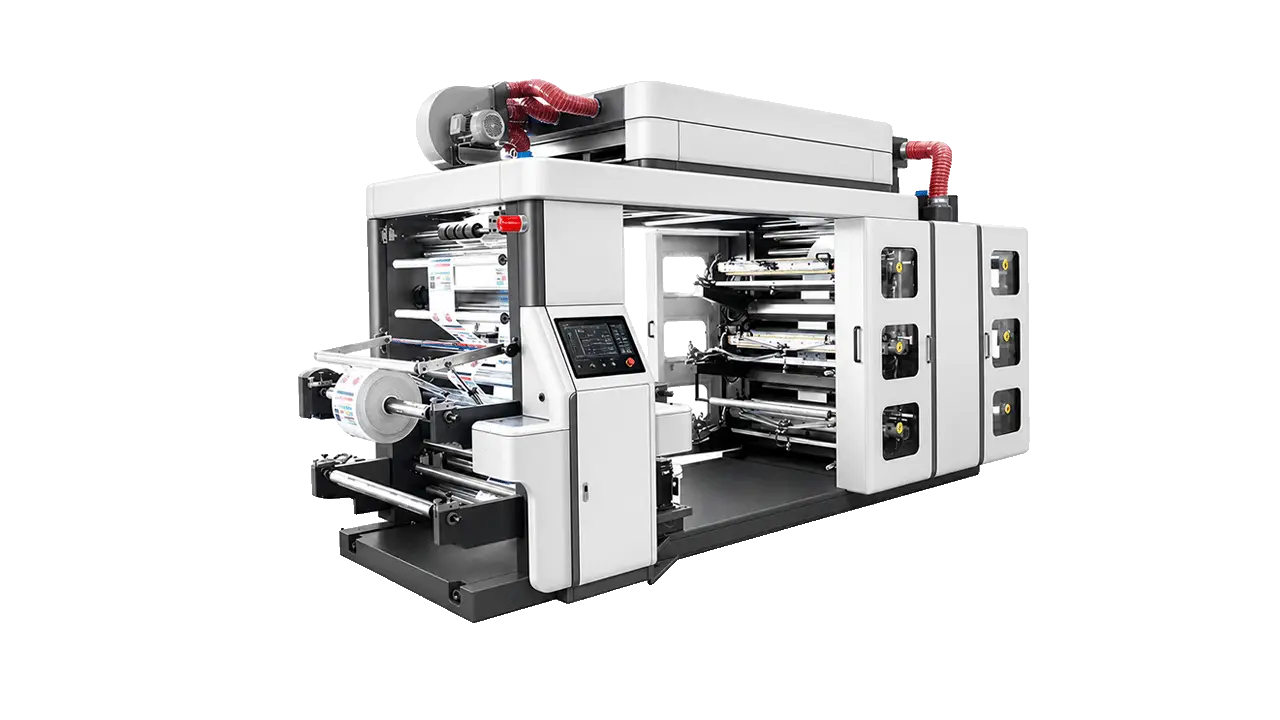
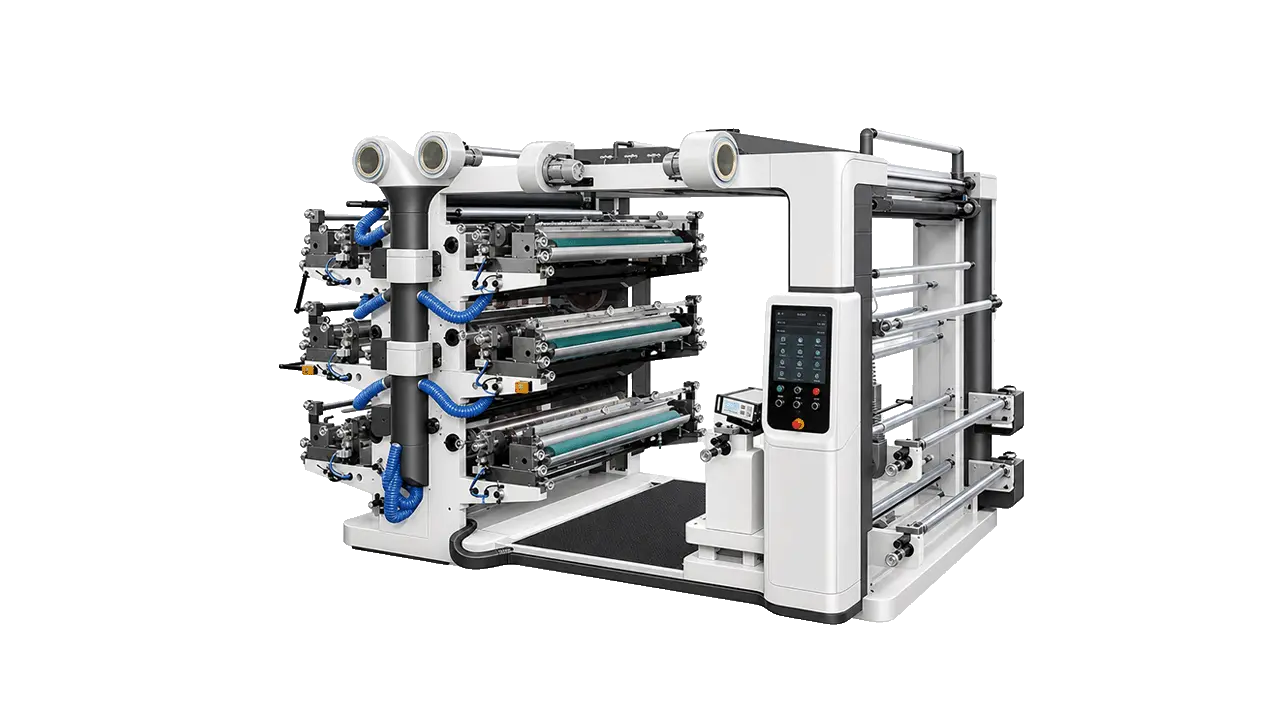
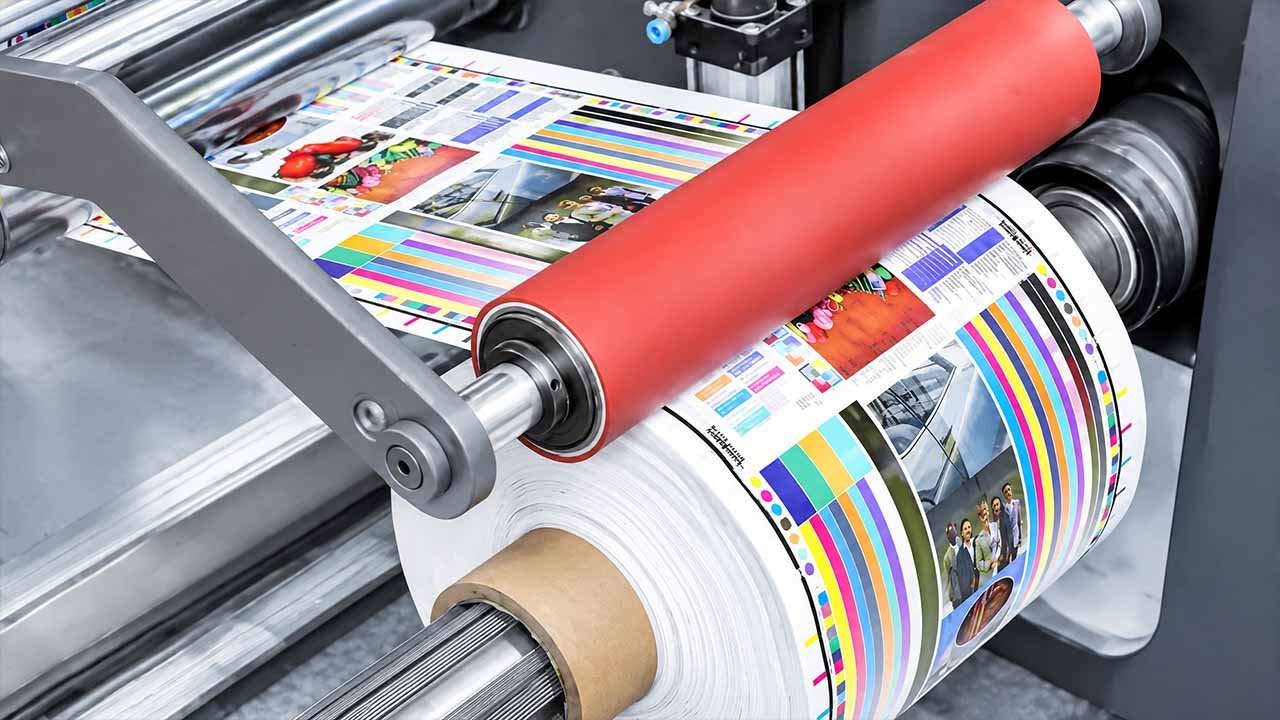
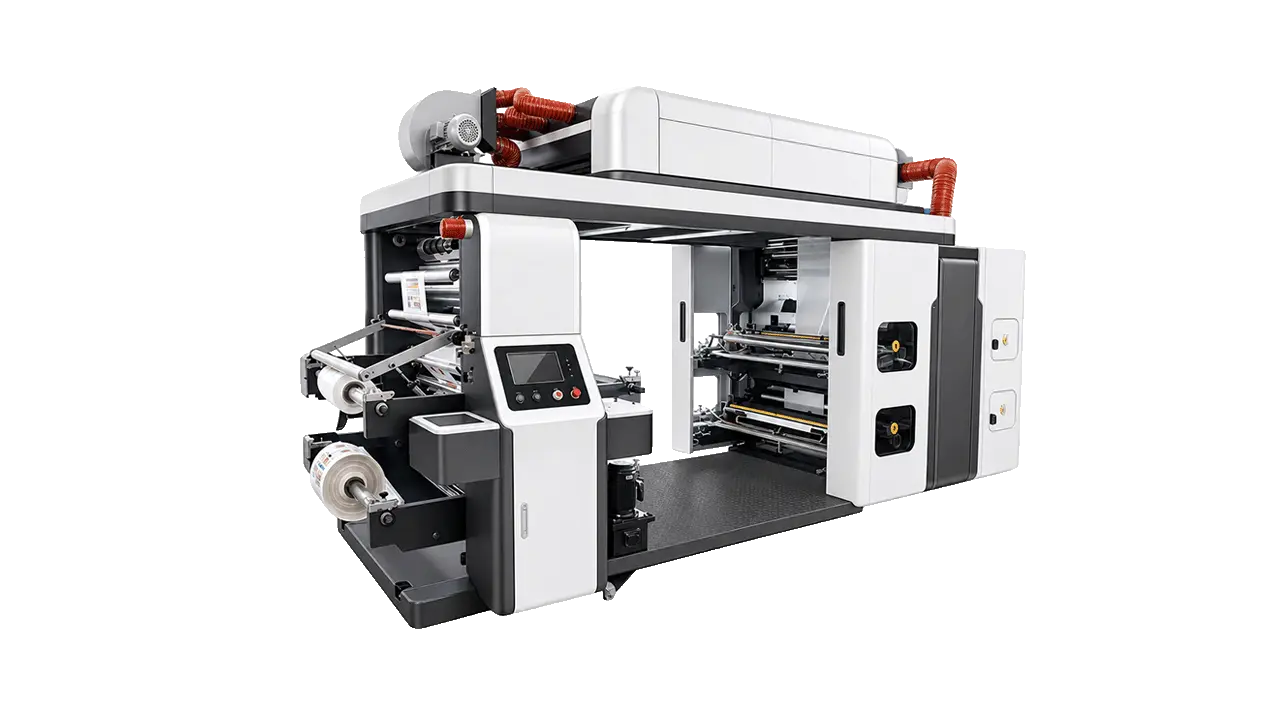
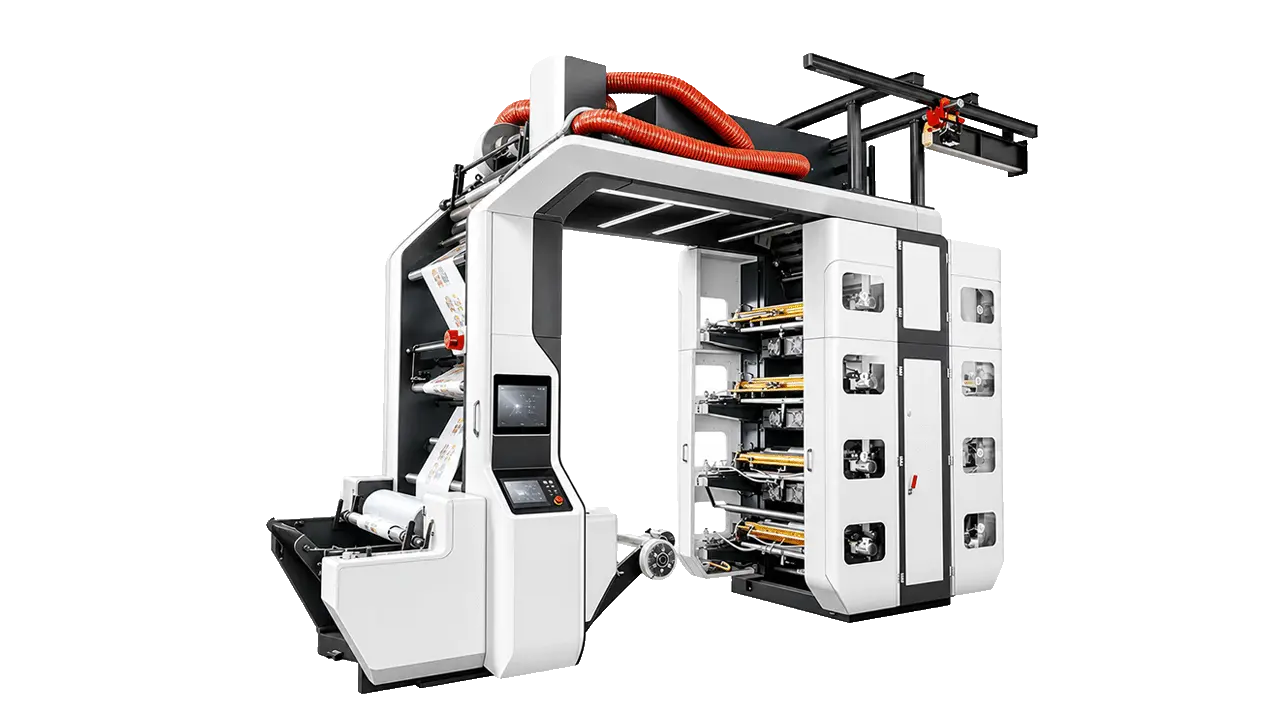
6-color flexo printing is not simply a step up from 4-color.
It solves a different problem: exact brand color compliance,
white base coat printing on kraft and dark substrates,
and high-saturation packaging for premium retail and food brands.
This page helps you confirm whether 6-color is the right tool
for your specific requirement — and which series fits your scale.
Most bag printing operations run 4-color and never need 6.
The three scenarios below are the specific situations where
4-color CMYK reaches its technical limits — and 6-color
becomes the correct answer.
01
Three Situations Where 4-Color Is Not Sufficient
Pantone Spot Color Brand Compliance
International retail chains, food service brands, and
cosmetics companies often specify exact Pantone colors
in their brand guidelines — not CMYK approximations.
A 4-color press mixes cyan, magenta, yellow and black
to simulate any color, but the simulation has limits:
certain Pantone colors fall outside the CMYK color gamut
and cannot be accurately reproduced by mixing. A 6-color
press adds two dedicated spot color stations — each loaded
with a pre-mixed Pantone ink — that print the exact brand
color directly, without mixing.
Signal: Your customer provides a Pantone reference number and requires color matching
White Base Station for Kraft Paper and Dark Substrates
CMYK printing assumes a white substrate. When you print on
kraft paper, black PE film, or any non-white substrate,
the CMYK colors mix with the substrate color and the result
is muddy, dark, and inaccurate. A white ink station printed
first creates an opaque white base layer that the subsequent
CMYK colors print onto. On a 4-color machine, adding a white
station means removing one CMYK color. On a 6-color machine,
the white station is additional — you keep all four CMYK
stations plus one or two extra stations.
Signal: You print on kraft paper bags, black film, or colored non-woven fabric
Extended Color Gamut for Premium Retail Packaging
Standard CMYK covers approximately 55–60% of the visible
color spectrum. For premium cosmetics, luxury fashion, and
high-end gift bags, buyers often require colors more vivid
than standard CMYK can produce — particularly deep oranges,
vivid greens, and bright blues. Adding two extra ink stations
(commonly orange and violet) expands the printable color gamut
significantly. This configuration is sometimes called
CMYK+OGV (Orange, Green, Violet).
Signal: Your customers are premium cosmetics, luxury fashion, or high-end gift packaging brands
If none of the three scenarios above apply to your current customer base:
a 4-color line is a better investment. You can always add a 6-color line
later when your market moves into premium packaging territory.
View the 4-color flexo page →
02
Two Ways to Configure 6 Color Stations
A 6-color press does not have a fixed ink sequence.
The six stations are configurable — the ink loaded into each
station depends on the job. Two configurations cover the
majority of 6-color bag printing requirements.
Config 1
CMYK + 2 Pantone Spot Colors
CCyan
MMagenta
YYellow
KBlack
S1Spot 1
S2Spot 2
The most common 6-color configuration for branded retail packaging.
Stations 1–4 run standard CMYK process inks for photographic
reproduction and complex graphics. Stations 5 and 6 run pre-mixed
Pantone inks — one for the primary brand color, one for a secondary
accent color.
Typical use: International retail chain carrier bags,
branded food service bags, cosmetics packaging, garment bags
for fashion brands with Pantone-specified colors
Config 2
White Base + CMYK + 1 Spot Color
WWhite
CCyan
MMagenta
YYellow
KBlack
S1Spot 1
Used when the substrate is not white — kraft paper bags,
brown paper, black PE film, colored non-woven fabric.
Station 1 prints an opaque white ink base layer. Stations 2–5
print standard CMYK over the white base. Station 6 adds one
Pantone spot color for brand accuracy.
Typical use: Kraft paper shopping bags, black film
courier bags, colored non-woven reusable bags, premium paper
packaging for food and retail
03
The Real Cost of Two Extra Color Stations
6-color printing delivers capabilities that 4-color cannot match.
It also comes with real additional costs and complexity.
These are not reasons to avoid 6-color — they are factors
to plan for before ordering.
Longer Job Changeover Time
A full 6-color job changeover — replacing six plates,
cleaning six ink trays and anilox rollers, loading new inks,
and re-calibrating registration across six stations — takes
approximately 60–120 minutes. This is 30–40% longer than a
4-color changeover. 6-color economics are most favorable on
long continuous runs of the same design.
Higher Consumable Cost Per Job
Six anilox rollers instead of four. Six sets of printing plates
instead of four. Six ink systems to maintain. Pantone spot inks
are also significantly more expensive per kilogram than standard
process inks. Factor these costs into your per-job pricing when
quoting 6-color work to customers.
Larger Machine Footprint
The LQ-6CH at 6,800mm requires a minimum floor length of 9m+
and ceiling height of 3.2m. If you are upgrading from a 4-color
line, verify ceiling height and floor load capacity
before ordering.
More Experienced Operators Required
Managing six-color registration, ink viscosity across six
stations, and Pantone color matching requires operators with
solid 4-color experience as a baseline. LayerQuestar provides
on-site commissioning support and operator training for
both series.
Series Overview
Same 6 Colors. Different Production Scale.
The LQ-6C and LQ-6CH produce identical 6-color output.
The choice between them is a production volume decision
and a floor space decision.
Six-color registration is the most demanding of any stack-type
flexo configuration. Every dimension in this table has a direct
consequence for print quality, throughput, and operating cost.
Dimension
Standard
LQ-6C
High-Speed
LQ-6CH
Why It Matters for 6-Color
Drive System
Variable frequency motor
VFD motor + synchronous belt transmission
In 6-color printing, all six stations must maintain identical surface speed simultaneously. The LQ-6C's VFD motor is reliable and sufficient at 50 m/min. The LQ-6CH combines a VFD motor for speed control with synchronous belt transmission across all six stations — eliminating speed variation between stations during acceleration and deceleration, where registration errors compound most rapidly across 6 colors.
Max Production Speed
5–50 m/min
up to 120 m/min160 m/min mechanical max
At 100–120 m/min versus 40–50 m/min average, the LQ-6CH produces approximately 2.5× the output per shift. For large continuous orders of Pantone-branded bags, this directly affects your cost per unit. The LQ-6C's lower speed also gives operators more time to monitor and correct 6-color registration during a run — an advantage when the team is building 6-color experience.
EPC Edge Position Control
Not included
Hydraulic EPC
In 6-color printing, lateral substrate drift causes all six colors to shift simultaneously. With Pantone spot colors, even a 0.3mm lateral drift produces visible color fringing on brand logos and text — the exact defect that Pantone-sensitive customers will reject. Hydraulic EPC corrects drift in real time. At 120 m/min, manual correction is not practical.
Plate Thickness Accepted
2.38mm (fixed) incl. double-sided tape
1.14–3.94mm full range
For 6-color Pantone work, plate quality and consistency are more critical than for standard CMYK. The LQ-6CH accepts all standard flexo plate thicknesses including thin digital photopolymer plates (1.14mm / 1.70mm) that deliver finer dot reproduction for Pantone color accuracy. The LQ-6C is fixed at 2.38mm — confirm your plate supplier's standard before ordering.
Machine Length
4,200mm 6 stations + drying
6,800mm 6 stations + extended oven
Both 6-color machines are the same length as their 4-color equivalents — the additional two stations are accommodated within the same footprint through tighter station spacing. The LQ-6C at 4,200mm requires a minimum floor length of approximately 6–7m. The LQ-6CH at 6,800mm requires 9m+. Ceiling height is the critical difference: the LQ-6CH at 2,900mm requires more clearance than the LQ-6C at 2,400mm.
Machine Weight
4,000–5,000 kg depending on width model
5,000–6,000 kg depending on width model
Both series require reinforced industrial floors. The LQ-6CH's maximum 6,000 kg requires floor load capacity verification before installation. Confirm floor specifications with your facility engineer before ordering.
Drying System
Standard drying per station central constant-temperature control
Extended high-capacity oven + cold air shaping bellows
6-color printing requires complete ink cure between each of six stations. The LQ-6CH adds a cold air shaping bellows system that rapidly cools and sets the ink immediately after printing — preventing ink smearing and blocking between layers on the rewind roll at 120 m/min. Both series use auto-shutdown heating when the machine stops, preventing ink from baking onto the substrate during downtime.
Optional Inline Finishing
Laminating + die-cutting optional add-on
Laminating + die-cutting optional add-on
Both series support optional inline laminating and die-cutting — completing printing, laminating, and die-cutting in a single pass. This is a significant throughput advantage for converters producing finished bags directly from printed film. Inline finishing is a factory-configured option — specify at time of order.
Entry Investment
Lower
Higher
Contact LayerQuestar for current pricing. The LQ-6CH's higher cost is justified when your production volume is large enough that the throughput difference generates measurable cost-per-unit savings on Pantone-branded bag orders. For operations running below full capacity or building 6-color expertise, the LQ-6C delivers better return on investment.
Choose LQ-6C if:
You run multiple Pantone designs per week in varied volumes
Your team is transitioning from 4-color to 6-color
Lower initial investment is a priority
Your facility floor length is 6–8m
You want simpler day-to-day 6-color operation
You print on kraft paper or dark substrates (white base config)
Small-format Pantone-branded bags: cosmetics pouches, small retail bags, garment tags. Smallest footprint — machine width 1,660mm. Suitable for facilities entering 6-color production with limited floor space.
Most Common800mm
Standard supermarket shopping bags, food service bags, garment bags, kraft paper bags. The most common LQ-6C configuration for converters supplying retail brands requiring Pantone color accuracy. Machine width 1,860mm.
1000mm
Wide-format branded bags, large supermarket carriers, wide kraft paper bags. Also enables multi-lane layouts — printing two narrow Pantone-branded bags side by side on a single wide roll. Machine width 2,060mm.
Floor space note: The LQ-6CH requires a minimum floor
length of approximately 9–10m (machine 6,800mm + operator clearance at
both ends). Ceiling height minimum 3.2m recommended to accommodate the
2,900mm machine height plus service clearance. Floor load capacity must
support 5,000–6,000 kg depending on width model — verify with your
facility engineer before ordering.
Which width model do you need?
600mm
High-speed narrow-format Pantone-branded bag production. Cosmetics, small retail, garment bags at continuous high volume. Machine width 1,800mm — the most compact LQ-6CH configuration.
Most Common800mm
The most common LQ-6CH configuration for high-volume converters supplying supermarket chains, food service brands, and fashion retailers requiring Pantone color accuracy at scale. Machine width 2,000mm.
1000mm
Maximum throughput configuration for wide-format or multi-lane high-speed Pantone-branded bag printing. Same machine width as the 800mm model — no additional floor space required in the width dimension.
The LQ-6C and LQ-6CH share LayerQuestar's core build standard.
Hardware differences between the two series are noted on each card.
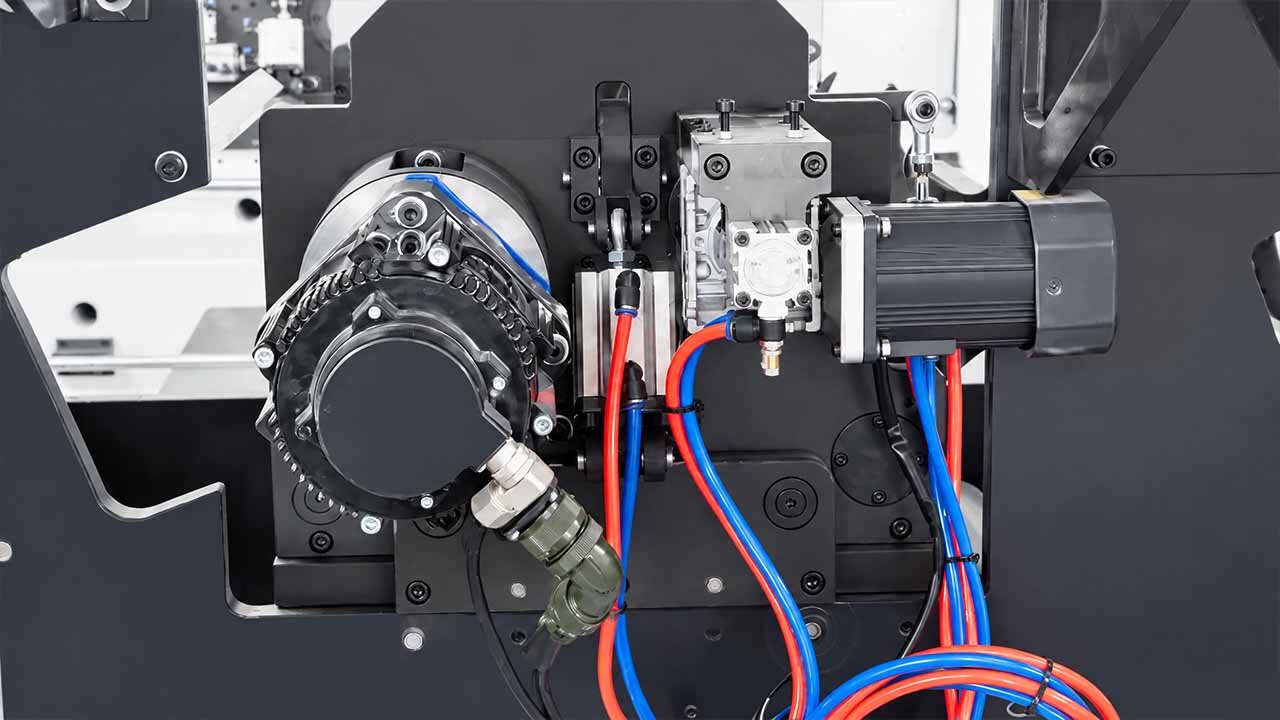
Drive System
LQ-6C: VFD MotorLQ-6CH: VFD + Sync Belt
The LQ-6C uses variable frequency motor drive — reliable
and straightforward to maintain at 50 m/min. The LQ-6CH
combines a VFD motor for speed control with low-noise
synchronous belt transmission across all six print stations.
In 6-color printing, synchronous belt transmission is
particularly important for Pantone spot color work: any
speed variation between the CMYK stations and the spot
color stations causes the spot color to print slightly
out of position relative to the CMYK image — producing
visible color fringing on brand logos and fine text.
Synchronous belt eliminates this variation during
acceleration and deceleration.
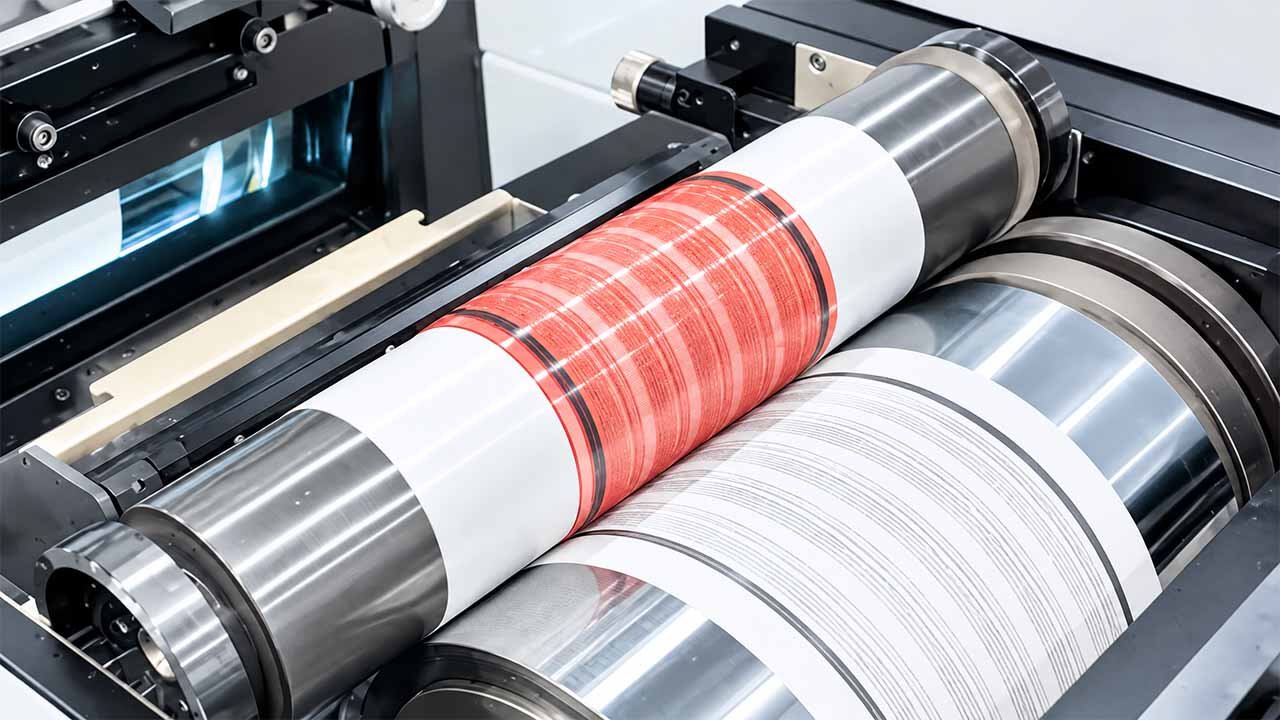
Anilox Roller Ink Metering
Both Series
Each of the six print stations uses a precision-engraved
anilox roller to meter ink transfer to the printing plate.
For Pantone spot color work, anilox roller specification
is more critical than for standard CMYK — the cell volume
and line count must be matched to the specific Pantone ink
viscosity and the substrate surface energy to achieve
consistent color density. The lower roller on both series
is made from special steel with a 10-wire thick hard
chromium electroplating layer, providing superior wear
resistance and ink release properties. Anilox rollers
are a wear component — LayerQuestar supplies replacements
as standard spare parts. Confirm the specification for
your specific ink system when ordering.
Inter-Station Drying System
LQ-6C: Standard per-stationLQ-6CH: Extended oven + cold air bellows
6-color printing requires complete ink cure between each
of six stations. Both series use a central constant-temperature
heating system with two sets of blowing and heating devices,
and auto-shutdown when the machine stops — preventing ink
from baking onto the substrate during downtime. The LQ-6CH
adds a cold air shaping bellows system that rapidly cools
and sets the ink immediately after printing at high speed,
preventing ink smearing and blocking between layers on the
rewind roll. For white base coat printing, the drying
system must fully cure the white ink before the CMYK
stations print over it — incomplete white ink cure causes
the CMYK colors to mix into the white layer, producing
muddy, inaccurate colors.
EPC Edge Position Control
LQ-6CH Only
Hydraulic edge position control automatically corrects
lateral substrate drift in real time. In 6-color Pantone
printing, lateral drift is especially damaging: the spot
color stations print after the CMYK stations, so any
drift that occurs between station 4 and station 5 causes
the Pantone spot color to print out of position relative
to the CMYK image — producing the exact color fringing
that Pantone-sensitive customers will reject at inspection.
At 120 m/min, a 0.5mm drift that goes uncorrected for
10 seconds results in 20 meters of defective Pantone
print. The LQ-6C manages without EPC at 50 m/min, but
requires attentive operators on extensible PE film.
Inline Laminating & Die-Cutting
Both Series — Optional
Both the LQ-6C and LQ-6CH support optional inline
laminating and die-cutting units, enabling printing,
laminating, and die-cutting to be completed in a single
pass. For converters producing finished bags directly
from printed film, this eliminates a separate laminating
and cutting operation — reducing handling, floor space,
and labor cost per finished bag. Inline finishing is a
factory-configured option that must be specified at the
time of ordering. It cannot be retrofitted after delivery.
Discuss your bag format and laminating requirements with
LayerQuestar's team when requesting a proposal.
Factory Acceptance Test
72-Hour Continuous Run — Both Series
Every LayerQuestar 6-color flexo printer undergoes a 72-hour
continuous factory run test before shipment. For 6-color machines,
the test protocol includes: six-color registration accuracy across
the full speed range, Pantone spot color ink transfer consistency
across the full substrate width, inter-station drying performance
at maximum speed, white ink opacity and cure verification,
tension stability during acceleration and deceleration, and EPC
correction response time on the LQ-6CH. Test results are
documented and provided with the machine.
National High-Tech EnterpriseProvincial Innovative SME123+ Patents Granted
FAQ
Questions Buyers Ask Before Choosing 6-Color
The most common questions when deciding on a 6-color flexo printer —
from "what is Pantone" to "should I buy a second 4-color line instead."
What is the fundamental difference between 4-color and 6-color printing?
4-color printing uses four inks — cyan, magenta, yellow and black (CMYK) — mixed in varying dot patterns to simulate any color. It covers approximately 55–60% of the visible color spectrum and is sufficient for the vast majority of retail bag printing. 6-color printing adds two additional ink stations, which can carry Pantone spot colors, white ink, or extended gamut inks (such as orange and violet). The key difference is that a dedicated spot color station applies a pre-mixed ink directly — without dot-pattern simulation — producing a measurably more accurate color match for brand-specified colors. 6-color is not a universal improvement over 4-color. It is the right tool when your customers require colors that 4-color CMYK cannot accurately reproduce.
What is a Pantone color, and why does it require a dedicated ink station?
Pantone is a standardized color matching system used by brand owners to specify exact colors across different printing processes, suppliers, and countries. A Pantone color reference (for example, Pantone 485 C — a specific red) defines the exact ink formulation required to produce that color. When a brand specifies "Pantone 485 C" on their packaging artwork, they expect every converter in every country to produce the same red — not an approximation. A 4-color CMYK press cannot reliably reproduce many Pantone colors because the CMYK color gamut does not include them — the press can produce a similar color through dot-pattern mixing, but the result will not pass a spectrophotometer check against the Pantone standard. A dedicated spot color station loads the pre-mixed Pantone ink directly, bypassing the CMYK mixing process entirely and producing the exact specified color.
How does white base station printing work, and when do I need it?
White base station printing uses one of the six color stations to print an opaque white ink layer before the CMYK colors. This is necessary when printing on any substrate that is not white or near-white — kraft paper, brown paper, black PE film, natural non-woven fabric, or any colored substrate. Without a white base, CMYK inks printed on a brown substrate produce muddy, dark colors — the brown of the substrate shows through every ink layer and shifts all colors toward brown. The white base layer creates a neutral white printing surface, allowing the CMYK stations to produce accurate colors regardless of the substrate color. On a 4-color machine, adding a white station means removing one of the four CMYK colors — you lose either cyan, magenta, yellow, or black from your color process. On a 6-color machine, the white station is additional, so you keep all four CMYK stations and still have one remaining station for a Pantone spot color.
How long does a job changeover take on a 6-color machine?
A full job changeover on a 6-color machine — replacing all six plates, cleaning six ink trays and anilox rollers, loading new inks including Pantone spot colors, and re-calibrating registration across six stations — typically takes 60–120 minutes depending on operator experience and the complexity of the new design. This is approximately 30–40% longer than a comparable 4-color changeover. The practical implication: 6-color economics are most favorable on long continuous runs of the same design. If you run many different Pantone designs in short runs, the changeover time per job becomes a significant portion of your total machine time. Discuss your typical job mix — number of designs, run length per design, changeover frequency — with LayerQuestar's team when deciding between the LQ-6C and LQ-6CH.
The LQ-6CH lists 120 m/min production speed and 160 m/min mechanical max. What is the difference?
120 m/min is the rated production speed — the speed at which the machine is designed to run continuously while maintaining six-color registration accuracy, consistent ink transfer across all stations, and complete inter-station drying. This is the figure to use for production planning and throughput calculations. 160 m/min is the mechanical maximum — the speed the drive system and frame are physically capable of reaching under ideal conditions. Running at mechanical maximum is not recommended for production use: at 160 m/min, inter-station drying time is reduced, registration tolerances are tighter, and substrate tension management becomes more demanding. For production planning purposes, use 100–120 m/min as your throughput basis for the LQ-6CH.
How much floor space does each machine require?
The LQ-6C (800mm model) has a machine footprint of 4,200 × 1,860 × 2,400mm. Allow at least 1m operator clearance on all sides plus feed and exit space for material rolls — a practical floor allocation of approximately 7m × 4m. The LQ-6CH is significantly larger at 6,800 × 2,000 × 2,900mm. Allow a minimum floor length of 9–10m and verify ceiling height — 2,900mm machine height plus service clearance requires a minimum ceiling height of approximately 3.2m. Floor load capacity must support 5,000–6,000 kg for the LQ-6CH depending on width model. If you are upgrading from a 4-color line, note that the LQ-6C and LQ-6CH are the same length as their 4-color equivalents — the primary facility change is ceiling height for the LQ-6CH and floor load capacity for both series.
I already have a 4-color line. Should I buy a second 4-color machine or upgrade to 6-color?
This depends entirely on why you need more capacity. If your existing 4-color line is running at full capacity and you need more output of the same type of work — standard 4-color branded bags — a second 4-color machine is the more cost-effective choice. It doubles your throughput, your operators already know how to run it, and your consumable supply chain is already established. If you are losing orders because customers require Pantone spot colors, white base station printing on kraft paper, or extended color gamut that your 4-color line cannot produce — then a 6-color machine addresses a capability gap that a second 4-color machine cannot fill. The question to ask is: are you capacity-constrained or capability-constrained? If capacity, buy a second 4-color. If capability, buy a 6-color.
What is the inline laminating and die-cutting option, and should I specify it?
The optional inline laminating and die-cutting unit allows the LQ-6C and LQ-6CH to complete printing, laminating, and die-cutting in a single pass through the machine. Without this option, printed film must be rewound, moved to a separate laminating machine, then moved again to a die-cutting machine — three separate operations with three separate material handling steps. With inline finishing, one operator runs one machine and produces finished, die-cut bags directly. The throughput and labor cost advantage is significant for converters producing finished bags at volume. The option must be specified at the time of ordering — it is factory-configured and cannot be retrofitted after delivery. It is most cost-effective when your production is dominated by a consistent bag format rather than frequently changing sizes and shapes.
Next Steps
Complete Your Production Line
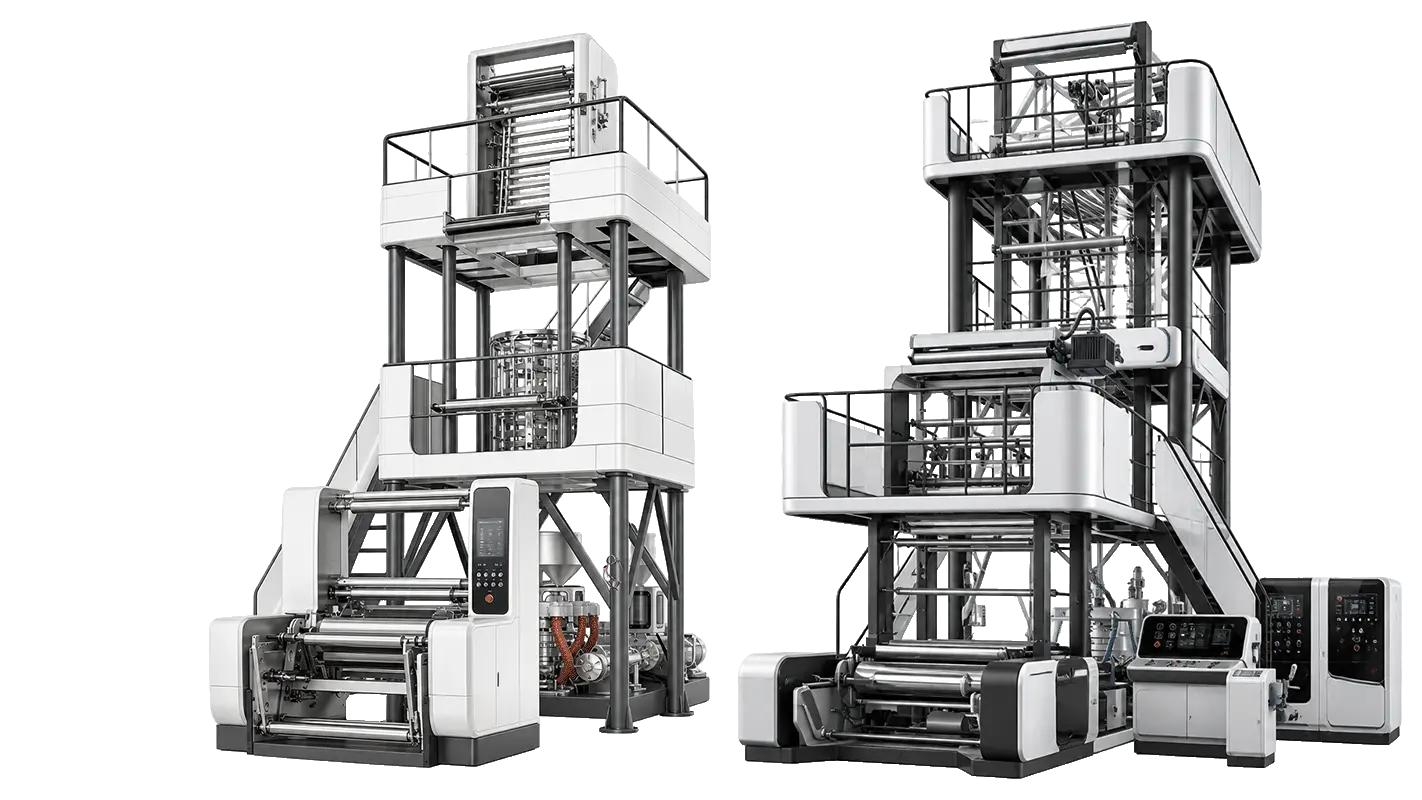
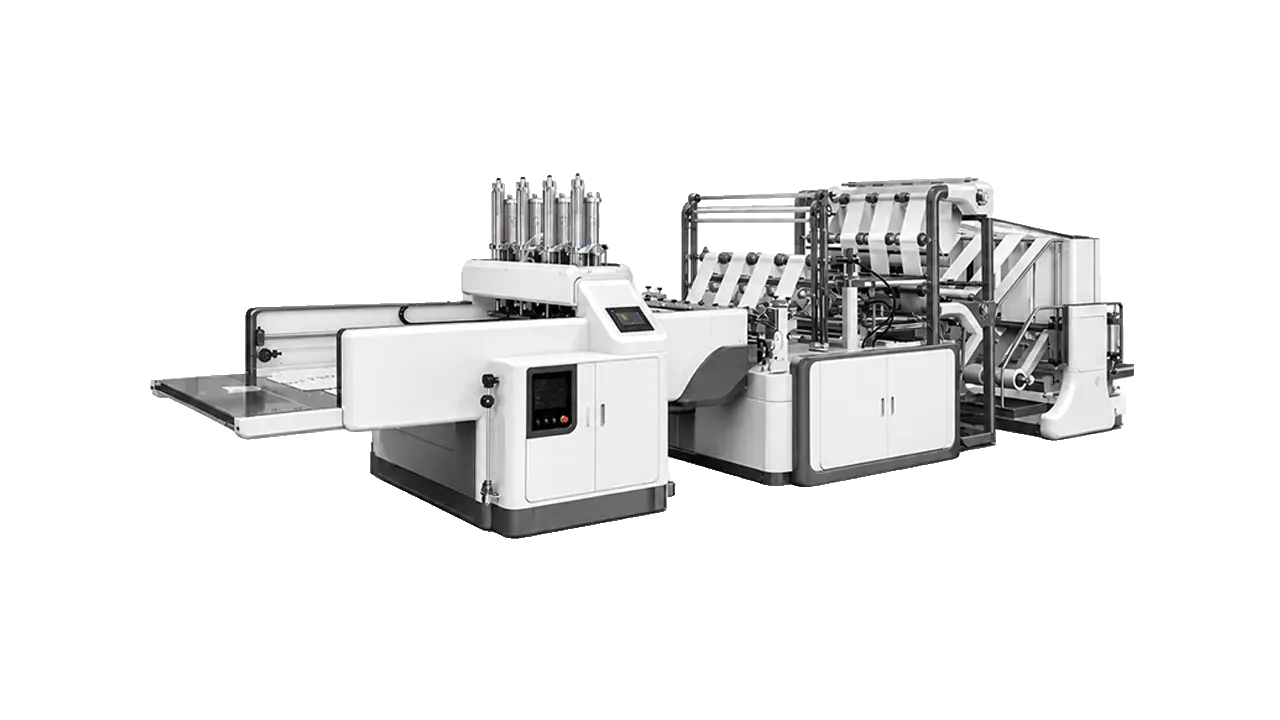
A 6-color flexo printer sits in the middle of your production chain.
LayerQuestar supplies every machine upstream and downstream.
Tell us your substrate, your Pantone color requirements,
your monthly print volume, and your target bag format.
LayerQuestar's team will confirm whether the LQ-6C or LQ-6CH
is the right fit — and which width model and configuration
matches your production requirements.